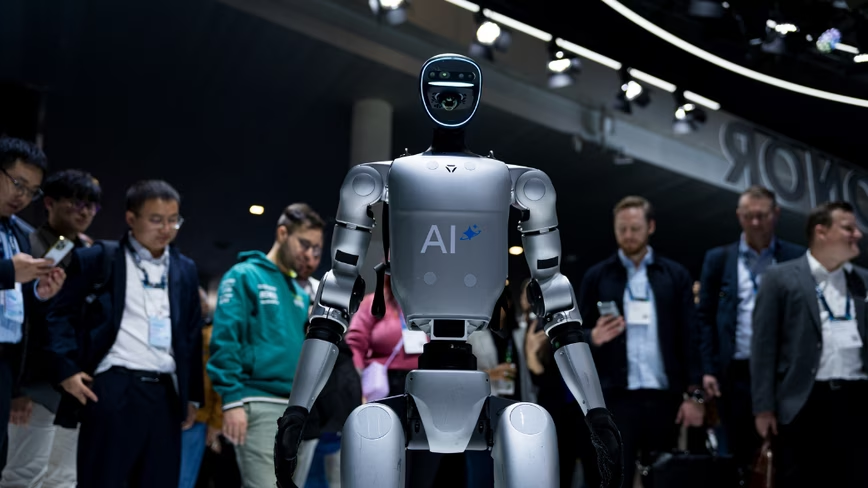
A humanoid robot by the company Unitree is seen at the Mobile World Congress 2025 (MWC) at the Fira de Barcelona.
 Credit: Davide Bonaldo via Shutterstock
China’s best-known robot maker is about to test the public markets. Unitree could be worth more than 50 billion yuan, roughly $7bn, after its Shanghai listing, according to its IPO sponsor.The estimate comes from CITIC Securities.
As the deal’s sponsor, CITIC set out the valuation as Unitree kicked off pricing for its float on Shanghai’s STAR Market, the exchange’s board for technology companies.Some readings run higher still. Depending on where the shares price, other estimates suggest the valuation could climb well above that figure, a sign of how much appetite there is for the stock.
The timing plays to the hype. Unitree says it expects revenue to grow in the first half of the year as demand for humanoid robots accelerates, giving the listing a genuine growth story to sell.
Unitree made its name on price. It builds both four-legged robots and humanoids, and undercut Western rivals dramatically, putting a walking humanoid within reach of universities, developers and even hobbyists.
That affordability reshaped the field. By pricing its machines far below competitors, Unitree turned humanoid robots from lab curiosities into products people could actually buy, seeding a developer base around its hardware.
The listing is also a milestone for its home market. It follows the recent approval of Unitree’s Shanghai listing registration, clearing the last big hurdle before the shares reach investors.
Beijing has a stake in the outcome. China has designated humanoid robotics a strategic priority, and a marquee domestic IPO is exactly the kind of showcase the government wants as it races the United States in physical AI.
Unitree is not the only one going public. Rivals are lining up too, with humanoid maker EngineAI filing for a Hong Kong IPO, a wave of listings that signals the sector’s move from prototype to profit.
Demand is showing up in unexpected places. China’s carmakers are among the buyers, with BYD planning to put a humanoid robot in its showrooms, a concrete use case that helps justify the valuations.
The software is catching up to the hardware. Systems such as Google DeepMind’s Gemini Robotics models now control whole humanoids, narrowing the gap between a machine that walks and one that is genuinely useful.
The choice of venue matters. Listing on Shanghai’s STAR Market keeps a strategic company on a domestic exchange, in line with Beijing’s preference for keeping its technology champions and their capital at home.
The race with the United States hangs over the deal. American firms are pouring money into humanoids too, and a well-funded, publicly listed Unitree gives China a flagship to point to in a contest it frames as central to the future.
Still, the enthusiasm carries risk. Humanoid robots remain expensive to build and unproven at scale, and a rich IPO valuation bakes in an assumption that mass adoption arrives faster than it so far has.
Unitree’s numbers will face scrutiny once it is public. Growth expectations are one thing, but listed companies must show durable revenue, and a young hardware firm carries the volatility that comes with a new market.
The valuation range itself tells a story. That estimates swing from around 50 billion yuan to twice that reflects how little agreement there is on what a humanoid-robot maker is actually worth this early.
For now, the float is a statement of intent. A $7bn-plus valuation would crown Unitree as the standard-bearer for China’s robot ambitions, and set a benchmark the rest of the industry will be measured against.
Get the TNW newsletter
Get the most important tech news in your inbox each week.


