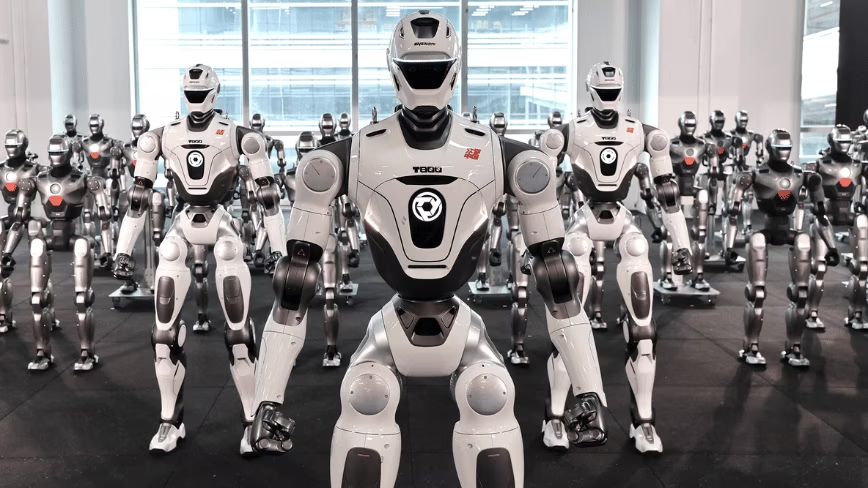
 Credit: EngineAI Robotics Intelligent Manufacturing
EngineAI, a Chinese maker of humanoid robots, has filed confidentially for an initial public offering in Hong Kong, Bloomberg reported on Friday, citing people familiar with the matter. The Shenzhen-based startup is working with China International Capital Corp and Citic Securities on the possible share sale.
The company is only three years old. It raised $200m in a Series B in April that pushed its valuation above 10 billion yuan ($1.5bn), in a round led by a fund tied to Henan Investment Group and the electronics supplier Luxshare Precision Industry.
Who EngineAI is
EngineAI was founded in 2023 by a team drawn from top universities, led by chief executive Zhao Tongyang. It builds general-purpose humanoid robots around what it calls “embodied AI”, machines meant to perceive their surroundings and act on them.
It went viral last year with a video of its PM01 robot performing a front flip. The wider product line runs from the entry-level SA01 to the T800, a heavier-duty machine built for demanding work.
Building robots at scale
EngineAI is not just demoing prototypes. On 1 June, it opened a 12,000-square-metre factory in Shenzhen and began shipping its first batch of T800 robots. It says the line can turn out a humanoid every 15 minutes, and is geared for 10,000 units.
That is a fast climb. The company says it went from a single test machine in 2024 to hundreds of PM01 units in 2025, and is now chasing mass production. The pitch to IPO investors is a real manufacturing base, not just viral clips.
A stampede to list
EngineAI is joining a rush. China’s robot makers are racing to public markets while money is flowing. Unitree, the sector leader, has filed for a $7bn IPO; the BYD-backed hand-maker PaXini is also weighing a listing. Even Dreame, the robot-vacuum giant, is eyeing Hong Kong, and the robot-hand unicorn Linkerbot is chasing a $6bn valuation. About $22.6bn has already been raised in Hong Kong IPOs this year.
What the EngineAI IPO must prove
Supply is racing ahead of proven demand. China shipped about 90 per cent of the world’s humanoid robots last year, but the market is crowded and unproven. More than 150 companies are chasing it, and only 23 per cent of buyers say they are satisfied with what they can buy.
EngineAI has not disclosed its revenue, and a confidential filing keeps the numbers hidden. The size and timing of the listing are undecided, and the company could still pull it. A robot every 15 minutes is a bold bet. Whether the orders arrive to match is the question now facing investors.
Get the TNW newsletter
Get the most important tech news in your inbox each week.


