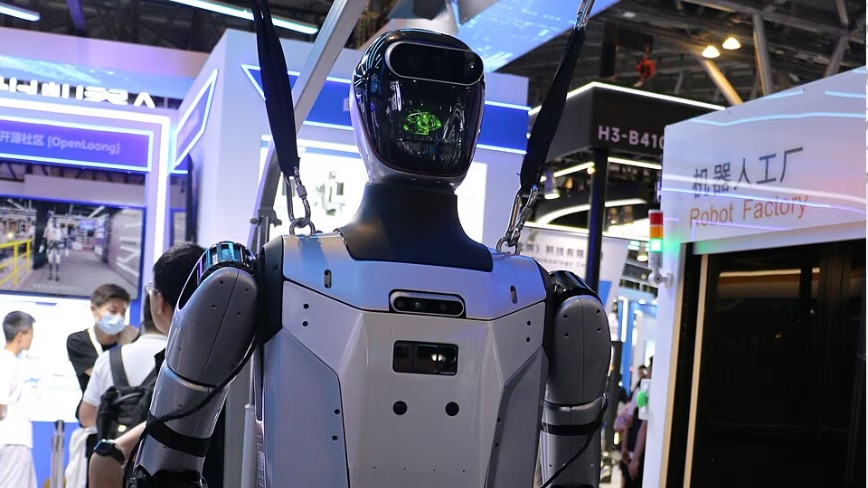
Robot
 Credit: Xuthoria
China’s securities regulator has approved Unitree Robotics’ registration to list on Shanghai’s STAR Market, clearing the last formal hurdle before the humanoid robot maker can price and sell shares.
The approval, confirmed by Reuters on Thursday, values the planned offering at roughly $619 million, or about 4.2 billion yuan, a figure that lines up closely with what Caixin Global and the South China Morning Post reported over the past month.
The China Securities Regulatory Commission’s sign-off is not the same as a completed listing. Unitree still has to set a final share price and issuance date, steps that typically follow registration approval by weeks rather than days.
It is, even so, the milestone that Unitree’s IPO filing from March has been building towards, and it puts the company on course to become mainland China’s first big humanoid robotics listing.
Unitree filed its prospectus with the Shanghai Stock Exchange in March, seeking around $610 million at the time.
That figure crept up as the process advanced, and Shanghai’s listing review committee cleared the application on June 1 before Thursday’s registration approval from the CSRC.
The gap between the March filing figure and this week’s number reflects yuan-dollar conversion drift as much as any change in scope, according to figures reported by Bloomberg, Nikkei Asia and Caixin across the different stages.
Founded in Hangzhou in 2016 by engineer Wang Xingxing, Unitree built its name on quadruped robots before expanding into humanoid machines that have become a fixture of Chinese state media demonstrations and viral videos.
The company has said it has been profitable since 2020, and Caixin reported 2025 revenue of roughly 1.7 billion yuan, though profit figures for the year vary between outlets and should be read as directional rather than precise.
Wang has cultivated a reputation as a rare celebrity engineer in China’s tech scene, his robots doing backflips and kung fu routines at galas long before the IPO paperwork made headlines.
The prospectus ties the proceeds to research on the software and control systems the industry calls robot “brains,” along with new product lines and manufacturing capacity, according to Global Times’ reporting on the filing documents.
That framing matters because China’s humanoid robotics sector has become crowded with hardware announcements and comparatively thin on the software that makes the machines useful outside a demo stage, a gap TNW reported on in May when surveying the roughly 150 companies chasing the same market.
Unitree is not the only Chinese robotics firm racing towards public markets this year. AgiBot and EngineAI have both pursued Hong Kong listings, and smaller players including Dobot, Deep Robotics and Leju Robotics are reportedly weighing their own routes to capital.
The EngineAI filing in June made explicit reference to Unitree’s valuation as a benchmark, a sign of how tightly the sector’s fortunes are now linked in investors’ minds.
Unitree’s position within that group is not uncontested. It has been described in various reports as the leading shipper of humanoid units globally, but at least one industry estimate puts AgiBot ahead on total 2025 shipments, so the claim is best read as one of several strong contenders rather than a settled ranking.
What is not in dispute is that Unitree has drawn attention beyond the robotics press, including a notable mention from Nvidia earlier this year as the chipmaker weighed which humanoid manufacturers to back, and a spot on a separate Pentagon list of Chinese companies with alleged military ties, which Unitree has disputed.
Valuation estimates for the listing have shifted as the process has moved along, with figures ranging from roughly $5.9 billion to $7 billion depending on when and how they were calculated.
A final number will not be clear until Unitree and its underwriters set the offer price, the next concrete step now that Beijing’s regulator has signed off on the paperwork.
Get the TNW newsletter
Get the most important tech news in your inbox each week.


