
doctor
 Credit: Canva
Search for requirements management tools for medical device development and you’ll find plenty of content arguing that the established platforms are too heavy for modern teams. Much of it comes from vendors with a stake in that conclusion. In a regulated industry, the question that matters is which tool produces a record you can defend in front of an FDA investigator or a notified body, not which one drafts a traceability matrix fastest.
Medical device work raises the documentation bar that general project tools can’t clear. You need design controls under FDA QMSR, risk management aligned to ISO 14971, software lifecycle evidence under IEC 62304, and a quality system that satisfies ISO 13485 and EU MDR. The right tool keeps requirements, risk, verification, and change history connected as one governed source of truth, so the design and development documentation takes shape as the work happens.
This guide ranks nine requirements management tools for medical device development, with where each one fits, what users praise, and where it tends to fall short.
- Jama Connect: Best for combining fast, accessible setup with a structured and governed AI approach that prioritizes substance over flashy interfaces.
- Visure Requirements: Best for compliance-heavy documentation
- PTC Codebeamer: Best for software-centric ALM
- Perforce Helix ALM: Best for unified requirements and test management
- Siemens Polarion: Best for Siemens PLM ecosystems
- Modern Requirements: Best for Azure DevOps teams
- Ketryx: Best for AI-generated compliance artifacts
- Altium Requirements Portal (Valispace): Best for requirements-to-design linkage
- IBM DOORS Next: Best for legacy enterprise deployments
1. Jama Connect: best for governed, audit-ready traceability
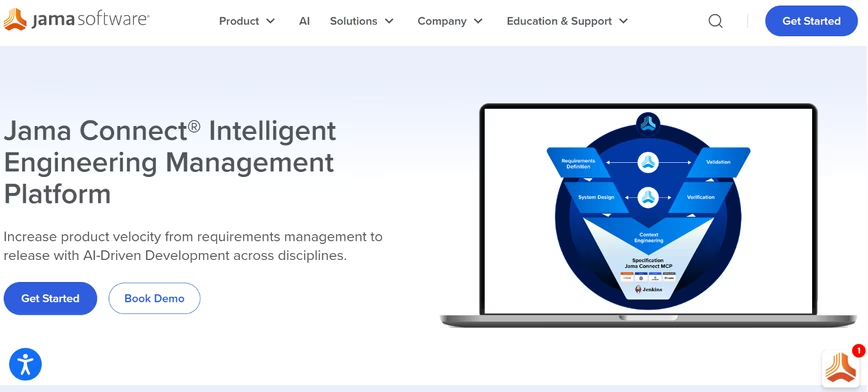
Jama Software® built Jama Connect® specifically for multidisciplinary teams developing complex, safety-critical products, and medical device development remains one of its strongest use cases. The platform manages requirements, risk, and testing as a single controlled product development process rather than a collection of disconnected activities. Its Live Traceability keeps user needs, design inputs, verification, validation, and ISO 14971 risk linked in real time, establishing traceability as engineers work rather than forcing teams to reconstruct it before an audit. The result is a governed system of record where every requirement, decision, approval, and change remains connected throughout development. Eight of the top ten global medical device companies rely on the platform.
Ease of adoption is where Jama Connect often surprises new teams and ships with medical device frameworks. While some competitors position requirements management as a heavyweight discipline, Jama Connect is designed to get organizations productive quickly. Teams can reach a working configuration in weeks, and the platform includes medical device frameworks that help quality and regulatory teams avoid building compliance processes from scratch. Free reviewer and stakeholder access removes licensing barriers for auditors, suppliers, and cross-functional contributors, while Review Center can reduce review cycles by as much as 50%, helping organizations collaborate efficiently without creating administrative overhead.
The platform’s AI capabilities operate within that governed development process rather than outside it. Jama Connect Advisor reviews requirements against INCOSE and EARS best practices, helps identify quality issues early, drafts test cases, and highlights areas that may require additional attention. Every AI-generated recommendation remains tied to audit trails, approvals, change history, and established workflows. While AI can assist with traceability activities, Jama Connect establishes and maintains traceability as part of the development lifecycle itself. The vendor also holds SOC 2 Type 2 certification across both the application and data center environment, reinforcing its focus on controlled, enterprise-grade development processes.
What stands out:
- Live Traceability with Trace Score provides a measurable, real-time view of requirement coverage, verification status, and risk alignment
- Fast implementation, preconfigured medical device frameworks, and free reviewer access make adoption easier than many enterprise requirements platforms
- Governed AI capabilities operate within controlled workflows and support ISO 14971, IEC 62304, FDA design controls, and broader regulatory requirements
- Built for the full product lifecycle across software, hardware, systems engineering, quality, and regulatory teams
Where it falls short:
- The platform’s depth delivers the greatest value on complex products, meaning smaller projects may not use every capability available
Overview
- Best for: Governed, audit-ready traceability across software, hardware, electronics, and systems development
- Deployment: Cloud (AWS, including GovCloud) or on-premises
- Compliance focus: ISO 13485, ISO 14971, IEC 62304, FDA 21 CFR Part 11, EU MDR
2. Visure Requirements: best for compliance-heavy documentation
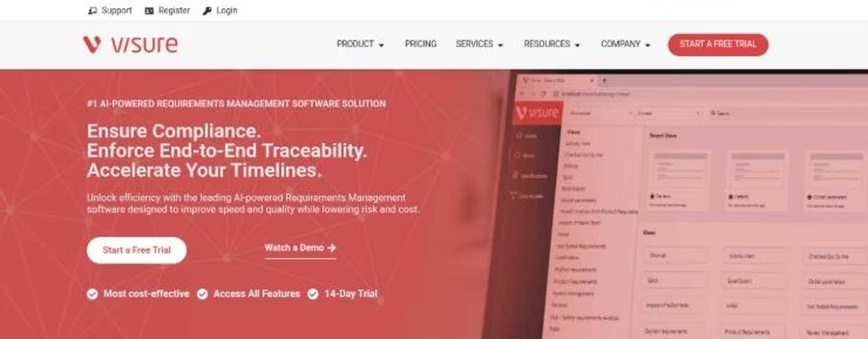
Visure Solutions positions its Requirements ALM platform for organizations working in regulated industries where documentation and traceability receive close scrutiny. Medical device companies use the platform to manage requirements, testing, risk, and verification within one controlled environment. It supports standards such as ISO 14971 and IEC 62304, while providing FMEA functionality, change impact analysis, baselining, and configurable workflows that can be adapted to existing quality processes.
The platform appeals most to teams that spend a large portion of each project producing and maintaining compliance records. Users regularly praise the ability to connect user needs, system requirements, risk controls, verification activities, and final deliverables without relying on disconnected documents. That single source of information can make regulatory reviews and internal audits easier to manage.
Flexibility is one of Visure’s biggest strengths. Organizations can configure workflows, templates, attributes, approval paths, and reporting to match their own development processes rather than changing those processes to fit the software. That freedom comes with a trade-off. Initial implementation can take time, particularly for teams introducing formal requirements management for the first time. Several users also report relying on vendor support for larger configuration changes and software upgrades.
Compared with larger enterprise platforms, Visure has a smaller integration catalog and a less mature partner ecosystem. Organizations with broad engineering toolchains may need additional work to connect external systems. Even so, the platform remains a strong option for medical device companies that place documentation quality and traceability ahead of rapid deployment.
What stands out:
- Strong traceability, FMEA tooling, and ISO 14971 support for compliance-driven programs
- Highly configurable workflows, templates, and documentation structures
- Centralized management of requirements, tests, risks, and verification evidence
Where it falls short:
- Initial configuration is complex and often requires vendor assistance
- Smaller integration ecosystem than larger enterprise competitors
- Steeper learning curve than platforms focused on rapid adoption
Overview
- Best for: Compliance-heavy requirements documentation
- Deployment: Cloud or on-premises
- Compliance focus: Medical, aerospace, automotive, and defense; FMEA and risk tooling
3. PTC Codebeamer: best for software-centric ALM
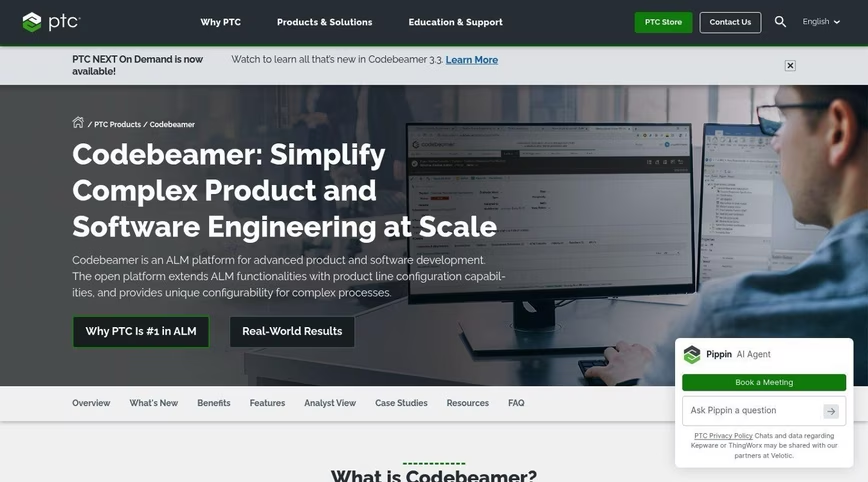
Codebeamer became part of PTC following the acquisition of Intland Software and now sits alongside the company’s wider engineering portfolio. The platform combines requirements management, testing, quality activities, risk management, and software development into one application lifecycle management environment. Medical device organizations often choose it for its traceability capabilities and support for regulated development, while automotive companies have helped establish its reputation through strong ASPICE coverage.
One of the platform’s biggest advantages is its connection with other PTC products. Organizations already using Windchill can link development and lifecycle management activities within the same vendor ecosystem. Reviewers frequently highlight the platform’s ability to connect requirements, testing, and quality records across the development process.
Codebeamer’s background in software engineering still shapes where it performs best. It handles software development workflows well, although organizations building products that combine software, hardware, electronics, firmware, and systems engineering may find dedicated requirements platforms provide broader coverage. Some multidisciplinary workflows also require extra configuration or supporting tools.
Teams should also consider how Codebeamer fits alongside existing development software. Some features overlap with Jira, including project management and work tracking, which may introduce duplication for organizations already committed to Atlassian products. Native support for model-based systems engineering tools is also more limited than several competing platforms. For software-focused medical device teams, however, Codebeamer remains a capable ALM solution.
What stands out:
- Complete ALM platform covering requirements, testing, quality, and risk
- Strong traceability across software development activities
- Good fit for organizations already invested in Windchill and other PTC products
Where it falls short:
- Software-first heritage leaves systems engineering coverage lighter than some dedicated requirements platforms
- Some organizations heavily invested in Jira may find less functional overlap than required
- Limited native support for several MBSE environments
Overview
- Best for: Software-centric application lifecycle management
- Deployment: Single-tenant cloud
- Compliance focus: Automotive, medical, and aviation, with ASPICE support
4. Perforce Helix ALM: best for unified requirements and test management
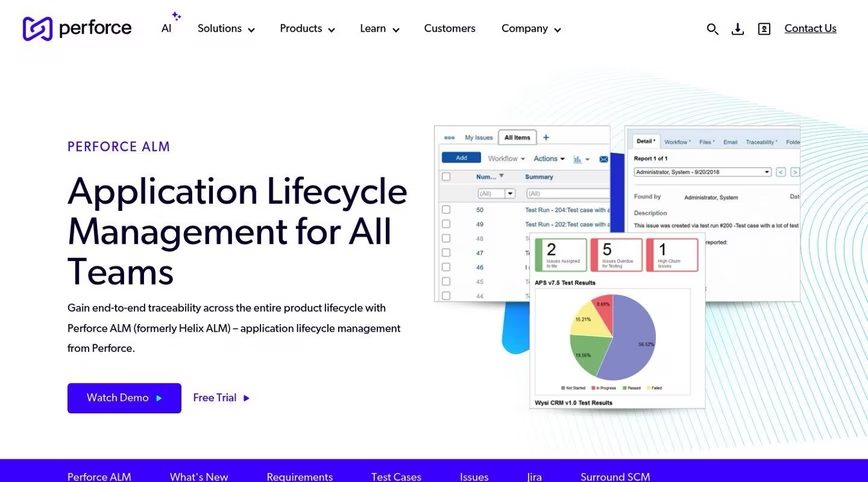
Perforce Helix ALM combines requirements management, test management, and issue tracking within a single application. Medical device teams often consider the platform when they want one system to manage engineering records and quality activities rather than maintaining separate tools for each discipline. Relationships between requirements, tests, defects, and releases remain connected throughout development, making traceability easier to follow.
A single workspace is one of the platform’s biggest strengths. Teams can manage requirements, verification, testing, and issue resolution without moving information between separate applications. That approach reduces manual work and gives engineering and quality teams one place to review development progress.
Organizations already using Perforce version control products may find adoption easier, as the development workflows feel familiar and integrate naturally with the wider Perforce ecosystem. The platform also appeals to teams that want a focused requirements and testing solution without adopting a much larger enterprise ALM platform.
Helix ALM has a smaller presence than platforms from IBM, Siemens, or PTC. That means buyers may find fewer implementation partners, fewer community resources, and a smaller integration ecosystem. AI capabilities also remain less mature than those found in several newer requirements management platforms.
What stands out:
- Requirements, testing, and issue tracking managed in one platform
- Strong traceability across engineering and verification activities
- Familiar environment for existing Perforce customers
Where it falls short:
- Smaller market presence than several enterprise competitors
- More limited partner and integration ecosystem
- AI capabilities remain behind many category leaders
Overview
- Best for: Unified requirements and test management
- Deployment: Cloud or on-premises
- Compliance focus: Medical devices, automotive, aerospace, and semiconductor
5. Siemens Polarion: best for Siemens PLM ecosystems
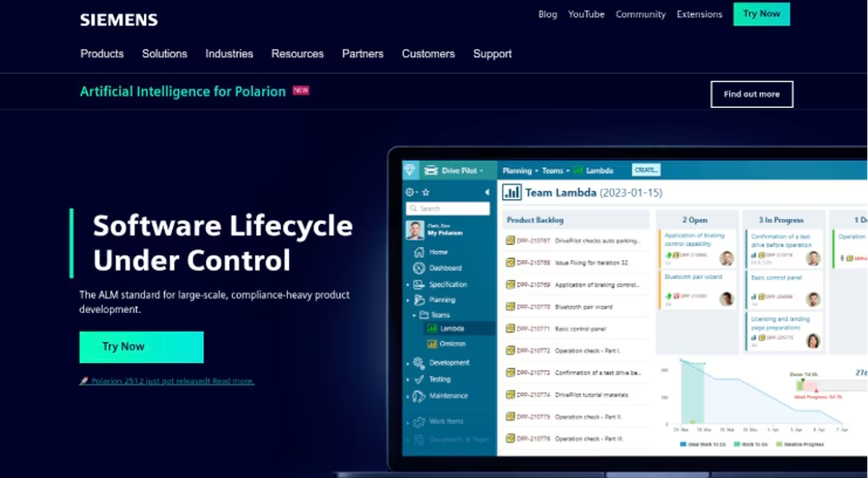
Polarion, from Siemens Digital Industries Software, combines requirements management, change management, testing, and application lifecycle management within a single platform designed for regulated engineering environments. Medical device manufacturers, aerospace companies, and automotive organizations use it to maintain traceability across the development lifecycle while supporting standards-driven development. Teams already invested in Teamcenter, NX, and the wider Siemens software portfolio benefit from close connections between ALM and PLM activities.
Traceability is one of Polarion’s strongest capabilities. Requirements, work items, tests, approvals, and change records remain connected throughout development, giving engineering and quality teams a clear audit trail. The platform also includes configuration and variant management features that suit organizations developing multiple product variants from a shared engineering baseline.
The platform offers broad functionality, although that depth comes with a learning curve. Organizations often spend time configuring workflows, permissions, and project structures before teams become fully productive. Companies already familiar with Siemens engineering software may find adoption more straightforward, while organizations introducing Polarion into an existing toolchain should plan for implementation effort and user training.
Polarion delivers its greatest value inside the Siemens ecosystem, where native integrations provide a connected engineering environment. It also supports integration with third-party development tools, including Jira, although organizations with established Jira workflows or model-based systems engineering environments may require additional configuration or third-party connectors to achieve their preferred integration approach. Buyers should evaluate those integration requirements alongside their broader engineering toolchain during product selection.
What stands out:
Strong traceability across requirements, testing, change management, and development activities
Close integration with Teamcenter, NX, and the wider Siemens software portfolio
Configuration and variant management capabilities for complex product families
Where it falls short:
Learning curve can be steeper than some newer requirements management platforms
Implementation and workflow configuration may require more planning than lighter-weight alternatives
Organizations using mixed engineering toolchains may need additional integration work outside the Siemens ecosystem
Overview
Best for: Organizations standardized on Siemens PLM
Deployment: Cloud or on-premises
Compliance focus: Automotive, aerospace and defense, medical devices, embedded systems
6. Modern Requirements: best for Azure DevOps teams
Modern Requirements builds directly on Microsoft Azure DevOps, allowing teams to manage requirements, reviews, traceability, and baselines without introducing a separate requirements management platform. Rather than replacing Azure DevOps, it extends the existing environment with capabilities for requirements authoring, document generation, review workflows, and end-to-end traceability. Organizations already using Microsoft’s development platform can continue working within familiar processes while adding more structured requirements management.
One of the platform’s biggest advantages is its native connection with Azure DevOps. Requirements remain linked to work items, development tasks, testing activities, and releases, reducing the need to synchronize information between separate systems. The platform also includes AI-assisted authoring and review features that help teams draft and review requirements while remaining inside the Azure DevOps environment.
The platform delivers the greatest value for organizations that have already standardized on Azure DevOps. Teams can introduce formal requirements management without moving data into another application, which may reduce training time and simplify user adoption. Companies already relying on Microsoft development tools often appreciate keeping engineering activities within a single environment.
That close relationship with Azure DevOps also defines where the platform fits best. Organizations using different development ecosystems may gain fewer advantages, while companies developing products that combine software with hardware, electronics, or broader systems engineering disciplines may require capabilities beyond those provided by an Azure DevOps-based solution. Buyers should consider how well the platform aligns with their engineering processes before making a long-term decision.
What stands out:
- Requirements management built directly into Azure DevOps
- AI-assisted authoring, reviews, baselining, and traceability
- Familiar experience for organizations already using Microsoft’s development platform
Where it falls short:
- Provides the greatest value for teams already committed to Azure DevOps
- May be less suitable for organizations seeking dedicated systems engineering capabilities
- Organizations using non-Microsoft development environments may require a separate requirements management platform
Overview
- Best for: Teams standardized on Azure DevOps
- Deployment: Cloud or on-premises (with Azure DevOps)
- Compliance focus: Software development, automotive, aerospace, and enterprise
7. Ketryx: best for AI-generated compliance artifacts
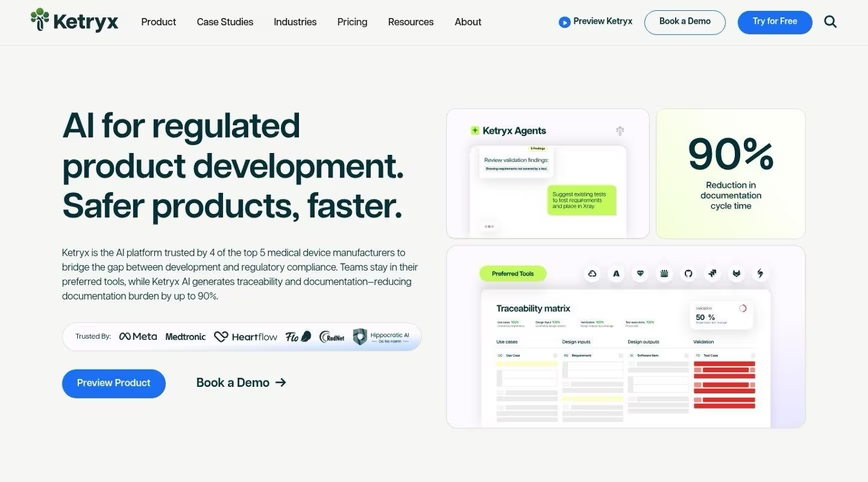
Ketryx takes an AI-first approach to compliance, connecting with tools such as Jira, source repositories, and existing ALM or PLM platforms to generate requirements, traceability artifacts, and documentation for software-centric medical device teams. For organizations already invested in those systems, the ability to automate compliance deliverables without replacing existing workflows is the primary attraction. The platform focuses on accelerating documentation and reducing the manual effort traditionally associated with software compliance activities.
The distinction between generating compliance artifacts and managing a compliant development process is where buyers should look more closely. Ketryx helps assemble documentation from existing data sources, but organizations still need controlled processes for requirements, reviews, approvals, risk management, and change control. Generating a traceability matrix can save time, yet auditors ultimately examine how records were reviewed, approved, and maintained throughout development. Documentation alone does not replace governance.
The platform is strongest in software-centric environments, particularly for teams already working within Jira-driven workflows. Many medical device organizations, however, require traceability across software, hardware, firmware, systems engineering, risk management, verification, validation, quality, and regulatory functions. Companies developing complex multidisciplinary products may find a software-focused approach does not address every aspect of the product lifecycle with the same depth.
As an overlay platform, Ketryx depends heavily on the quality of the systems it connects to. Traceability is only as reliable as the data, processes, and integrations feeding it. AI can accelerate documentation creation, but teams still need to review, validate, and defend those records during audits and inspections. Speed creates value only when organizations trust the resulting documentation enough to stand behind it.
What stands out:
- Fast AI-driven generation of compliance artifacts and traceability documentation from connected development tools
- Strong fit for software-centric medical device teams already operating in Jira, source control platforms, and existing ALM environments
- Allows organizations to layer compliance automation onto established workflows without replacing core development systems
Where it falls short:
- Generating compliance artifacts differs from governing compliance, and teams still need controlled processes for requirements, reviews, approvals, risk management, and change control
- Heavily focused on software workflows, while many medical device organizations require traceability across hardware, firmware, systems engineering, verification, and risk disciplines
- Traceability quality depends heavily on the completeness, accuracy, and connectivity of underlying tools and data sources
- AI-generated outputs still require review, validation, and audit readiness before organizations can confidently rely on them during inspections
Overview
- Best for: AI-generated compliance artifacts and traceability support within software-focused development workflows
- Deployment: Cloud
- Compliance focus: FDA-aligned requirements management and compliance automation for software-centric medical device teams
8. Altium Requirements Portal (Valispace): best for requirements-to-design linkage
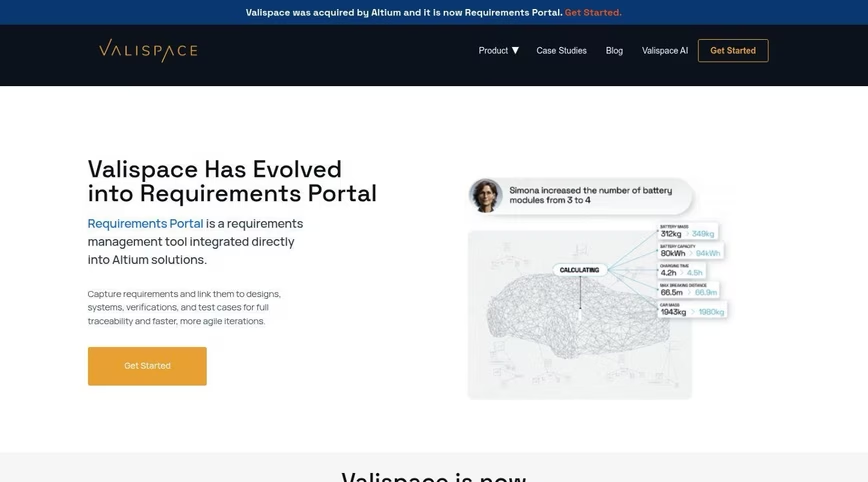
Altium Requirements Portal, formerly known as Valispace, focuses on connecting requirements with engineering data throughout product development. The platform allows teams to capture requirements, manage verification activities, and maintain links between engineering decisions and product documentation within a shared cloud environment. Following Altium’s acquisition of Valispace, the product became part of the company’s broader engineering software portfolio while continuing to support collaborative systems and hardware development.
The platform stands out for keeping requirements closely connected to engineering work. Rather than treating requirements as standalone documents, it links them with design information, calculations, verification activities, and related project data. This approach appeals to engineering teams that want requirements and technical information managed within the same working environment.
Organizations already using Altium products may benefit from closer integration with the wider Altium ecosystem as the platform continues to develop. The cloud-based deployment and relatively straightforward onboarding also make it attractive for teams looking to adopt structured requirements management without the complexity associated with some larger enterprise platforms.
Requirements Portal is designed primarily for engineering collaboration and product development rather than highly regulated medical device compliance. Companies working under standards such as ISO 13485, IEC 62304, or FDA design controls should evaluate whether the platform provides the documentation, governance, and traceability capabilities required for their quality management processes. Organizations with demanding regulatory requirements may determine that platforms built specifically for regulated industries provide broader compliance support.
What stands out:
- Strong linkage between requirements, engineering data, and verification activities
- Cloud-based platform with collaborative engineering workflows
- Close alignment with the Altium engineering ecosystem
Where it falls short:
- Stronger focus on engineering collaboration than regulated medical device compliance
- Organizations with highly regulated development processes should evaluate whether the available governance capabilities meet their requirements
- Best suited to teams that can benefit from the wider Altium ecosystem
Overview
- Best for: Requirements-to-design linkage
- Deployment: Cloud
- Compliance focus: General engineering and product development
9. IBM DOORS Next: best for legacy enterprise deployments
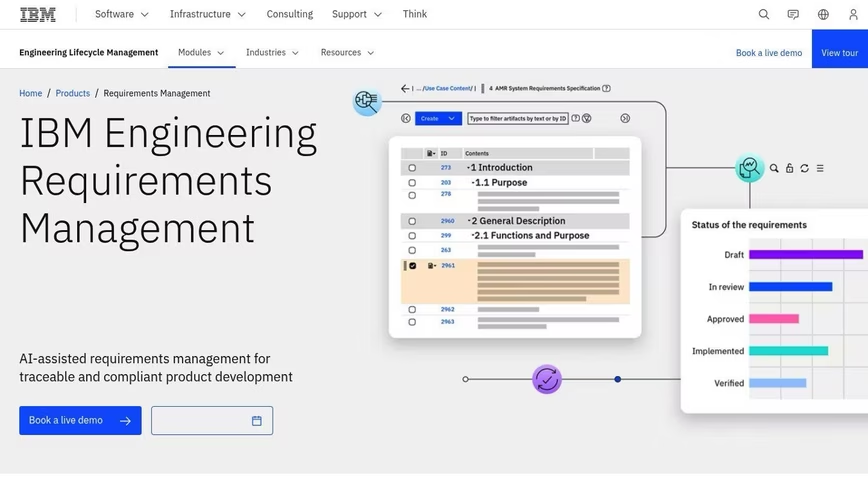
IBM DOORS Next is part of the IBM Engineering Lifecycle Management suite and represents the successor to the long-established IBM DOORS platform. For many years, IBM DOORS has been widely used across aerospace, defense, automotive, and medical device programs where formal requirements management and end-to-end traceability are central to product development. DOORS Next builds on that history with a web-based platform that connects requirements, change management, testing, and engineering workflows within the wider IBM ecosystem.
Traceability remains one of the platform’s strongest capabilities. Requirements can be linked with related artifacts throughout development, helping engineering teams maintain relationships between requirements, changes, verification activities, and supporting documentation. Organizations already using other IBM Engineering Lifecycle Management products can also benefit from OSLC-based integrations that connect information across multiple engineering disciplines.
DOORS Next is designed for large engineering organizations with established requirements management processes. The platform provides a wide range of configuration options, although implementing and administering those capabilities can require dedicated expertise. Teams introducing the software should expect time for configuration, user training, and ongoing administration, particularly in larger deployments.
Organizations currently using IBM DOORS should also consider migration planning. Classic DOORS and DOORS Next are separate products, and IBM does not provide a direct upgrade path between them. Companies evaluating new requirements management platforms may also compare DOORS Next with newer cloud-native alternatives that typically place greater emphasis on simplified deployment and day-to-day administration.
What stands out:
- Long history supporting large, regulated engineering programs
- Strong traceability across requirements and related engineering artifacts
- OSLC-based integration within the IBM Engineering Lifecycle Management suite
Where it falls short:
- Configuration and administration can require dedicated expertise
- Implementation may take longer than some newer cloud-based platforms
- No direct upgrade path from Classic IBM DOORS to IBM DOORS Next
Overview
- Best for: Legacy enterprise deployments
- Deployment: Cloud or on-premises
- Compliance focus: Aerospace, defense, automotive, and medical devices
What requirements management software does for medical device development
A requirements management tool for medical device development captures user needs, design inputs, and system requirements, then keeps them traceable to the risks, tests, and verification evidence that prove a device does what it should. That trace chain is the backbone of the design history file regulators expect to see.
This differs from a quality management system. A QMS such as Greenlight Guru handles document control, CAPA, training, and complaint handling across the whole quality operation. A requirements management platform governs the engineering record: what the device must do, how each requirement links to risk and test, and how changes ripple through the design. Many device companies run both, with the requirements tool serving as the engineering system of record that feeds the QMS.
What to look for in requirements management tools for medical device development
Buyers evaluating requirements management tools for medical device development should weigh a few capabilities against their regulatory scope:
- Live, governed traceability: Links between requirements, risk, and test should update as work happens and carry audit trails, approvals, and change history. A matrix generated after the fact is harder to defend than a record built as you go.
- Risk management built in: Look for ISO 14971 alignment and FMEA or hazard analysis connected to requirements, not siloed in a separate file.
- Coverage beyond software: Devices combine software, firmware, electronics, and hardware. Traceability that only spans code leaves the rest of the product unverified.
- Standards fit: Confirm support for IEC 62304, ISO 13485, FDA 21 CFR Part 11 electronic records, and EU MDR if you sell in Europe.
- Setup and adoption: A tool that takes months to configure delays the program. Preloaded frameworks and free reviewer access lower the barrier and raise participation.
- Governed AI: AI that drafts requirements or test cases helps, as long as it operates inside a controlled environment where humans review and approve the output.
Choosing the right requirements management tools for medical device development
The strongest requirements management tools for medical device development share one trait: they treat traceability as a governed record, not a report you assemble before an audit. Jama Connect earns the top spot because it establishes that record as engineers build, spans hardware and software alike, and sets up in weeks rather than the heavyweight rollout its critics describe, all while keeping AI inside an audited, approval-driven process.
Visure, Codebeamer, Helix ALM, and Polarion each serve specific ecosystems well, and AI-first or design-linked entrants like Ketryx and the Altium Requirements Portal show where the market is moving. For a regulated program, the decision comes back to a single test: when an investigator asks how a requirement connects to its risk control and verification evidence, can the tool show a controlled, defensible answer. The platforms that can are the ones worth shortlisting in 2026.
Frequently asked questions
What is the best requirements management tool for medical device development?
For most regulated programs, Jama Connect ranks first because it manages requirements, risk, and test as one governed process with Live Traceability, and it covers hardware and software together. Visure, Codebeamer, and Polarion are credible options for teams tied to specific ecosystems, but the best fit depends on your standards scope and existing toolchain.
What’s the difference between a requirements management tool and a medical device QMS?
A requirements management tool governs the engineering record, linking requirements to risk, test, and verification so the design history file holds together. A QMS manages document control, CAPA, training, and complaints across the quality operation. They solve different problems, and many device makers run both, with the requirements platform feeding evidence into the QMS.
Which standard is used by medical device manufacturers for risk management?
ISO 14971 is the international standard for applying risk management to medical devices. It covers hazard identification, risk estimation, risk control, and residual risk evaluation across the product lifecycle, and both ISO 13485 and the FDA reference it. Strong requirements tools link ISO 14971 risk records to the requirements and tests they affect.
Does Jama Connect support FDA design controls and IEC 62304?
Yes. Jama Connect provides design control structures for FDA 21 CFR Part 820, traceability and verification evidence for IEC 62304 software lifecycle work, and risk tooling aligned to ISO 14971. It also supports ISO 13485, FDA 21 CFR Part 11 electronic records, and EU MDR, which is why eight of the top ten global medical device companies use it.
How is Jama Connect different from an AI compliance tool like Ketryx?
Ketryx generates compliance artifacts by pulling from connected systems, while Jama Connect establishes traceability as a governed record from the first requirement onward. AI can assist documentation, but auditors ask who reviewed and approved each change. Jama Connect keeps that governance, audit trails, and approval history built in, and it spans the whole product rather than software alone.
How long does it take to set up requirements management software for a medical device team?
It varies by tool. Legacy platforms can take months and need specialist administrators, while modern tools with preloaded frameworks reach a working configuration in weeks. Jama Connect ships with medical device frameworks and free reviewer access, which shortens setup and lifts team adoption compared with tools that start from a blank configuration.
What is Live Traceability in medical device development?
Live Traceability keeps the links between requirements, risk, design, and test current in real time, so the trace record reflects the actual state of development at any moment. Jama Connect measures it with a Trace Score, giving teams a live view of coverage and verification rather than a static matrix rebuilt before an audit.
Get the TNW newsletter
Get the most important tech news in your inbox each week.
Sponsored content. Not produced by the TNW newsroom and does not reflect the editorial stance of TNW. This listing is not an independent editorial ranking. Product and compliance claims are those of the vendors and have not been verified by TNW.


