
The best requirements management tools for functional safety all protect one thing: the chain of evidence behind a safety case. It runs from a hazard, through the safety requirement that mitigates it, into the design that implements it, and out to the test that proves the design works. Break one link and an assessor stops trusting the whole chain.
Building that chain once is manageable. Keeping it intact through months of design changes, then proving it to a certification body that expects every link to hold, is where teams struggle.
These tools exist to keep that chain valid under change. They tie safety requirements to hazards and verification, mark what needs re-checking when something upstream moves, and produce the record an IEC 61508 assessment asks for.
General office tools and issue trackers can hold the text of a requirement, yet none of them can prove the trace survived the last three revisions.
The sections below walk through what IEC 61508 asks of a requirements process, then compare nine tools built for safety-critical engineering.
What IEC 61508 asks of your requirements process
IEC 61508 is the parent functional safety standard for electrical, electronic, and programmable systems. Its sector standards shape most industrial work: IEC 62061 for machinery, IEC 61511 for process plants, EN 50128 for railway software, and ISO 26262 for road vehicles. ISO 13849 for machinery and ISO 10218 for industrial robots are separate standards that sit alongside it.
The sector standards share one spine, so a tool that fits IEC 61508 tends to fit the rest.
The standard sorts safety functions into four Safety Integrity Levels. SIL 1 covers the lowest risk reduction and SIL 4 the highest, and the level you target sets how much rigor your evidence needs. Whatever the level, IEC 61508 expects the same connected thread: a hazard analysis that produces safety requirements, a design traced back to those requirements, and verification that closes the loop with evidence.
For a requirements tool, that translates into a short list of must-haves. Each safety requirement needs a link to the hazard it addresses and to the test that verifies it.
The process needs controlled reviews and approvals with enough history to show how safety requirements were assessed and changed. It also has to keep that web of links honest as engineers revise the design, because an assessor reads a broken or stale trace as a gap in the safety argument.
What functional safety demands from a requirements tool
Meeting the letter of the standard is table stakes. A tool earns its place on a safety program when it also does three things well.
The first is trace integrity under change. Baselines age the moment someone edits a requirement. A tool worth using flags every linked design item and test that a change puts in doubt, so the team re-verifies what moved instead of discovering the gap during an audit. The second is a tool with its own assessment behind it.
When a certification body qualifies the software you use to manage safety evidence, you skip a large chunk of tool-qualification effort and argument. The third is reach across the product, since a safety-critical machine mixes mechanical parts, electronics, firmware, and control software, and a requirements tool that only understands code leaves the rest of the hazard picture outside the trace.
Teams that skip these end up bolting compliance onto Jira, Word, or Excel after the fact. These tools are not purpose-built for maintaining baselines, bidirectional requirements traceability, and controlled safety evidence across a complex development lifecycle.
Requirements management tools for functional safety compared
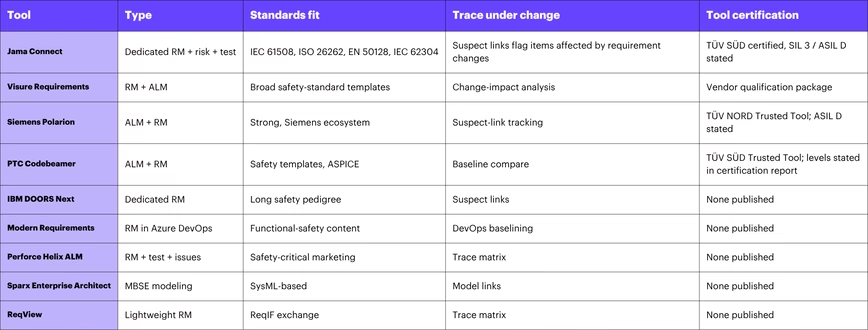
Purpose-built requirements platforms for safety-critical work
Jama Connect
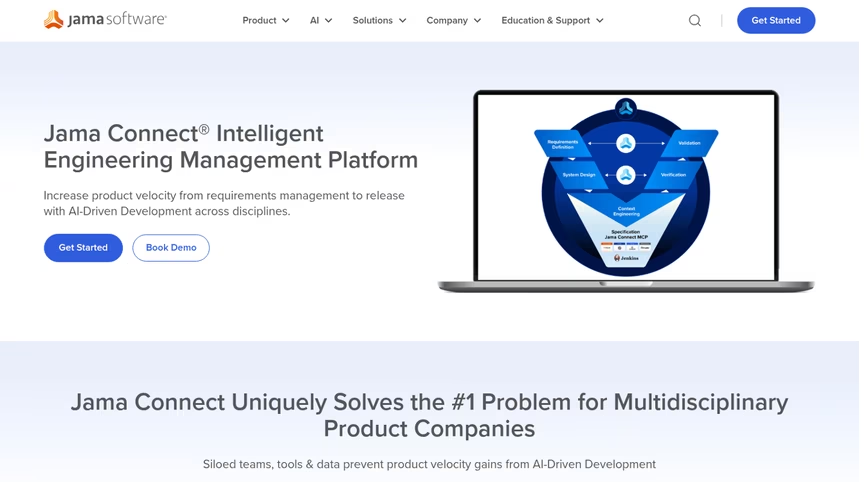
Jama Connect® brings safety requirements and verification into a controlled environment alongside risk management. Traceability helps teams identify related items that may require review when a requirement changes. TÜV SÜD has also certified the platform for safety-related development up to SIL 3 under IEC 61508 and ASIL D under ISO 26262.
The platform supports multidisciplinary development across hardware and software engineering. Reviews and change histories also provide documented records that teams can use throughout safety-related development.
Jama Connect can also help teams prepare for the EU Cyber Resilience Act by linking cybersecurity requirements with development and verification activities. This provides traceability from security requirements through implementation and testing as teams work toward CRA compliance.
Pros:
- TÜV SÜD certification can support tool qualification for functional safety programs
- Traceability highlights related items that may need review after requirements change
- Review workflows and change histories provide documented records for audits
- Supports traceability across hardware and software engineering disciplines
- Review workflows and electronic signatures help maintain documented approval records
- Supports multidisciplinary requirements across hardware and software development
Cons:
- Initial configuration may be needed to align the platform with existing development workflows
- Pricing is not publicly available which means teams need to request a quote
Visure Requirements
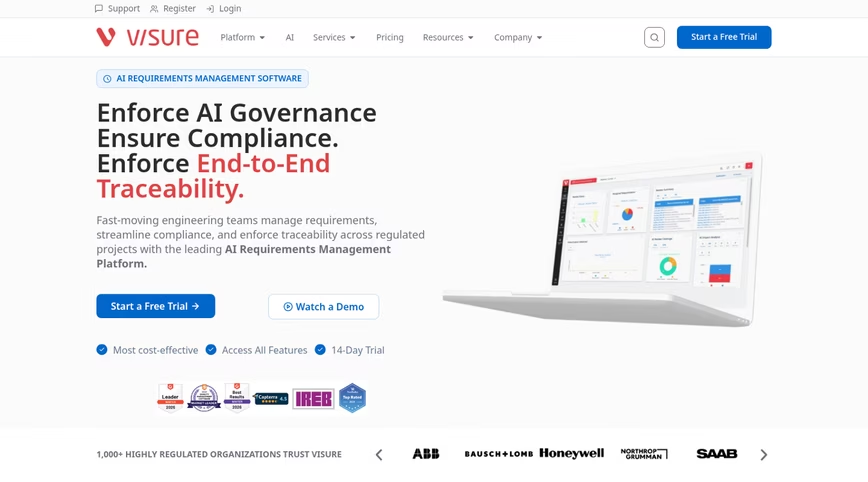
Visure aims straight at safety-critical work, folding FMEA, risk analysis, and test management around a requirements core. It ships templates for functional-safety standards and puts out a steady stream of IEC 61508 material, which makes it a familiar name to safety engineers.
Reviewers value the traceability and the standards focus, though setup effort is a recurring gripe. Configuration takes time, and major updates can depend on vendor help.
Pros:
- One safety-oriented tool spanning requirements, risk, FMEA, and test
- Templates aligned to functional-safety standards
Cons:
- Interface takes real effort to configure, per user reviews
- Smaller integration ecosystem, and updates can lean on vendor support
Siemens Polarion
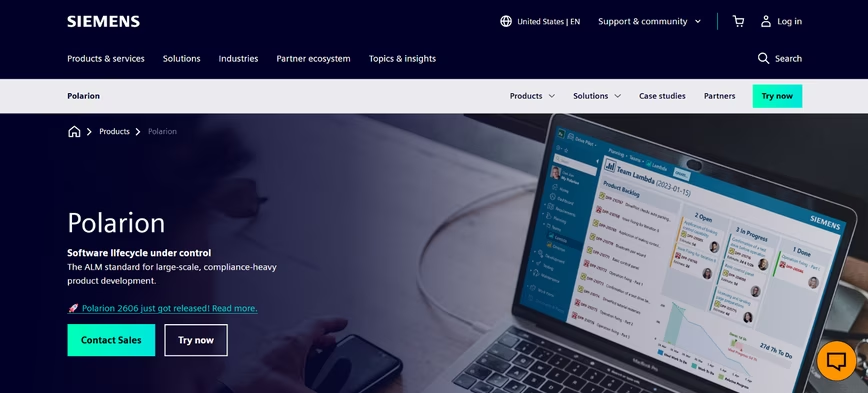
Polarion brings requirements and ALM together for large compliance programs, with a natural fit for teams already inside the Siemens PLM world. Its traceability is strong, and suspect-link tracking helps surface what a change touches.
The trade-offs show up in daily use. Reviewers point to a learning curve, sluggish performance on big projects, and a dated interface, and the tool is happiest inside the Siemens stack.
Pros:
- Requirements, changes, and documents unified with strong traceability
- Tight fit with Teamcenter and the wider Siemens toolchain
Cons:
- Users report slow performance and an aging interface
- Flexibility drops outside the Siemens ecosystem
PTC Codebeamer
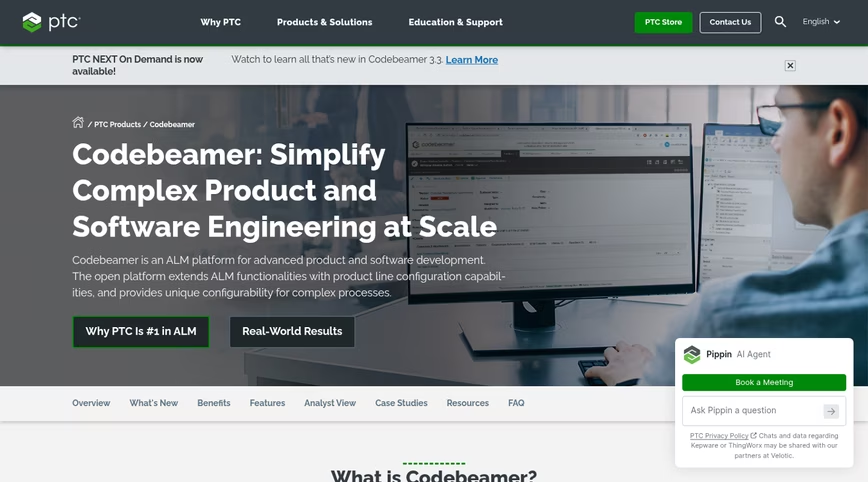
Codebeamer, now part of PTC after the 2022 Intland acquisition, offers requirements, test, and risk in one ALM platform with safety templates and ASPICE support. For software-led safety programs already using PTC Windchill, the pieces connect well.
Its roots are in software ALM, so systems work spanning hardware and firmware is lighter than a dedicated systems tool. It also runs single-tenant in the cloud, and teams that also use Jira report overlap between the two.
Pros:
- End-to-end ALM trace with functional-safety and ASPICE templates
- Slots in beside PTC Windchill for product data
Cons:
- Software-centric origins leave hardware and firmware coverage thinner
- Single-tenant cloud, with reported friction when Jira is also in play
IBM DOORS Next
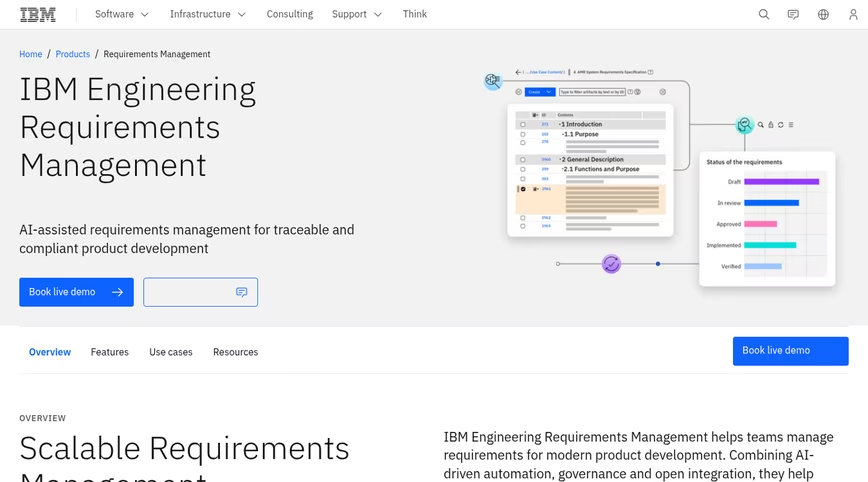
DOORS Next has managed requirements on safety-critical programs in aerospace, defense, and rail for years, and that pedigree still counts. It belongs to IBM’s broader Engineering Lifecycle Management family, adding baselining and suspect-link flags for change control.
The cost of that depth is usability. Reviewers describe a tool that takes serious training to run and a heavy admin burden, and moving from DOORS Classic to DOORS Next takes a dedicated migration project. Licensing draws frequent complaints.
Pros:
- Deep requirements pedigree on large safety programs
- Baselining and suspect-link tracking for change control
Cons:
- Steep to learn and administer, per user reviews
- Migration from DOORS Classic takes a dedicated project, and cost is a common gripe
Modern Requirements
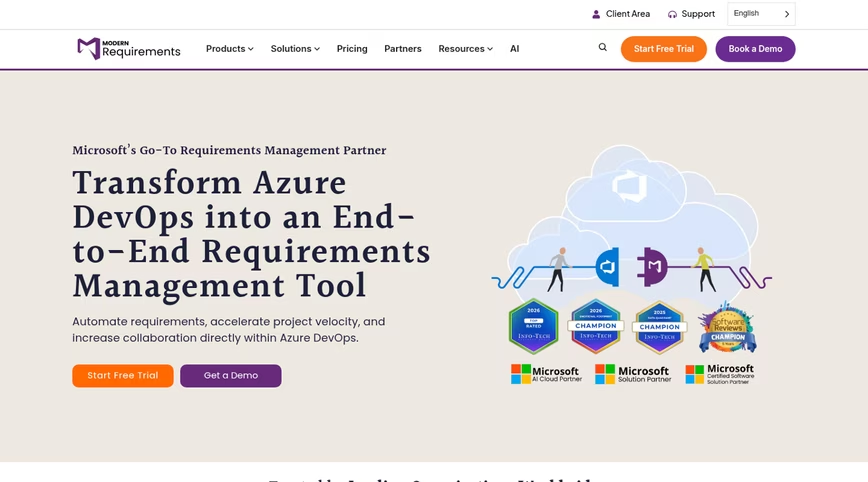
Modern Requirements lives inside Microsoft Azure DevOps, giving a team that already works there a way to author, baseline, and trace safety requirements without a second system. It publishes functional-safety material and leans on AI-assisted authoring.
The catch is the dependency itself. The value hinges on committing to Azure DevOps, and it covers less ground on hardware and cross-discipline systems work than dedicated safety platforms.
Pros:
- Native safety requirements work inside Azure DevOps
- AI authoring and traceability in a familiar Microsoft environment
Cons:
- Value depends on standardizing on Azure DevOps
- Lighter for hardware and cross-discipline systems work
Perforce ALM
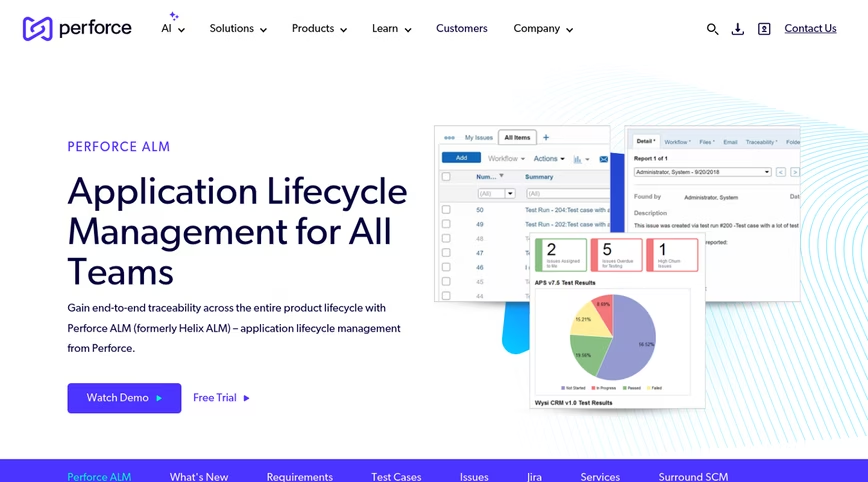
Perforce ALM, formerly Helix ALM, unifies requirements, test cases, and issues, with a trace matrix across the three, and Perforce markets it for safety-critical and regulated development. Teams that want requirements and tests in one tool find the coverage handy.
Reviewers rate the flexibility, yet flag setup and customization effort along with integration snags, and cost comes up as a gripe for what it covers.
Pros:
- Requirements, tests, and issues share one trace matrix
- Flexible workflows and automation
Cons:
- Setup, customization, and integration friction per G2 reviews
- Priced high for the footprint
Modeling-first and lightweight options
Sparx Enterprise Architect

Sparx Enterprise Architect anchors requirements to a SysML or UML model, which suits teams doing model-based systems engineering for safety-critical products. Keeping requirements next to architecture helps trace intent into design.
It’s a modeling tool at heart, so it lacks the governed review, approval, and audit workflow of a dedicated requirements record. Engineers who don’t live in models find the interface demanding.
Pros:
- SysML and UML modeling with requirements attached to the model
- Affordable next to enterprise requirements suites
Cons:
- No governed approval and audit workflow of a requirements system of record
- Steep for engineers outside a modeling practice
ReqView
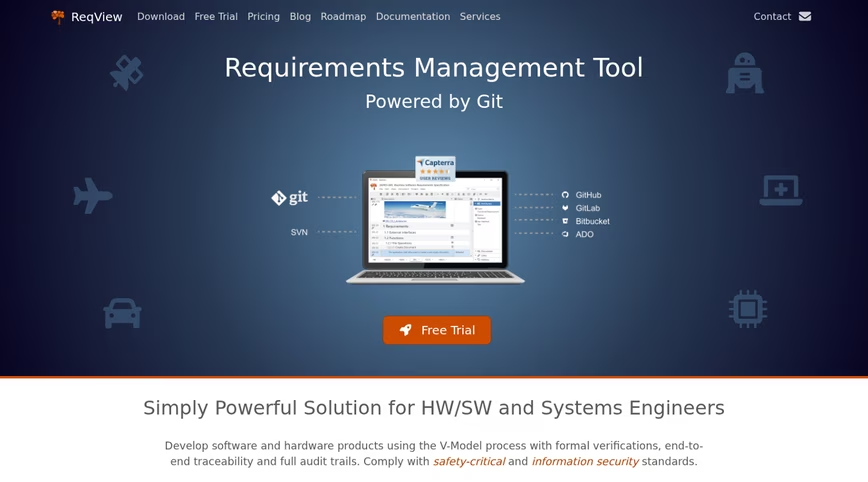
ReqView keeps things light: a clean requirements editor, a traceability matrix, and dependable ReqIF import and export. It fits small safety teams and the suppliers who hand requirements up to a bigger partner.
For a full IEC 61508 program it runs out of room. It links requirements to risks and tests but is not a full risk or test management suite, and its desktop orientation limits it once several teams need to work the same evidence at once.
Pros:
- Easy to adopt, with reliable ReqIF exchange for suppliers
- Clean traceability matrix at a low price
Cons:
- Links to risks and tests but is not a full risk or test management suite
- Desktop-oriented and thin for large, multi-team programs
Which functional safety requirements tool fits your team
The right pick depends on the structure of the program. A team working within Siemens PLM may find Polarion a natural fit while Microsoft-focused software groups can use Modern Requirements inside Azure DevOps. Modeling-led teams can keep requirements close to architecture in Sparx while smaller suppliers may find ReqView covers their core needs.
For programs that span several engineering disciplines, Jama Connect is another option worth considering. It supports traceability across hardware and software development while providing controlled reviews and change records. Its TÜV SÜD certification can also be relevant for teams developing safety-related products under IEC 61508.
Functional safety requirements management: FAQs
What is IEC 61508 and what do SIL levels mean?
IEC 61508 is the base international standard for the functional safety of electrical, electronic, and programmable systems. It defines four Safety Integrity Levels, from SIL 1 at the lowest risk reduction to SIL 4 at the highest, and the target level sets how much rigor your requirements, design, and verification evidence need. Sector standards like IEC 61511 and ISO 26262 adapt the same framework to specific industries.
How is functional safety different from general product safety?
General product safety covers the whole hazard picture, including electrical shock and mechanical injury. Functional safety is the slice that depends on a system performing its safety function on demand, like a controller stopping a robot when a guard opens. IEC 61508 governs that slice, and it’s why safety-critical teams keep requirements traced to hazards and verification rather than filed as loose documents.
Do requirements tools need their own safety certification?
Not always, but it helps. When a certification body assesses the tool you use to manage safety evidence, you can lean on that assessment instead of qualifying the tool yourself, which saves time on a SIL program. Credentials differ in depth: some vendors offer trusted-tool marks or qualification kits, while Jama Connect’s TÜV SÜD certificate states its levels outright, up to SIL 3 and ASIL D. Check the scope of any certificate during selection.
How do ISO 26262 and machinery standards relate to IEC 61508?
They descend from it. ISO 26262 adapts IEC 61508 for road vehicles and uses ASIL ratings, while IEC 62061 adapts it for machinery and EN 50128 covers railway software. ISO 13849 also covers machinery but sits alongside IEC 62061 rather than descending from IEC 61508. Because they share one root, a requirements approach that satisfies IEC 61508 tends to map onto the sector standard with modest adjustment, and tools like Visure ship templates for several at once.
Can I run functional safety on Jira or do I need a dedicated tool?
Jira is primarily designed for work and issue tracking rather than dedicated requirements management. Teams that need formal baselining and requirements traceability often add dedicated requirements tooling. This can also provide more controlled reviews and approvals that support reliable safety evidence.
Get the TNW newsletter
Get the most important tech news in your inbox each week.
Sponsored content. Not produced by the TNW newsroom and does not reflect the editorial stance of TNW. This listing is not an independent editorial ranking.


