 Credit: Scytale
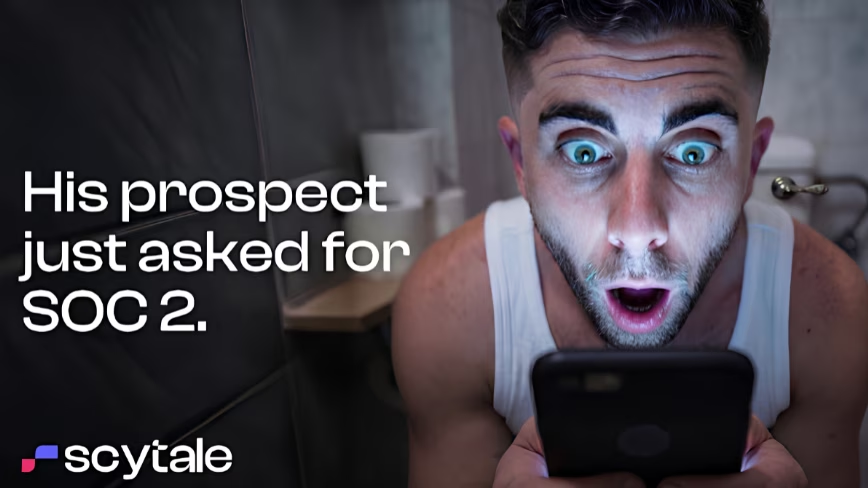
The conversation at this year’s NY Tech Week is about AI. The panels, the pitch decks, the happy hours: agents that code, agents that sell, infrastructure for the agents. Then a screen mounted to a truck shows a man sitting on a toilet, staring at his phone in open panic.
The line underneath: “His prospect just asked for SOC 2.”
The ad belongs to Scytale, an AI GRC platform that took over the streets of New York this week, running billboards, street screens and an LED truck through the same blocks where founders and investors were converging for Tech Week. While many NY Tech Week companies are looking many years out, Scytale built its campaign around a feeling founders know now: the moment a deal that looked closed turns out to depend on a security audit that nobody started.
The question that stalls the deal
SOC 2 (System and Organization Controls 2) is the security compliance framework that tells enterprise buyers one thing clearly: this company can be trusted with your data. For SaaS companies today, it’s less a nice-to-have and more a ticket to the table. For years it lived in the fine print of enterprise procurement cycles, a box ticked late in the process by companies big enough to have a compliance team.
That timeline has collapsed. Security reviews now sit at the front of the buying process, and buyers ask for a SOC 2 attestation report the way they ask for pricing. Surveys across the compliance industry put the share of enterprise buyers requiring SOC 2 from their software vendors at over 80 percent, and roughly a third of vendors report losing deals over a missing report.
The founders this hits hardest for are the ones selling upmarket for the first time. A seed-stage company lands a meeting with an enterprise buyer, the demo goes well, the champion is sold. Then procurement sends a security questionnaire with 200 questions, and question one asks for a current SOC 2 Type II report. The audit takes months. The buyer’s timeline doesn’t.
“We see it constantly,” says Meiran Galis, CEO and founder of Scytale, who spent years as a security compliance manager at EY before starting the company. “A founder spends six months getting a deal to the finish line, and the deal dies in security review. Nothing was wrong with the product. They were three months of audit work away from the signature, and they found out at the worst possible time.”
AI gets the stage. Compliance gets the deal.

The founders filling Tech Week’s AI sessions this week are the campaign’s exact audience, and most of them have a compliance problem coming that nobody on stage is discussing.
AI startups touch more sensitive data than any previous generation of software companies, and they sell into enterprises earlier. A two-year-old AI company today negotiates with Fortune 500 procurement teams that a SaaS startup in 2018 wouldn’t have met until Series C. Those buyers respond to the data exposure by tightening security review, and new frameworks keep arriving behind SOC 2: ISO 42001, the standard for AI governance, is showing up in questionnaires barely a year after auditors began certifying against it.
Caught off guard, by design
The campaign image works because the panic is specific. The man on the toilet isn’t worried about competition or runway. He’s freaking out because his prospect just asked him for SOC 2, and he doesn’t have it. That’s it, he knows at that moment that he might be totally screwed, and could very likely lose the deal. He should have seen this coming. He should have started the process already. Scytale says the creative came from listening to founders describe the moment they learned what SOC 2 was. “No one discovers compliance at a good time. You discover it mid-deal, in an email, with money on the table. We wanted the ad to capture how that feels rather than explain what we sell.”
Scytale’s advice to founders at Tech Week is to treat compliance the way they treat hiring: a thing you start before you need it. “Compliance has moved from a post-deal checkbox to a pre-deal asset. The companies that close enterprise deals fastest are the ones that can answer the security questionnaire the same day it arrives.”
Winter comes for every startup
Compliance used to be an enterprise problem. Now the security questionnaire arrives with a startup’s first serious deal, and the gap between the companies that prepared and the companies that didn’t is measured in lost quarters.
That makes the toilet billboard a decent litmus test. Some founders at Tech Week will see it and laugh. Some will see it and feel their stomach drop, because they have a deal in security review right now. The difference between the two groups is whether they saw the question coming.
Get the TNW newsletter
Get the most important tech news in your inbox each week.
Sponsored content. Not produced by the TNW newsroom and does not reflect the editorial stance of TNW.


