TL;DR
NTSB says the driver, not FSD, caused the fatal Texas Tesla crash by flooring the accelerator to 100 percent on a residential street.
Michael Butler told police he had passed out while using Autopilot, but his phone contained searches for "Tesla FSD not aggressive enough" and the NTSB found he manually overrode the system
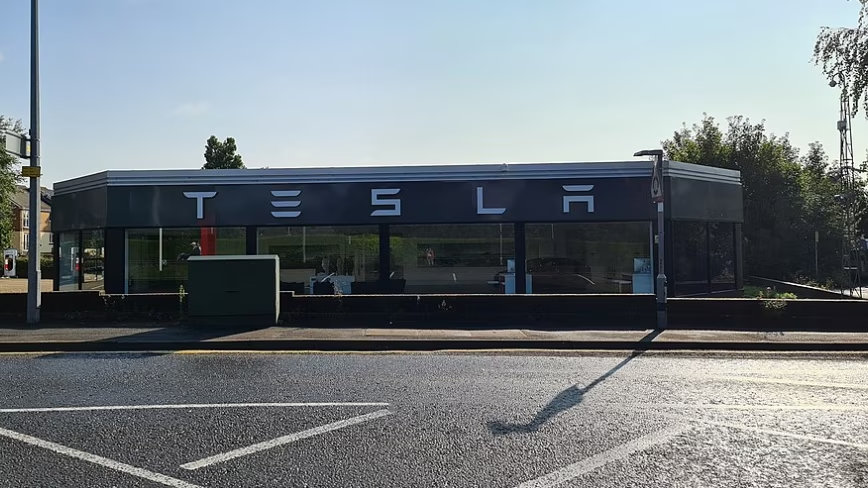
Tesla
 Credit: Steve Barnes
NTSB says the driver, not FSD, caused the fatal Texas Tesla crash by flooring the accelerator to 100 percent on a residential street.
The driver of a Tesla that crashed into a Texas home and killed a 76-year-old woman had manually overrode Full Self-Driving by pressing the accelerator pedal to 100 percent, the National Transportation Safety Board said in a preliminary report released on Wednesday. The 2025 Model 3 was travelling at more than 70 mph on a residential street with a 30 mph speed limit in Katy, west of Houston, when it jumped the curb and tore through a brick wall on June 19. Martha Avila, who was standing in the front room, died from her injuries.
The driver, 44-year-old Michael Butler, told police after the crash that he had passed out while using Tesla’s driver-assistance system. But investigators found Google searches on his phone including “Tesla FSD not aggressive enough” and “Tesla FSD too timid,” raising serious questions about how he was using the system before the collision. Butler has been charged with manslaughter, and Avila’s family has filed a wrongful-death lawsuit against both Butler and Tesla.
The finding clears Tesla’s FSD software in this particular crash but does not resolve the broader scrutiny facing the company’s driver-assistance technology. NHTSA elevated its own investigation of FSD to engineering analysis in March, one step short of ordering a recall, covering more than three million vehicles after documenting crashes where the system failed to detect poor visibility conditions until immediately before impact. The agency has opened 46 special crash investigations into Tesla’s self-driving or driver-assistance technology over the past decade, with fatalities in more than a dozen cases.
The case illustrates a recurring problem with FSD Supervised: the system allows drivers to override it at any time by pressing the accelerator, but Tesla’s marketing has historically blurred the line between driver assistance and full autonomy. Tesla renamed the feature from “Full Self-Driving” to “Full Self-Driving (Supervised)” after regulators complained the original name was misleading. The company faces a certified class-action lawsuit in the US over FSD advertising and statements made between October 2016 and August 2024.
The NTSB finding aligns with what Tesla’s head of AI software, Ashok Elluswamy, posted shortly after the crash, that vehicle data showed the driver manually pressed the accelerator to full throttle. Tesla’s broader FSD safety record remains contested: the company claims one major crash per millions of miles under FSD Supervised, but its Austin robotaxi fleet has reported crashes at roughly four times the human average. NHTSA separately opened an investigation last year into 58 incidents where Teslas reportedly violated traffic laws while using self-driving technology, leading to more than a dozen crashes and nearly two dozen injuries.
The timing is uncomfortable for Tesla as Musk prepares to turn hundreds of thousands of Teslas into fully driverless vehicles and has begun selling two-seated Cybercabs without steering wheels or pedals. Tesla reports second-quarter earnings next week, with analysts expecting a sixth consecutive quarter of flat or falling profits. The stock trades at 170 times expected earnings, more than eight times the S&P 500 average, reflecting investor confidence in the autonomous driving vision rather than the current business.
Get the most important tech news in your inbox each week.


