BYD
 Credit: Alexander-93
For a decade the car industry raced towards one finish line: the electric car. Almost every big carmaker pointed its money and its marketing the same way. That single race is now over. In 2026 it has broken into several at once, and they pull in different directions.
The clean story of steady electric growth has given way to something messier. The question of what powers a car is open again. The centre of the market has moved east. The West is easing off. And the biggest prize has slipped out of the car itself.
The powertrain question reopened
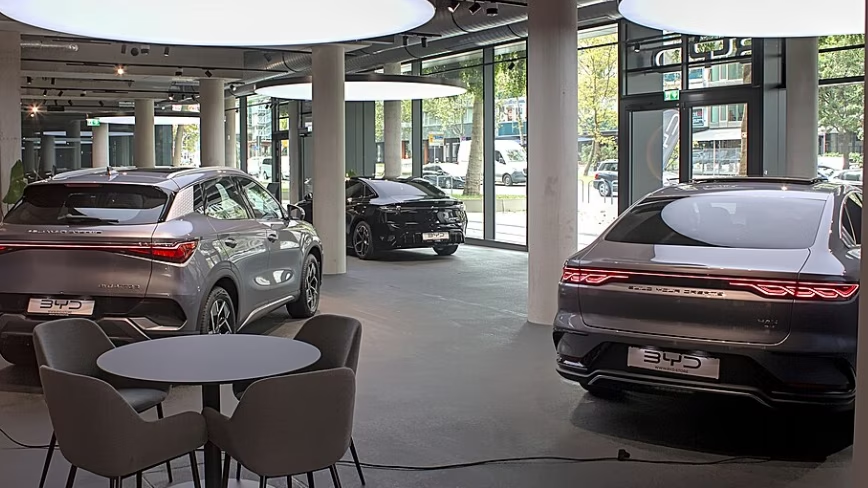
Not long ago the pure battery car looked like the settled answer. It no longer is. In China, BYD has now built and sold more than 17 million “new energy” vehicles, and roughly half of those are hybrids rather than pure EVs.
Extended-range cars, which carry a small petrol engine only to recharge the battery, are surging too. Xiaomi’s new SkyNomad SUV is one, and it is priced to wound: about 23% below Tesla’s comparable Model Y L in China, the South China Morning Post reported. Even Mazda now says its next MX-5 could go electric while keeping a petrol option open.
Demand is changing from below, too. In the US, used-EV prices are rising for the first time, pushed by higher petrol prices rather than subsidies, which have largely gone. Cheap metal is arriving to meet it. The bare-bones Slate Truck starts at $24,950, and buyers are turning to golf carts and e-bikes for short trips.
The centre of gravity moved to China
China now sets the pace. FAW’s Hongqi brand says its latest battery can charge from nearly empty to 97% in about eight minutes, beating BYD, in a race that also pulls in CATL and Geely. The contest is as much about price as speed.
BYD is fighting a domestic price war so fierce it is denting its own sales, and it is exporting that pressure. Chinese brands have taken a large share of Europe’s plug-in hybrid market, which has pushed Volkswagen to demand tariff protection.
The lead carries a cost. Sales of battery cars in China jumped from about 1 million in 2018 to more than 16 million in 2025, WIRED reported, and that first wave is now ageing. The country logged 400,000 tonnes of battery waste last year and has brought in a recycling rule to cope. Leading the market means meeting its problems first.
The West eases off
America’s giants have gone quiet. An analysis of seven years of earnings calls found GM and Ford now mention EVs far less than before the pandemic, TechCrunch reported. GM’s references fell from 82 on one 2025 call to just 21 a year later. Both have delayed or dropped models since Washington scrapped the $7,500 credit.
Audi, which once bet its future on electric, is now selling America a V8 flagship. Even Tesla looks strained at home. Its US sales fell 13% last quarter, and this week regulators opened a probe into about 1.2 million Model 3 and Model Y cars over a suspension part that can detach, The Verge reported.
The real prize left the car
The clearest sign of the shift is where the money now points. Tesla built its 10-millionth car this week, yet the goals that unlock Elon Musk’s pay package are not about metal. They are about robotaxis and self-driving subscriptions. Tesla already reports close to 1.5 million paying FSD users.
Rivian shows the same tilt in miniature. Last quarter it lost money building cars but turned a $215m profit on software and services, CNBC reported. The car is becoming the thing you sell once. The software is the thing you sell forever.
Uber has bet hardest of all. It has tied up with a sprawl of self-driving firms and set aside about $10bn for robotaxi fleets and AV investments, CNBC reported. Its old partner Waymo is now heading for the exit, and the two are racing each other instead.
That race is already hitting friction. In Washington, Uber has sided with unions against a bill that would speed robotaxis onto the streets, warning that one autonomous car can do the work of four drivers. The next fight over the car is about who drives it, and who gets paid.
One market, several futures
Put together, the pieces no longer point one way. The powertrain is unsettled, China leads on price and speed, the West is hedging, and the real margin is drifting from the vehicle to the software and the network above it. The electric car was supposed to be the destination. It turned out to be the on-ramp.
Get the TNW newsletter
Get the most important tech news in your inbox each week.


