TL;DR
Samsung Display is shipping tandem OLED laptop panels reaching 1,600 nits peak brightness, 40% above single-stack OLED, with twice the lifespan. Lenovo’s Yoga Pro 9i is first.
The tandem architecture stacks two emissive layers. VESA's new True Black 1400 tier raises the brightness bar by 40%. Lenovo, ASUS, Dell and MSI are onboard.
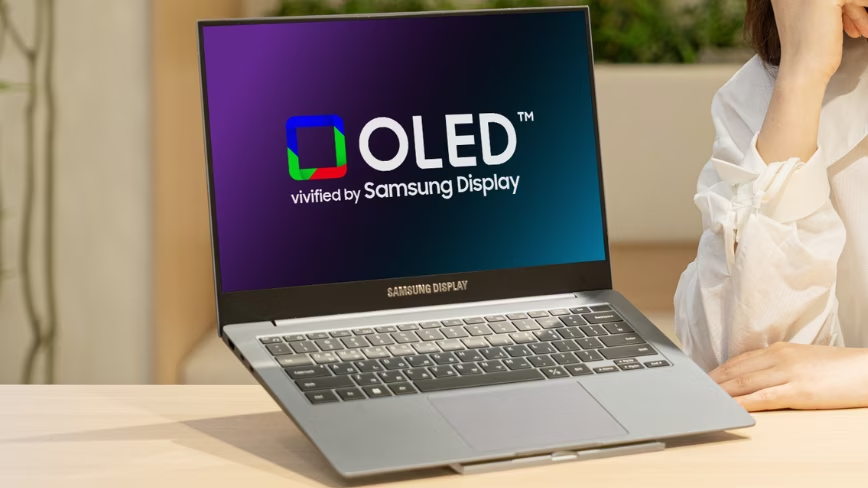
Samsung
 Credit: Samsung
Samsung Display is shipping tandem OLED laptop panels reaching 1,600 nits peak brightness, 40% above single-stack OLED, with twice the lifespan. Lenovo’s Yoga Pro 9i is first.
Samsung Display has begun shipping tandem OLED panels for laptops that reach 1,600 nits peak brightness, more than 40% above the 1,100-nit ceiling of conventional single-layer OLED. The panels meet VESA’s new DisplayHDR True Black 1400 certification, announced this month, which requires 1,400 nits at 10% on-pixel ratio while maintaining black levels of 0.0005 nits or lower. It is the brightest commercially available OLED panel for laptops.
The architecture is what makes the jump possible. Tandem OLED stacks two organic emissive layers instead of one. Because both layers emit light together, the panel can produce higher brightness at the same current, or run each layer at lower stress for the same brightness. The result is both: more light and a longer life. Samsung says the tandem panel lasts more than twice as long as a single-stack OLED under typical laptop operating brightness. New organic materials developed for this generation further improve efficiency and stability.
Lenovo’s Yoga Pro 9i Aura Edition earned True Black 1400 certification on July 8, making it the first laptop to carry the new standard. ASUS, Dell, and MSI are expected to follow with certified products from the second half of this year through 2027. The AI-driven memory shortage has pushed component costs higher across consumer electronics, and premium laptop panels are one of the few product categories where Samsung Display can charge more for a measurably better spec rather than competing on price alone.
Samsung will showcase the panel at K-Display 2026 in Seoul from July 22 to 24, with video editing and creator content designed to demonstrate the brightness difference in practical use. Samsung Electronics crossed $1 trillion in market cap earlier this year, driven primarily by AI memory demand. The display division’s tandem OLED push is a quieter bet: that laptop buyers will pay a premium for screens that are brighter, last longer, and do not compromise the true blacks that made OLED the standard for high-end displays in the first place.
Get the most important tech news in your inbox each week.


