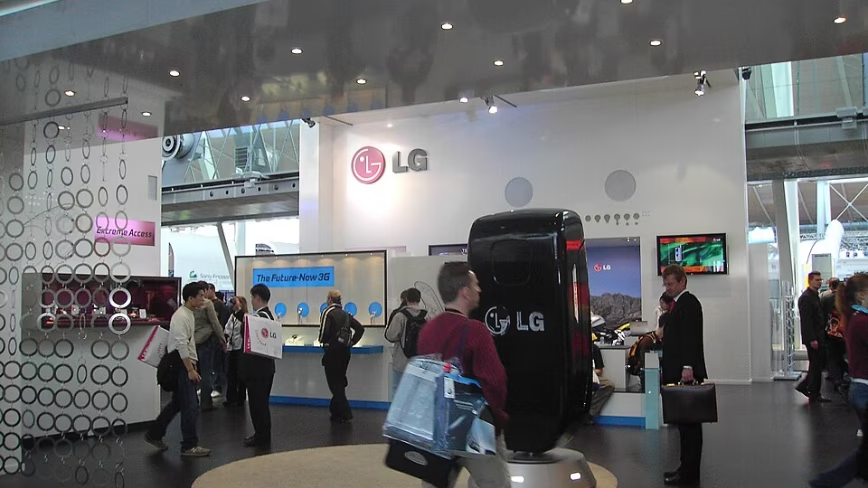
LG electronics
 Credit: Strubbl
LG Energy Solution began production on Tuesday at its $2bn Lansing plant, which was originally a GM joint venture before GM sold its stake in December 2024. It will make cells for Toyota’s 2027 Highlander EV and, from next year, for Tesla’s Megapack 3.
The battery plant General Motors walked away from opened on Tuesday. LG Energy Solution has started production in Lansing, Michigan, at a site GM helped design, part-funded with state money, then sold.
It was meant to be half GM’s. The plan was a $2.6bn Ultium Cells joint venture, and GM accepted roughly $600mn in Michigan state incentives for the project in 2022.
GM sold its stake in December 2024 and dropped its plans to build electric cars in Lansing. The state funding transferred to LG along with the building, while GM has since put $900mn into its own chemistry elsewhere.
What opened this week is a different business. More than $2bn has gone into the 226-acre site since 2022, around 900 people work there now, and output should pass 35 GWh a year at full scale with up to 1,700 staff.
Toyota is the car customer. Lansing will supply nickel manganese cobalt cells for the 2027 Highlander EV, which Toyota assembles in Georgetown, Kentucky.
The rest of the building has nothing to do with cars. LG is making lithium iron phosphate cells there for grid storage, with utilities including DTE Energy and Consumers Energy among the buyers.
Tesla is the biggest of them. LG has a $4.3bn agreement to supply LFP prismatic cells for the Megapack 3, built in Houston, with dedicated lines at Lansing due to start in 2027.
That split is now the standard survival route. Honda took it too, and is making batteries for data centres at a plant built for electric cars it cancelled.
LG’s own targets show the scale of the shift. It expects more than 50 GWh of LFP capacity across five North American sites by the end of this year, with 80% of its global storage capacity on the continent.
Michigan keeps paying for cell plants either way, and not always successfully. A township killed a $2.4bn Gotion project the state had backed, and the company is now suing over it.
The subsidy tells the story better than the ribbon cutting. Michigan money was awarded to help GM build electric cars in Lansing, and it has ended up producing cells for a Toyota SUV assembled in Kentucky and a Tesla product built in Texas.
Get the TNW newsletter
Get the most important tech news in your inbox each week.
Also tagged with


