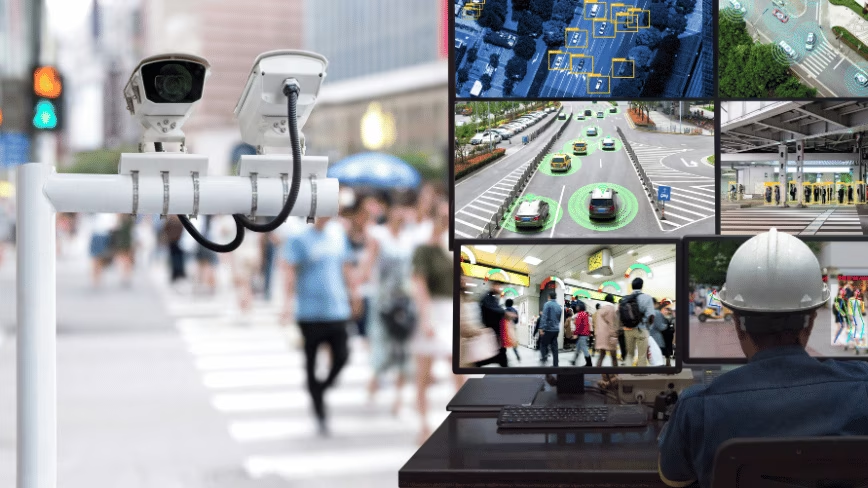
 Credit: Canva / JIRAROJ PRADITCHAROENKUL
Walk into a shop with the wrong face on file, and the police could know within four seconds. That is the pitch, and the problem.
A facial recognition system in more than 100 UK shops is about to start calling the police in real time. It will fire the moment it spots a flagged shopper. Facewatch, whose cameras already watch aisles in Sainsbury’s, B&M and Spar, calls it a UK first. Civil liberties groups call it a dangerous escalation.
The Guardian revealed the feature. Facewatch says it will “alert police instantly when the most serious offenders trigger a live facial recognition match”. The tool launches in autumn.
Chief executive Nick Fisher called it a “unique technical development”. He says it warns police in an average of four seconds when the “worst offenders” hit a match on the network.
From watching to summoning
Facewatch already does one job. It scans faces at the door and tells staff when someone on its watchlist walks in. It leans on the same facial recognition that keeps surfacing in consumer tech, then points it at shoppers. The new feature changes what happens next. Instead of alerting a shop worker, the system can call the police itself.
That shift worries lawyers. “It’s not against the law to walk into a shop even if you’ve committed crimes in the past,” said Charlie Whelton, a policy officer at Liberty. Calling the police on someone who might offend, he said, “is really upending the way we do things”.
The systems also make mistakes, he added, “and it’s very hard to argue with that when it happens to you”.
The case for it
Retailers say they are drowning. Facewatch claims its system flagged a “known repeat offender” entering a store almost 300,000 times in the first half of 2026. It says that lets staff step in “before theft, abuse or violence could occur or escalate”.
Official figures show more than 509,000 shoplifting offences in England and Wales in the year to December 2025. The British Retail Consortium warns that theft and violence are “spiralling out of control”.
Sainsbury’s is racing ahead regardless, from 55 stores to more than 200 by the end of the year. The cameras are spreading here as they have across the US, and faster than the rules that might govern them.
A blacklist no one can see
Critics say the deeper danger is accountability. People end up matched against “a secret blacklist compiled by unaccountable businesses and private security guards”, Big Brother Watch said. The group accused police of “inserting themselves into this cowboy operation”.
The errors are not abstract. Shoppers wrongly flagged as thieves have had to leave stores, calling it “Orwellian” and guilty until proven innocent. Evidence suggests the system misidentifies black and Asian people more often than white shoppers.
“People’s faces being scanned without consent and being added to lists is worrying enough,” said Sarah Lasoye of the Open Rights Group. The speed of a police encounter “in the middle of their daily shop”, she said, is “a really dangerous escalation”.
The regulation gap
Britain is rolling out live facial recognition faster than it is writing rules for it. The Met plans to widen its own use across central London by Christmas. Biometrics watchdogs warn that oversight lags far behind the technology. It echoes the government’s rush to police online life, where the tools arrive first and the guardrails follow.
The gap that alarms experts is a specific one. The government’s planned law for facial recognition would cover the police, not private firms like Facewatch.
“If we agree this technology poses significant risks in police use, but we continue to let it be used unchecked in the private sector, there’s a discrepancy,” said Nuala Polo of the Ada Lovelace Institute.
The risk, she said, is “backdoors” that pair private surveillance with the police while dodging the same standards. Courts elsewhere have begun to rein in how police track people. UK shops are heading the other way.
Why it matters
Facewatch frames its tool as a faster way to stop crime. Some even argue that constant surveillance makes people behave better. Its critics see something narrower and sharper. A private company decides who counts as a threat, and a four-second line runs straight to the police.
Britain has spent the past year fighting over facial recognition on its streets. This drags the fight into the weekly shop, where the camera no longer just watches you. It can call for you.
Get the TNW newsletter
Get the most important tech news in your inbox each week.


