TL;DR
Google and Antigravity built an offline AI translator prototype on a Raspberry Pi 5 running Gemma 4 E2B. No internet needed. Open source on GitHub. Not a product announcement.
The Gemma Translator prototype runs Gemma 4 E2B on a Raspberry Pi 5 with a microphone and speaker in a 3D-printed case. No cloud connection required. The project is open source.
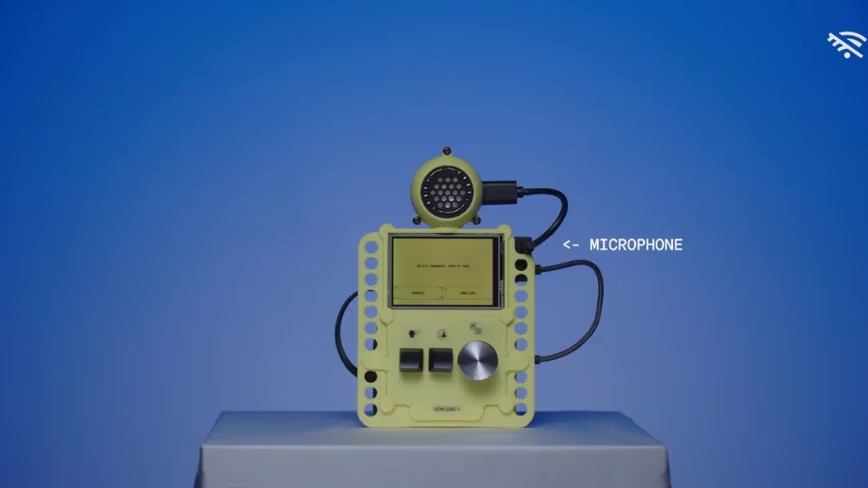
AI-translator
 Credit: Google Antigravity
Google and Antigravity built an offline AI translator prototype on a Raspberry Pi 5 running Gemma 4 E2B. No internet needed. Open source on GitHub. Not a product announcement.
Google and its Antigravity team have built a prototype AI translator that runs entirely offline on a Raspberry Pi 5. The Gemma Translator uses Gemma 4 E2B, the smallest model in Google’s open-weight family, to process speech locally without any cloud connection. The device includes a microphone and speaker inside a custom 3D-printed enclosure, creating a self-contained translation device that works anywhere regardless of connectivity. The project is open source on GitHub.
Google launched Gemma 4 in April with four model sizes, and the E2B edge variant was specifically designed to run on hardware as small as a Raspberry Pi or Jetson Nano. The Translator prototype is the most tangible demonstration of what that means in practice. Most AI translation tools, including Google Translate, require a cloud connection to process speech. Running everything on-device eliminates that dependency, which matters for travellers in areas with poor connectivity, organisations handling sensitive conversations, and emergency responders operating without infrastructure.
This is a technology showcase, not a product announcement. Google has not said it plans to sell the device or integrate it into an existing product. But it points toward a future where AI assistants do not always need data centres to be useful. Antigravity launched as Google’s agentic development platform at I/O, and the Translator is one of the first projects built with it that targets non-developers: a physical device that does one thing well, without an internet connection, on hardware that costs under $100.
As open models continue to shrink while becoming more capable, devices like this could eventually appear in travel gadgets, accessibility tools, classrooms, or disaster response kits. The Raspberry Pi 5 costs about $80. The Gemma 4 E2B model is free under Apache 2.0. The 3D-printed case and the code are open source. The components for a working offline translator are now available to anyone who wants to build one.
Get the most important tech news in your inbox each week.


