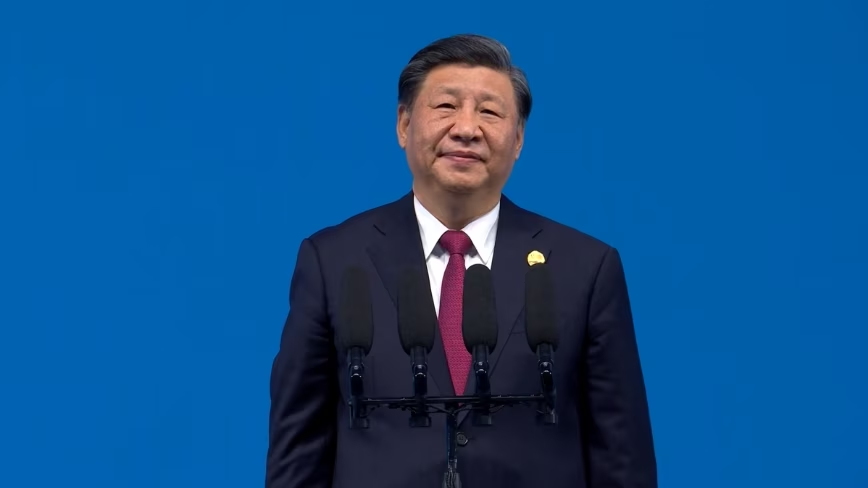
Xi Jinping at the opening ceremony of the Chengdu Universiade in July 2023.
 Credit: FISU / CC BY 3.0 via Wikimedia Commons
Xi Jinping used the BRICS summit to propose a China-led community for open-source AI and to invite members into the World AI Cooperation Organization, a Beijing-founded body of 29 countries with no EU state among them. Europe drew its line in the AI Act, which exempts genuinely open models but not those carrying systemic risk, and has carried fines since August.
Xi Jinping used the BRICS summit to propose a Chinese-led community for open-source artificial intelligence, Bloomberg reported. He said it would “support the cooperation in developing and applying large language models“, alongside seminars and training courses.
He was speaking in New Delhi on Sunday. A day earlier he had invited BRICS members to join the World AI Cooperation Organization, a body Beijing founded in July.
Twenty-nine countries signed the founding agreement on 16 July and the organisation is headquartered in Shanghai, China’s government said. Russia, Pakistan, Kazakhstan, Indonesia and Brazil are among them.
No European Union member state is.
The pitch did not carry the room either. The joint declaration issued on Saturday made no mention of it, asking instead for international cooperation on access to AI resources “while ensuring its safety, security, inclusiveness and reliability“.
Europe settled the same question in a statute.
The AI Act exempts providers of genuinely free and open-source general purpose models from keeping technical documentation for regulators, from supplying it downstream and from appointing an EU representative, the Commission’s guidelines say. The weights, parameters and architecture have to be public, and the licence has to permit use and modification without monetisation.
The exemption stops at systemic risk. A model in that tier complies with everything, open licence or not, and every provider still has to publish a training data summary and a copyright policy.
Those rules acquired teeth on 2 August, when the Commission gained the power to demand evaluations, restrict market access and fine 3% of global turnover.
So both blocs have a ceiling on openness. Europe’s is written down and reviewable in court.
China’s is not. Xi told the country’s own AI summit in July that development and security have to be balanced, and a social media account used to signal policy thinking has said the most powerful model features should be restricted.
State security minister Chen Yixin, in a journal article published on Saturday, accused unnamed countries of using blacklists and closed ecosystems to “sever global AI industrial chains and supply chains“.
His own ministry of commerce spent a month this summer discussing whether to curb overseas access to Qwen, Doubao and GLM. Europe published its limit and can be sued over it, while Beijing is still deciding what its own is.
Get the TNW newsletter
Get the most important tech news in your inbox each week.


