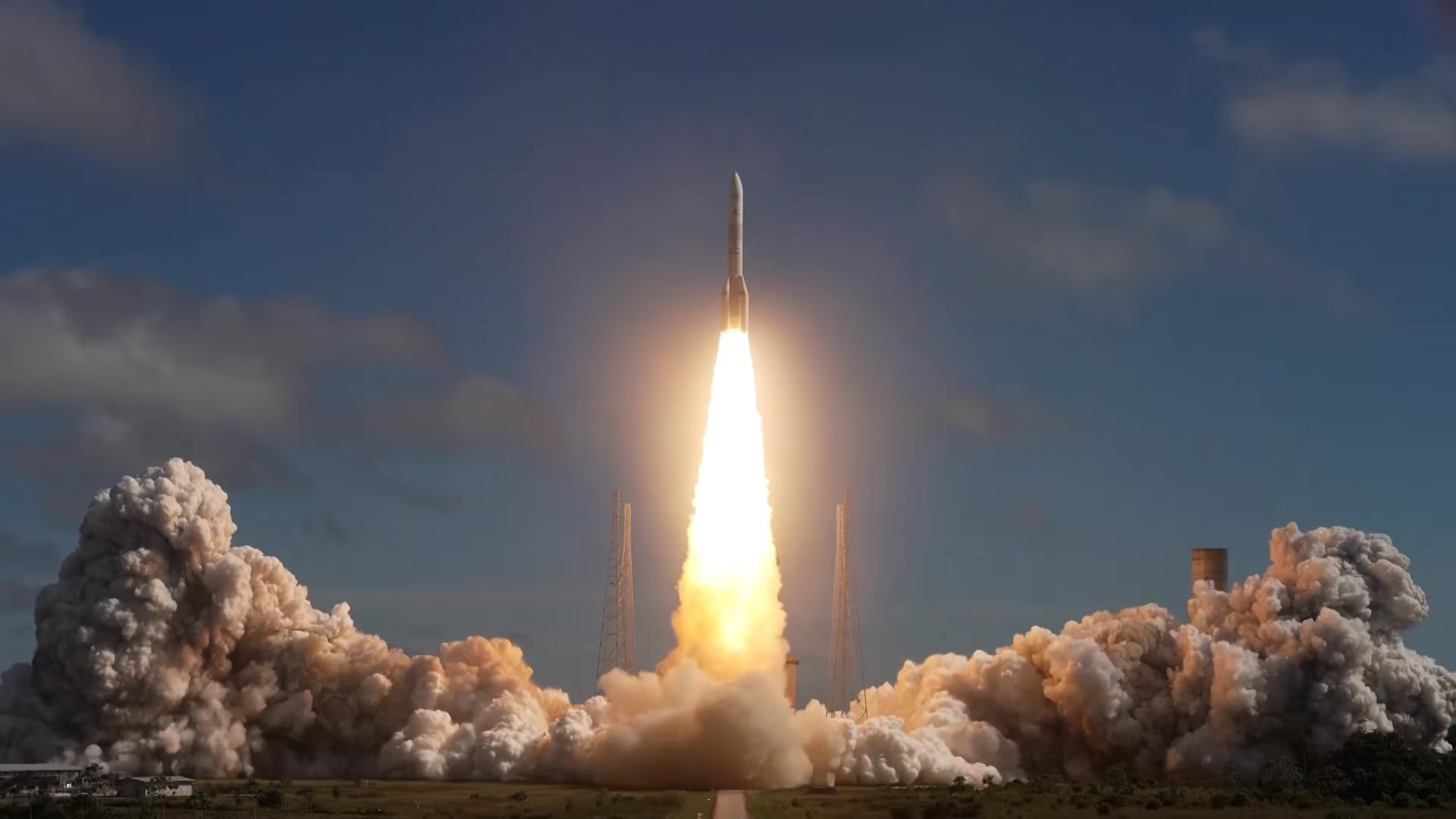
 Credit: Amazon
United Launch Alliance is investigating why its Vulcan rocket failed on Sunday. The loss took 40 Amazon Leo internet satellites with it. It was the first mission ULA has lost since Boeing and Lockheed Martin formed the company in 2006.
Vulcan lifted off from Cape Canaveral Space Force Station in Florida at 12:40pm ET (17:40 UTC). About 10 minutes later, ULA said, the rocket suffered an anomaly and failed to deliver the satellites to orbit. The company said in a post on X that it did not yet have specific data on what went wrong.
Based on data received by our Launch Director, we confirm that the Vulcan vehicle launched from Space Launch Complex 41 suffered an anomaly 10 minutes into the flight and failed to deliver the Amazon mission to orbit.
Every flight generates data, and every flight teaches us something. Since the anomaly just occurred, we don’t have any specific data yet to understand what occurred today.
ULA exists to provide assured access to space for our nation and for the customers who depend on us. That purpose is why we take on some of the hardest missions in spaceflight, and why we hold ourselves to the standard of mission success. Today, we did not meet that standard.
We will work closely with our customer and other appropriate organizations to find the cause, determine the appropriate corrective action, and return to flight as quickly as possible.
ULA is committed to full transparency with our customers, and they will have visibility into the investigation process, which utilizes rigorous methodology and corrective action.
We will provide further updates when new information becomes available.
ULA (@ulalaunch) November 15, 2026
ULA added that engineers will find the cause and the fix, then return to flight quickly. Blue Origin makes Vulcan’s BE-4 main engines. It is working with ULA on the investigation, a person familiar with the matter told Reuters.
Where it went wrong
Early accounts differ on which part of the rocket failed. Several sources told Stephen Clark of Ars Technica that the problem lay in the booster stage. They said it was not in the Centaur V upper stage or the six solid boosters. According to Ars, the two BE-4 engines kept firing at least 30 seconds past their planned shutdown. The rocket’s telemetry animation then showed it starting to spin.
Reuters reported it was unclear whether the BE-4 engines played a role. The failure appeared to come after the upper stage, which carried the satellites, separated from the booster.
The question matters beyond Vulcan. Blue Origin’s own New Glenn rocket uses a similar engine. A faulty BE-4 valve caused its launch pad explosion in May. Blue Origin has already delayed New Glenn’s return to January.
What Amazon loses
Sunday’s flight, LV-01, was the first of 38 Vulcan launches Amazon bought for Leo. Leo is its rival to SpaceX’s Starlink. Amazon had about 400 Leo satellites in orbit before Sunday. Its first-generation network needs more than 3,200. It said last month it had built its 1,000th satellite, so hundreds are waiting for rockets.
“There is risk with any launch, and that’s especially true for inaugural missions like LV-01,” Amazon said.
Amazon called ULA a trusted partner and said it expects ULA to learn from the mission. Its next launch is an Ariane 6 flight with 36 satellites. It is set for 23 November at the earliest, according to GeekWire. Amazon also has 10 more missions booked on SpaceX’s Falcon 9, Ars reported.
Amazon already missed a July deadline to have half its network in service, and the FCC gave it more time while stripping some spectrum priority. It still has until July 2029 to deploy the full first generation.
The Pentagon and NASA
The failure also reaches the US military. The Pentagon had not yet cleared Vulcan to resume national security launches, pending Sunday’s result, according to Reuters. Ars put Vulcan’s share of those missions at about half over the next few years. The rest go mostly to SpaceX, which has squeezed launch rivals and has stopped taking new Falcon 9 bookings.
NASA, which picked a version of ULA’s Centaur upper stage for future flights of its Space Launch System, offered to help.
“Artemis, Moon Base, and the nation need ULA. We are in your corner and here to help,” NASA’s administrator wrote on X.
Get the TNW newsletter
Get the most important tech news in your inbox each week.


