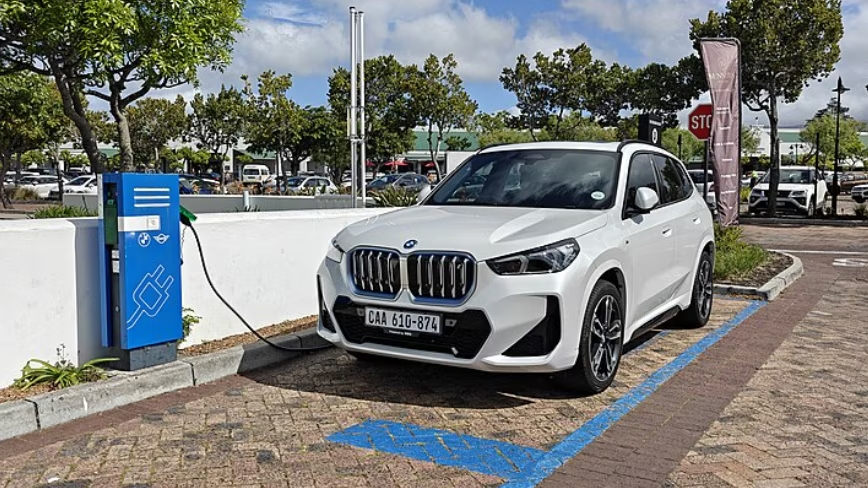
BMW iX1 EV in Constantia, Cape Town
 Credit: Husskeyy
American buyers are leaving electric cars for hybrids and petrol after the $7,500 federal credit ended, with 42.6% of second-quarter EV trade-ins going to a combustion car. Hybrids are already the biggest-selling powertrain in the EU at 37.3%, and the Commission has proposed keeping them legal after 2035.
Americans who bought an electric car are increasingly trading it for something with a petrol engine, InsideEVs reported on Saturday. The site called the United States an outlier for it.
Of people who traded in an EV in the second quarter, 42.6% left with a combustion car and 15.6% with a hybrid, against 34.6% who bought another EV, Edmunds found. The figures exclude Tesla, Rivian and Lucid stores, which skews them away from electric.
Cox Automotive found 22% of buyers considered a new hybrid this year, against 10% for an EV. The range on offer is narrowing too, with several models tariffed out of existence.
The cause is price. Washington’s $7,500 credit ended last September, and the average EV lease reached $707 last month, about $100 above a petrol equivalent. “$30,000 is the sweet spot for a new car in the U.S.,” said Corey Cantor of ZETA.
Europe is the contrast the piece reaches for. Registrations there did jump 51% in July, taking battery-electric cars to 25% of the market, with France at 35% and Germany at 29.3%.
The comparison still does not hold, because Europe’s best-selling powertrain is not electric either.
Hybrids took 37.3% of EU registrations in the first half of this year. Battery-electric cars took 20.7% and petrol 22.2%, ACEA said, with petrol registrations down 17.2% year on year.
Europe simply put a date on its hybrids, and Brussels has now moved it.
The Commission proposed on 16 December cutting the 2035 target from a 100% emissions reduction to 90%, Euronews reported. Parliament and Council have been negotiating it since January.
That would keep plug-in hybrids, range extenders and mild hybrids sellable after 2035. The remaining tenth can be offset with EU-made low-carbon steel or renewable fuels.
Transport and Environment calculates battery-electric sales would reach 85% by 2035 instead of 100%, and 47% in 2030 instead of 57%. Three-year averaging on the 2030 target does most of that.
Its May study put the industrial cost at battery capacity worth 34 Northvolt-sized plants and up to 47,000 jobs. “China will move even further ahead,” said T&E’s Julia Poliscanova.
American buyers went to hybrids because electric cars got expensive, and that can reverse when prices fall. Europe is writing its hybrids into law until 2035, while still building out charging for the cars it is deferring.
Get the TNW newsletter
Get the most important tech news in your inbox each week.


