
Modern derivatives and digital asset markets operate under a persistent drag of operational friction. A recent Nasdaq survey reveals that 70% of global firms experience settlement failures on a daily basis. This structural inefficiency forces institutions to maintain excess overnight collateral buffers, tying up capital that could otherwise generate returns.
Sponsored content, not produced by the TNW newsroom. Its claims have not been independently verified. It is not investment advice or an offer to buy or sell securities, and nothing in it is an offer of crypto-asset services to readers in the EU or the UK. Crypto-assets are volatile and carry risk.
The inability to mobilize assets instantly across disparate systems acts as a constant drain on institutional performance. As market participants look to optimize their balance sheets, tokenized collateral is emerging as a practical mechanism to mitigate these execution frictions. By representing traditional assets on distributed ledgers, firms can reduce counterparty exposure and improve the velocity of their capital across trading venues.
The Counterparty Risk Dilemma in Digital Assets
Traditional cryptocurrency market structures present a fundamental challenge for institutional allocators. Historically, platforms required participants to pre-fund their accounts before executing trades. This model leaves capital sitting idle on trading venues and exposes participants to centralized counterparty risk. TradFi market infrastructure deliberately separates custody and execution as well as clearing to distribute risk. Bringing digital asset markets into alignment with these legacy standards has become a core priority.
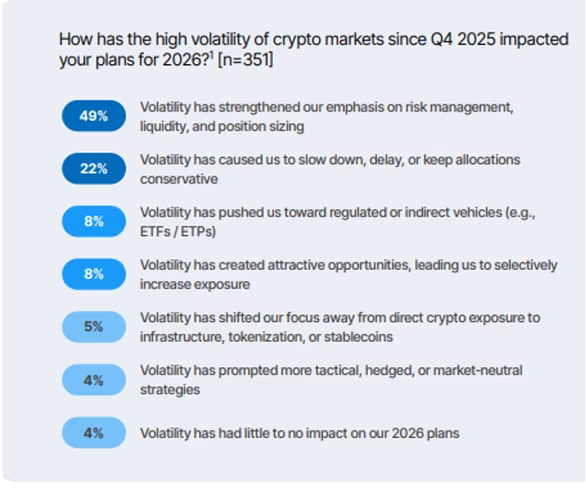
A recent EY-Parthenon institutional investor survey indicates that 49% of respondents have strengthened their emphasis on risk management and liquidity as well as position sizing following recent market volatility. Institutions require frameworks that minimize exposure while maintaining access to deep liquidity.
Tokenized Money Market Funds as the Yield-Bearing Bridge
Exchanges are adapting their infrastructure to bridge this gap. Some now let traditional institutions trade in a set-up they are more used to, decoupling asset storage from trade execution.
The mechanics center on off-exchange collateral. Institutions can pledge yield-bearing assets, such as tokenized money market fund shares, through a third-party custodian to access trading margin. The custodian keeps the assets and mirrors their value for trading on the exchange, so the actual assets never move onto the order book. Institutions can allocate capital without compromising their baseline compliance mandates.
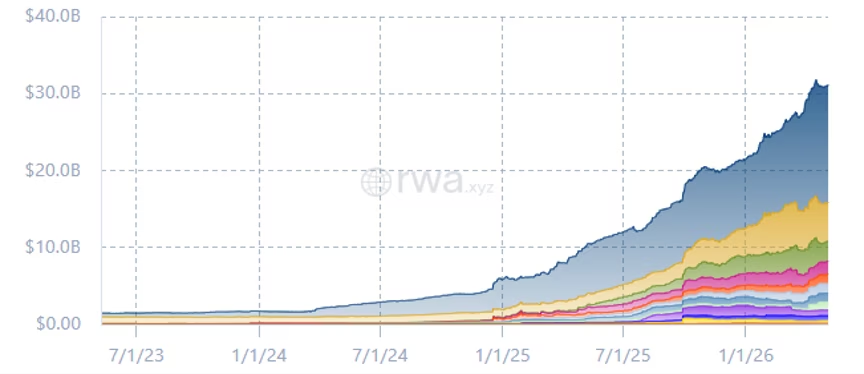
Deploying real-world assets in this manner is gaining measurable traction. Recent data from RWA.xyz shows that total distributed value in this sector has reached $31.12 billion, representing a 45% increase year-to-date.
Moving these assets on-chain addresses specific execution bottlenecks. The same Nasdaq research assessing market friction notes that tokenizing collateral can prevent 1 in 8 failed trades and reduce overall operational costs by 12%.
Using tokenized money market funds as trading collateral creates a system that reflects institutional risk frameworks rather than asking traditional firms to adopt native cryptocurrency settlement patterns.
24/7 Capital Efficiency Meets TradFi Safeguards
The financial benefits of this architecture directly target capital efficiency. Traditional fiat or standard stablecoins deposited on an exchange do not generate yield. They act as a dead weight on a firm’s balance sheet during periods of low trading activity. Tokenized money market funds alter this dynamic. They allow deployed capital to remain fully productive and yield-bearing while simultaneously acting as margin in a continuous 24/7 digital asset market.
This dual utility aligns with a broader shift in how corporate treasuries approach digital assets. According to PwC’s Global Crypto Regulation Report 2026, institutional involvement has now crossed the “point of reversibility.” The consulting firm observes that digital assets are becoming deeply embedded in treasury operations and corporate balance-sheet management, moving far beyond simple speculative trading.
As institutional capital moves deeper into digital asset infrastructure, treasury teams are also demanding higher standards around collateral transparency and reserve verification. Publicly verifiable reserve reporting is becoming increasingly important for firms evaluating whether digital asset infrastructure can support treasury-scale liquidity management while maintaining institutional risk controls.
Firms are utilizing blockchain rails to move and manage money behind the scenes, integrating these systems directly into their core financial workflows. Off-exchange collateral structures support this integration by maintaining traditional financial safeguards without sacrificing the continuous liquidity of cryptocurrency markets.
An Enhanced Infrastructure for Modern Markets
Utilizing off-exchange collateral and tokenized real-world assets successfully aligns digital asset execution with traditional financial risk standards. By holding tokenized shares in regulated custody and mirroring their value for trading, market participants achieve a necessary separation of duties.
It’s an operational upgrade that addresses the capital inefficiencies that have historically penalized firms for maintaining strong risk controls. The digital asset ecosystem continues to mature, and future market resilience will increasingly depend on platforms that can support continuous margin optimization and secure custody architectures.
Get the TNW newsletter
Get the most important tech news in your inbox each week.
Paid content. This article was not written by the TNW newsroom or editorial staff.


