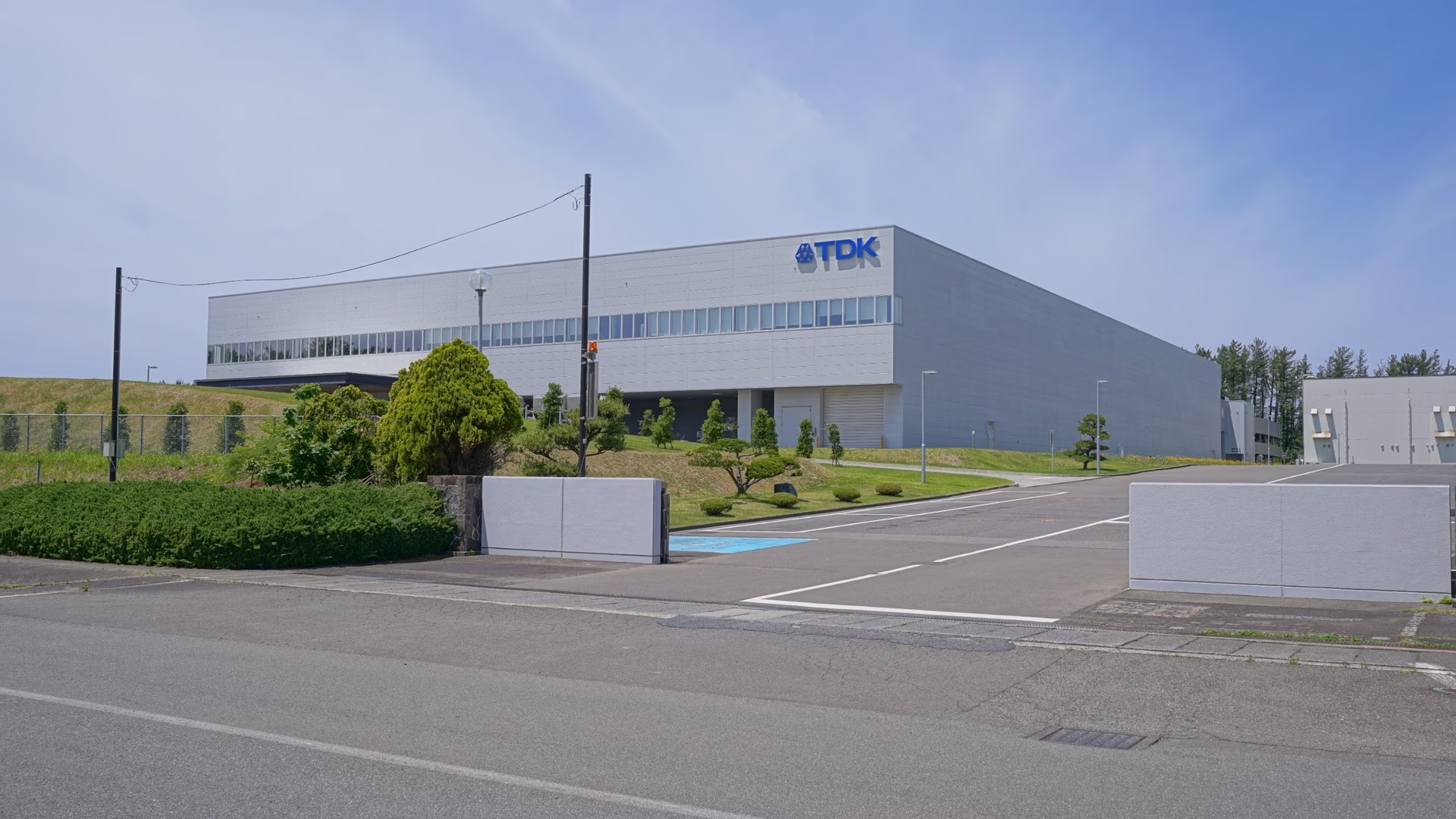
A TDK factory in Nikaho, Japan. The company plans to double output of its TMR sensors by 2031.
 Credit: 掬茶 / CC BY-SA 4.0 via Wikimedia Commons
Japan’s TDK plans to invest $635M to double output of its tunnel magnetoresistance (TMR) sensors by 2031, Bloomberg reported. The sensors, used in iPhones, are now in demand for cars, humanoid robots and AI data centres, and TDK estimates it makes 80% of the world’s supply.
Japan’s TDK plans to invest $635M to double its output of high-end magnetic sensors by 2031, as demand grows from cars, humanoid robots and AI data centres, Bloomberg reported.
The parts, known as tunnel magnetoresistance (TMR) sensors, are precise and use little power. Apple’s iPhones use them for features like camera stabilisation. TDK estimates it makes 80% of the world’s supply.
Takao Tsutsui, who runs TDK’s sensor unit, said demand is already stretching capacity. He added that TDK could invest more if growth speeds up.
“We’ve now passed a tipping point. We now see significant demand ahead,” Tsutsui told Bloomberg.
Each humanoid robot uses dozens of TMR sensors, a TDK spokesperson said. Chinese firms, which build almost every humanoid shipped today, are already retooling phone factories to make more. In data centres, the sensors help adjust power flows as computing loads change and watch over liquid-cooling systems.
TDK, which made its name with cassette tapes, has largely missed out on the AI boom so far. Rivals Murata and Taiyo Yuden have done better, as AI servers soak up so many parts that carmakers face capacitor shortages. TDK’s shares have given up all their gains this year.
The extra output will come from a new plant in Niigata prefecture, which TDK said in June would open in 2029. Customers asked TDK to make sensors outside its existing plant in Nagano, as it is often their only supplier.
“We almost always end up being the sole supplier of TMR sensors,” Tsutsui said.
Others are chasing the same market. Germany’s Infineon is expanding into magnetic sensors, and Bosch is giving its chip and sensor business its own division.
Get the TNW newsletter
Get the most important tech news in your inbox each week.


