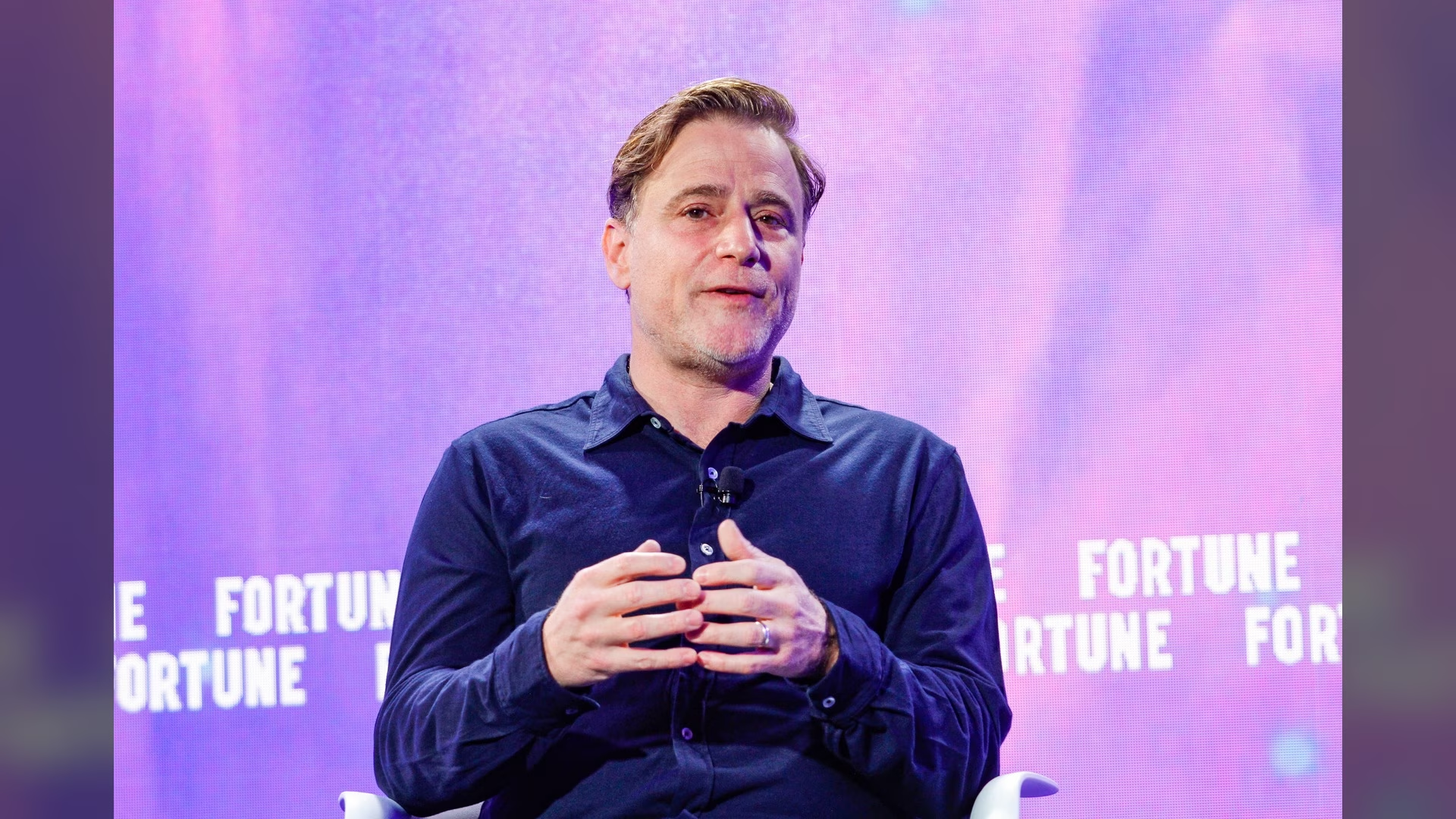
Stewart Butterfield, then Slack’s chief executive, at Fortune Brainstorm Tech in Aspen in July 2022

Johnny Rodgers, one of Slack’s original eight team members, has written a first-hand account of Slack’s first two years inside Salesforce. It quotes Stewart Butterfield, Slack’s co-founder and former chief executive, throughout.
Rodgers spent 11 years at Slack and left in the spring of 2023. He published the second part of his Building Slack series on the Salesforce years on Friday.
“I only got about one hour of total facetime with Marc before the deal was announced. My last meeting with him was cut short because McConaughey arrived,” Butterfield told Rodgers, referring to Matthew McConaughey, one of Salesforce’s celebrity spokespeople.
Salesforce announced the deal in December 2020 at $45 a share. That was more than double Slack’s stock price at the time, as Rodgers recounted in part one in March.
Celebrities, tickets and email
Once the deal closed in 2021, the inefficiency Butterfield found at Salesforce “baffled” him, Rodgers writes. He says Butterfield watched executives approve expensive celebrity appearances while cutting travel between offices.
Rodgers also describes VPs hiring thousands of people and then laying off thousands in later quarters. An annual trip to Hawaii for senior staff, called Laulima, cost millions, he writes. Butterfield raised these issues with Benioff and Bret Taylor, then Salesforce’s co-CEO, but “it seemed to fall on deaf ears”, according to Rodgers.
Slack staff had to file tickets instead of asking in a channel, complete regular quizzes on Salesforce’s Trailhead platform, and use email again. Rodgers writes that Slack’s CEO had once joked that he would fire anyone who sent internal email.
A sales team that didn’t use Slack
The biggest gap was in sales, Rodgers writes. Salesforce sells to one department at a time, while Slack needed buy-in from a whole leadership team.
“Salesforce got put onto Slack [the product], but weren’t really using it, especially in Sales. They didn’t understand the product. So they sold the products they understood and were easier to sell vertically. Slack didn’t fit the pattern,” said Cal Henderson, Slack’s co-founder and former chief technology officer.
Benioff praised Huddles, Slack’s first big feature under Salesforce, at a company all-hands. But it was clear inside the company that Benioff himself did not use Slack and did not really understand it, Rodgers writes.
The Davos panel
Butterfield decided to leave in the autumn of 2022. The tipping point, he told Rodgers, was a trip to Davos to represent Slack and Salesforce. He expected to meet customers. Instead, he found himself on a panel about innovation with will.i.am, another Salesforce spokesperson.
In a leaked all-hands at the time, reported by Fortune, Butterfield described the problem himself.
“The problem has been, there’s no incorporation of the Slack culture into the Salesforce culture. And unless there is some element of that, then it’s not integration in any sense. It’s just elimination,” Butterfield said.
Butterfield planned to announce his exit on 1 December 2022. A day earlier, Taylor, who had brokered the deal, announced his own departure. Nobody had told Butterfield, Rodgers writes.
Slack has stayed central to Salesforce’s plans. It has given Slackbot 30 new AI features, and Benioff wants coding inside Slack next. In September, Meta said it was dropping Google Chat for Slack.
Rodgers, who is now building a company called Supergroup, says one more Building Slack post is to come.
Get the TNW newsletter
Get the most important tech news in your inbox each week.
Also tagged with


