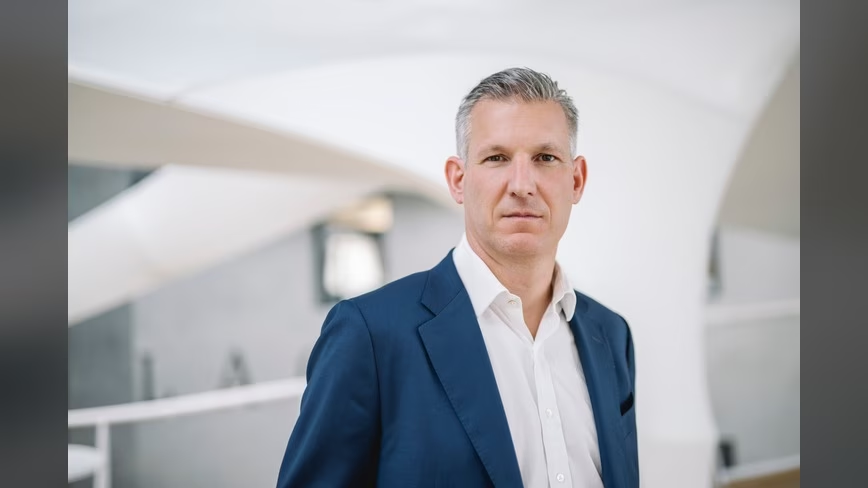
Philipp Navratil, chief executive of Nestlé. Photo taken in June 2024.
 Credit: Nestlé / CC BY-NC-ND 2.0 via Flickr
Nestlé chief executive Philipp Navratil says knowing how to write a good prompt is not enough for workers who want to keep up with artificial intelligence.
Staff also need to understand their business and change the way they work, he told Business Insider in an interview published this month.
Philipp Navratil runs a company of more than 270,000 people, and according to Business Insider, he does not expect them to master the technical side of AI.
Instead, he wants them to grasp how it can be applied, where it may go next, and what it means for Nestlé. He also said many people see AI as just another tool.
In his view, adding it on top of existing habits can make work more complicated, not less. As a result, he wants workers to rethink their processes and drop steps that are no longer needed.
The time saved, he said, can be used to analyse data and meet business partners. His focus is on how work is designed, the publication reported, rather than on any particular piece of software.
Navratil joined Nestlé in 2001 as an internal auditor and later ran its Nespresso business. He became chief executive on September 1, 2025, after the board dismissed Laurent Freixe over an undisclosed relationship with a direct subordinate.
About six weeks later, Nestlé announced plans to cut about 16,000 jobs over two years. Around 12,000 of these are office roles, and about 4,000 are in manufacturing and supply chain.
The company said automating its processes was part of the plan, and it raised its savings target to CHF 3bn by the end of 2027.
“The world is changing, and Nestlé needs to change faster,” Navratil said in a statement at the time.
The company already uses AI tools widely. About 100,000 Nestlé employees use Microsoft Copilot each month, chief information officer Chris Wright told Fortune in January.
Other executives have made a similar argument. Earlier this week, Miro chief executive Andrey Khusid said companies should redesign work around AI rather than add it to existing teams.
Meanwhile, a TU Darmstadt survey in Germany found that only 15% of respondents had received any AI training.
Get the TNW newsletter
Get the most important tech news in your inbox each week.


