TL;DR
Xbox prices rise $100-$150 on Aug 1, pushing the Series X to $800. Microsoft blames memory costs and is sunsetting the 2TB model.
Memory and storage costs have risen more than two and a half times since 2024, and Microsoft expects them to double again by fall 2027, making this the third price increase since May 2025
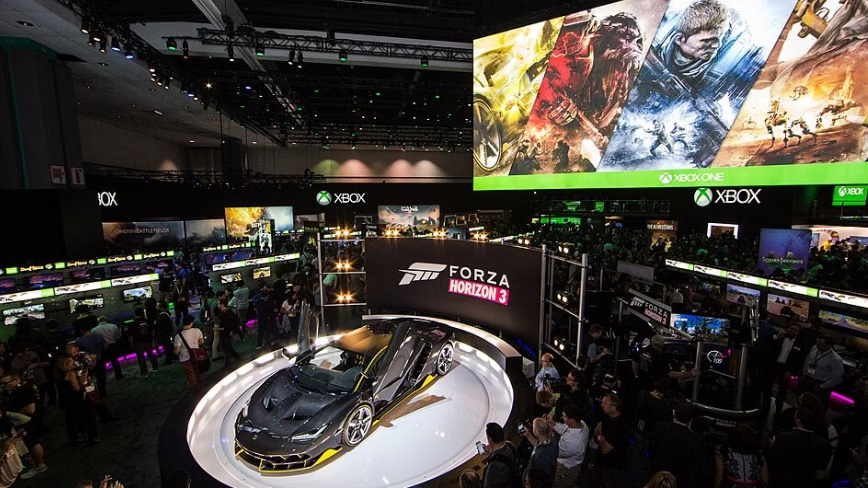
XBOX
 Credit: Guywelch2000
Xbox prices rise $100-$150 on Aug 1, pushing the Series X to $800. Microsoft blames memory costs and is sunsetting the 2TB model.
Microsoft is raising the price of every Xbox console by $100 to $150, effective August 1. The increases push the Xbox Series X with a disc drive to $800, up $300 from its original $500 launch price in November 2020. It is the third time Microsoft has raised Xbox prices in 13 months.
The 512-gigabyte models will increase by $100, while the one-terabyte models will go up by $150. The Xbox Series S will start at $500 for the 512-gigabyte version and $600 for the one-terabyte model. The digital Xbox Series X will cost $750.
Microsoft is also discontinuing the two-terabyte Xbox Series X, which it described as “sunsetting.” The company said on Xbox Wire that console storage and memory prices have increased by more than two and a half times, and that it expects those costs to double again by fall 2027. “We hoped another price increase would not be necessary,” the company wrote.
The announcement came on the same day Apple raised prices across its Mac and iPad lineups, citing the same memory shortage. Apple killed its $600 Mac Mini earlier this year after DRAM prices surged 90 percent in a single quarter, driven by Samsung, SK Hynix, and Micron redirecting production toward high-bandwidth memory for AI data centres. On Thursday, Apple extended increases to MacBooks, iPads, and home products while leaving the iPhone unchanged.
Consoles have historically been sold at or below the cost of manufacturing, with platform holders recouping their investment through game sales, subscriptions, and accessories. That model depends on stable component costs. When memory prices more than double, the economics of subsidising hardware break down.
Microsoft first raised Xbox prices in May 2025, increasing the Series X from $500 to $600. A second increase followed in October 2025, pushing the Series X to $650. The August increase will be the largest yet, adding $150 to the one-terabyte Series X in a single move.
To soften the impact, Microsoft is introducing buy-now-pay-later options through the Microsoft Store, allowing customers to split payments into short-term, interest-free instalments. The company framed the financing option as a response to the “challenging” pricing environment.
Microsoft is not alone in raising prices. Sony has raised PlayStation prices more than once, with the PS5 disc edition now selling for $650 and the PS5 Pro at $900. Nintendo confirmed that the Switch 2, originally priced at $450 when it launched in June 2025, will rise to $500 in September.
The AI-driven memory crisis has already pushed GoPro to the brink of collapse and wiped out the sub-$100 smartphone market in India and Africa. Gaming consoles are the latest consumer electronics category to absorb the cost of an industry-wide reallocation of memory production toward AI infrastructure.
The $500 console, a price point that held from the Xbox 360 era through the Series X launch, appears to be over. At $800, the Xbox Series X now costs more than many gaming PCs and sits within range of the $900 PS5 Pro. Whether gamers will continue to pay is the question Microsoft has not yet answered.
Get the most important tech news in your inbox each week.


