TL;DR
Google’s SynthID watermark debunked a viral fake image of Senator McConnell in hospital. The watermark survived screenshots across platforms. First major real-world win.
The invisible watermark survived screenshotting across Reddit and X. Snopes confirmed it was AI-generated. Anthropic does not participate in the programme.
DeepMind
 Credit: Google
Google’s SynthID watermark debunked a viral fake image of Senator McConnell in hospital. The watermark survived screenshots across platforms. First major real-world win.
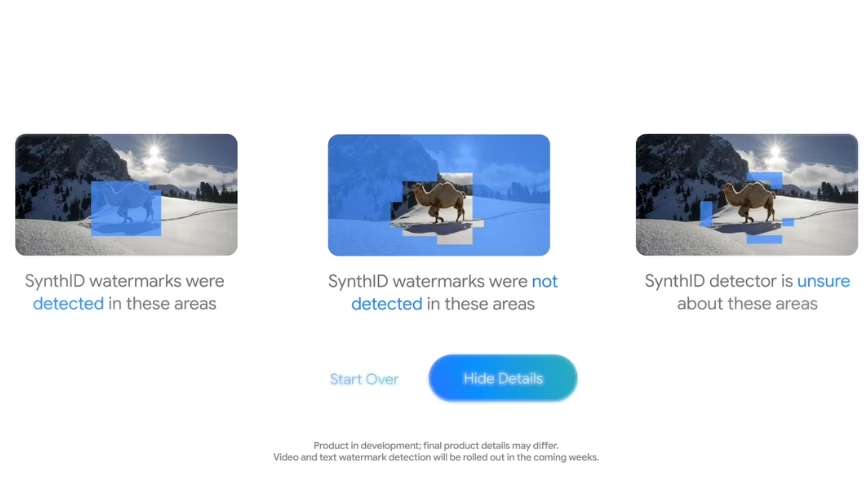
Google’s SynthID watermarking system scored its first high-profile real-world win this week after Snopes used it to debunk an AI-generated image of Senator Mitch McConnell that had gone viral on Reddit and X. The image, which appeared to show McConnell covered in tubes in a hospital bed in extreme distress, was confirmed as AI-generated after Snopes detected the invisible SynthID watermark embedded in the file.
McConnell’s health has been the subject of intense speculation since he was hospitalised after an emergency call on June 14. He has been largely absent from the public eye since, fuelling speculation. In this case, the evidence was entirely fabricated, and the watermark worked exactly as designed.
SynthID, launched at Google I/O in 2025, embeds an invisible signature into AI-generated images. The signature is built into the image data itself, meaning it survives screenshots, resizing, and compression across platforms. That durability is what made the McConnell debunking possible: the image was screenshotted and shared across multiple platforms, but the watermark persisted. OpenAI joined the SynthID programme in May 2026, embedding the watermark alongside C2PA metadata in its image outputs. Anthropic does not participate.
The main limitation is that SynthID only works when an image-generation tool actively participates. Gemini models have included the watermark since launch. Users can check images by asking a Gemini model or uploading them to OpenAI’s public verification tool. But images generated by tools outside the programme, including open-source models and those from non-participating labs, carry no watermark. YouTube has separately moved to auto-label AI-generated videos, but the broader challenge remains: watermarking only works at the scale of adoption, and adoption is still voluntary.
Get the most important tech news in your inbox each week.


