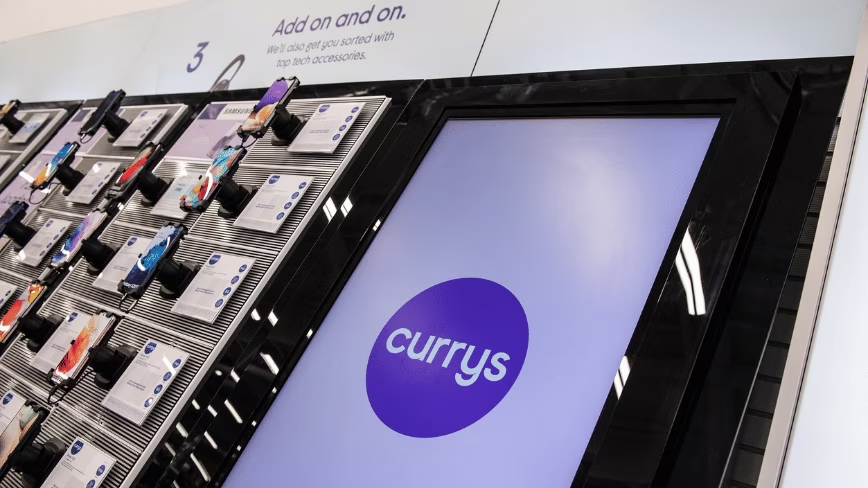
 Credit: Currys
The AI memory squeeze has been an industry story for months. Now it is heading for the till. Currys, Britain’s biggest consumer electricals retailer, has warned that phones, laptops and TVs will cost more later this year.
Chief executive Alex Baldock delivered the warning to reporters after the company posted its annual results, as Reuters reported. AI and data centres, he said, are eating up the world’s supply of silicon. Shoppers will feel it.
The high street catches up
Currys is a useful bellwether. It is the UK’s answer to Best Buy, with stores across the UK, Ireland and the Nordics. That scale gives it a clear read on where consumer prices are heading. And the read is not reassuring.
“Less is left over for the likes of mobile phones and laptops,” Baldock said. That, he added, “inevitably will cause availability challenges and some cost price inflation coming through later this year.” He would not put a number on the rises. It is too early to tell.
Buying time until September
Currys is not helpless. Baldock said it would use its buying power as market leader to secure stock and limit increases. It has also stocked up early. “We’ve made sure that we’ve bought forward, so we’ve got good security of supply in computing and mobile phones until at least September,” he said.
That cushion runs out in the autumn. After that, the shortage bites. Currys is only the latest firm to sound the alarm. Apple has already lifted prices, and Xbox consoles have gone up too. Analysts expect the crunch to worsen before it eases.
Where the chips went
The cause is simple. Memory makers have shifted production towards deep-pocketed AI hyperscalers such as Meta, Google and Amazon. Gadget makers are left fighting over what remains. The pressure has reached even two-decade-old chip standards, and it helped push Micron to a trillion-dollar valuation. Some relief may come from cheaper Chinese DRAM, but not yet at scale.
The warning also landed on an awkward day for Europe. A separate EU-funded report cautioned that Chinese export controls, heavy reliance on US technology and structural weaknesses could leave the region’s chip industry facing a bleak future. The fix, it argued, is to build up domestic supply, and fast. Currys’ price warning is the consumer-facing edge of that same problem.
Strong results, nervy market
The numbers themselves were solid. Currys posted adjusted pre-tax profit of £191mn on revenue up 6 per cent to £9.25bn. Like-for-like sales rose 3 per cent in the UK and Ireland and 6 per cent in the Nordics. The football World Cup helped: sales of 90-inch-plus TVs trebled, and the summer heatwave drove a run on fans and air conditioning.
Investors still marked the shares down 3.3 per cent, trimming the year’s gains to 25.6 per cent. There is a leadership change too. Baldock, the architect of the retailer’s turnaround, leaves on 31 August to run Boots. Nordics chief Fredrik Tønnesen takes over. His first job is a memory crunch that is about to reach shoppers across Europe.
Get the TNW newsletter
Get the most important tech news in your inbox each week.


