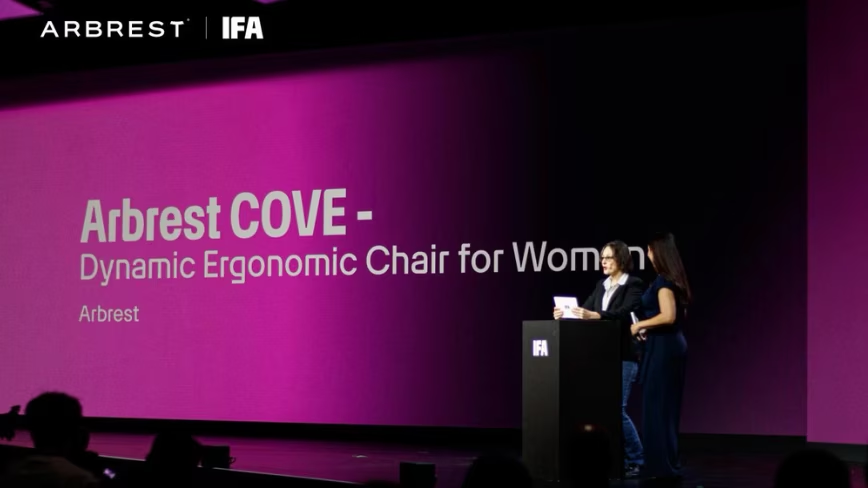
ARBREST presents COVE at IFA Berlin 2026, debuting with the IFA Best of Design award.
 Credit: ARBREST
At IFA Berlin 2026, ARBREST put a chair through movements that office furniture often treats as exceptions. COVE is the new brand’s first product, made its world debut with an IFA Best of Design award. At Hall 2.2, Stand 141, visitors leaned toward a desk, shifted their shoulders, turned and reclined. The demonstration made a larger point: working is not a single posture, and support should not disappear when the body changes direction.
COVE is ARBREST’s first product and first expression of that idea in the ergonomic chair category. The new smart lifestyle technology brand focuses on real needs that remain poorly addressed in work and everyday life. Its aim is to let technology recede into the background. COVE is the brand’s first step, not a claim that ARBREST will only make ergonomic chairs.
The reason for developing the chair is closely connected to the limits of standard office furniture. Many chairs are built around a standardized reference body, with differences addressed later through adjustments. That approach can leave smaller users compensating for a seat that is too deep, a lumbar support out of reach, armrests too far apart or feet that do not land securely. Women’s bodies are not identical, but the category has often treated their proportions as an afterthought. ARBREST decided to make them an initial design reference.
COVE starts with a 7-Point Fit Calibration. Seat height, width and depth, lumbar support, armrests, headrest and footrest are considered together. The recommended user height is 150 to 175 centimetres; seat height ranges from 46 to 54 centimetres and seat depth from 43 to 49 centimetres. The idea is to establish a better fit from the start, rather than relying on adjustment to compensate for the wrong proportions.
The seat has its own logic. A firmer sit-bone zone provides a stable base. A contoured pelvic area follows the body’s shape, and a flexible front edge is intended to reduce pressure under the thighs. The dual-tier active footrest helps bridge the gap between leg length and seat height. Together, these details address a familiar problem: when the legs, pelvis and lower back do not share a stable base, the user keeps moving in search of one.
COVE’s other details are similarly grounded in ordinary habits. The 3D Winged Headrest creates clearance for ponytails and styled hair during recline. Wide-surface touch controls are intended to be easier with longer nails. The 5D armrests follow the elbows as the user types, reads, browses or turns to communicate. None of these features changes the category alone. Together, they suggest that the chair was designed around a person’s routine rather than an abstract diagram of correct sitting.
Movement becomes more visible in the mechanism. COVE’s multi-axis forward-tilt chassis reaches 16 degrees, allowing the user to move closer to the desk without perching on the seat edge. The footrest continues to support the legs. The point is not to demonstrate how much a chair can move, but to keep support present as the body leans forward, sits upright, turns or reclines.
The 12-Zone Micro-Motion Backrest distributes support across twelve independent units arranged along a flexible spine plate. A small turn of the shoulders, a change in weight or a shift in the lower back can be met by different areas of the backrest. This is a different answer to the familiar ergonomic instruction to “sit correctly.” Instead of holding the body still, the chair is designed to stay connected as the body moves.
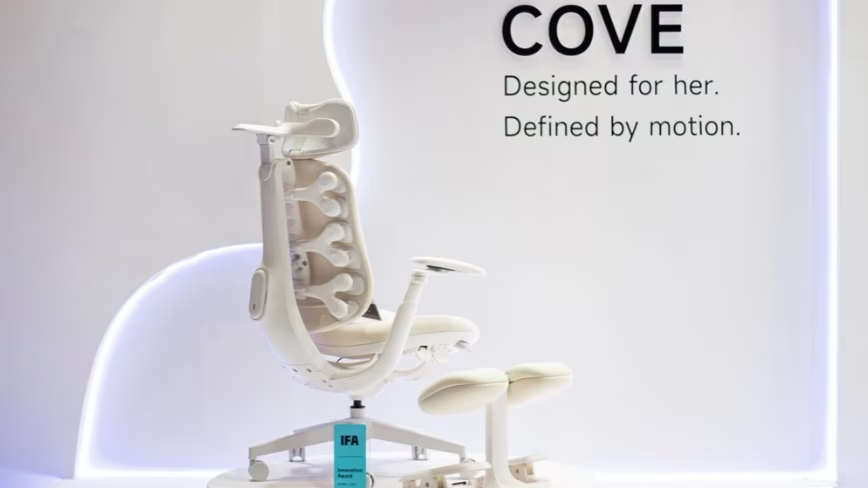
COVE links that backrest to a 5-Point Synchronized Support system. The headrest, armrests, backrest, seat and footrest move as coordinated contact points. When fatigue appears, one touch activates the motorized lumbar support. As the backrest reclines, the support extends forward and the footrest continues to cradle the legs, creating a brief seated stretch.
The market value of this approach is not that COVE promises to solve every problem associated with desk work. It is that the chair gives a growing conversation about inclusive design a physical, testable form. Designing for women here means more than reducing dimensions. It means looking at where the pelvis settles, how the feet are supported, how hair and fingernails affect daily use, and how a person moves between concentration and rest.
After its IFA debut, ARBREST expects to move COVE into an initial launch or crowdfunding phase later in 2026. Launch details will be announced later. Its broader significance lies in its starting assumption: the user is not a fixed shape, and a chair should not require her to behave like one. COVE is the brand’s first product, and its first step toward further smart lifestyle products built around real user needs.
Get the TNW newsletter
Get the most important tech news in your inbox each week.
Contributed article. Not produced by the TNW newsroom and does not reflect the editorial stance of TNW.
Also tagged with


