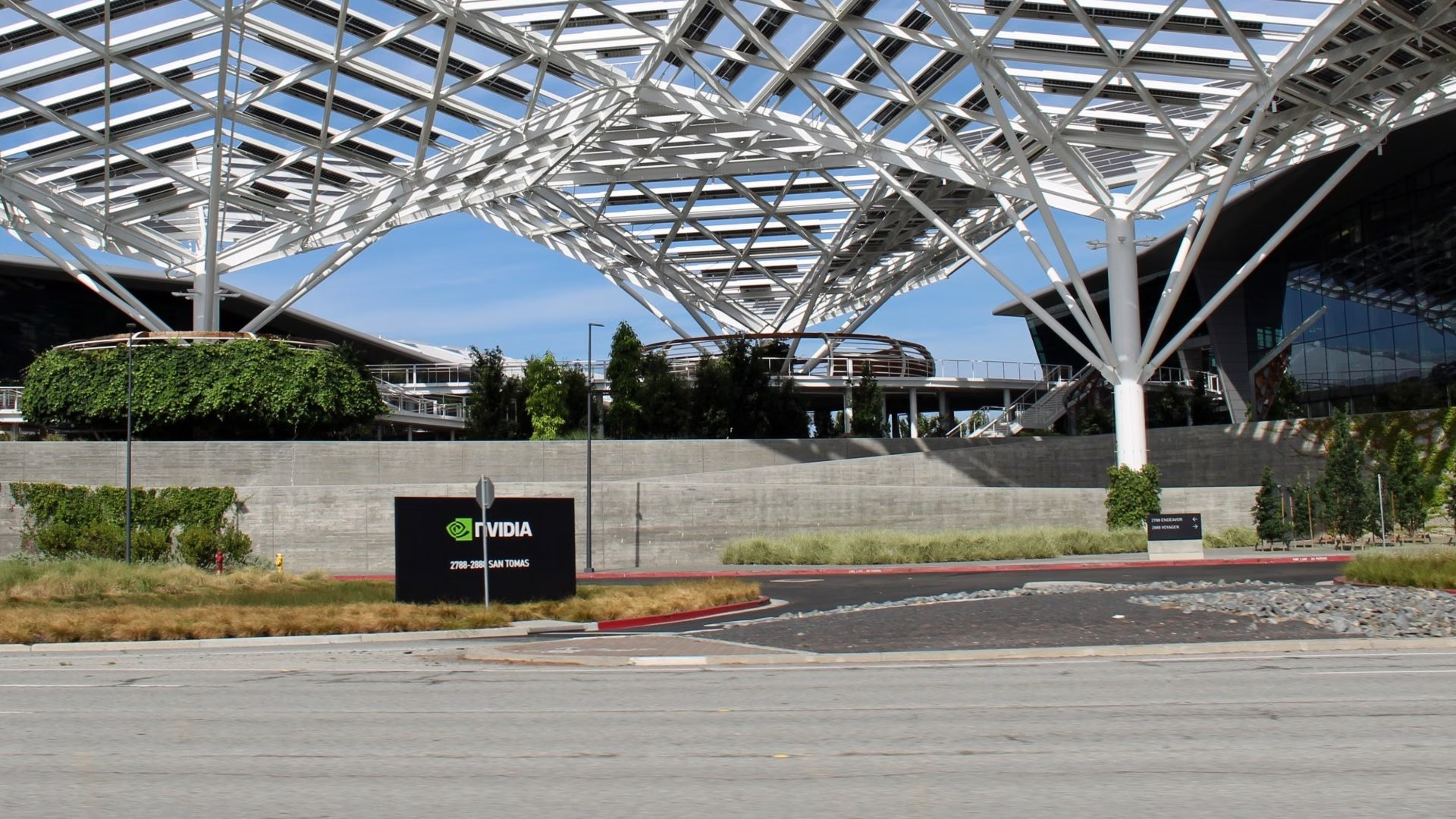
Nvidia’s headquarters on San Tomas Expressway in Santa Clara, California

Alice Huang, the former Megaspeed executive at the centre of the Nvidia scandal, had links to gaming tycoons, hundreds of shell companies and an alleged Cambodian criminal group, the Financial Times reported on Saturday. Together they formed a network that supplied Nvidia chips to China. A day earlier, The New York Times tied companies linked to her family to suppliers of China’s military.
TNW has not independently verified either report. US officials suspect Huang of working for Chinese intelligence, the Times first reported in October, describing a Chinese spy plot. Beijing calls the claim a smear. Jensen Huang quit as Nvidia’s chief executive on 12 November after admitting an affair with her. They are not related.
How the network worked
The FT’s Zijing Wu and Haohsiang Ko traced the Alice Huang chip network through hundreds of filings and more than a dozen sources. Its companies made billions moving Nvidia chips into China, not necessarily aware of the full picture, the paper reported.
It started with Inspur, one of Nvidia’s largest server partners in China. The US put Inspur on its entity list in March 2023, but not its part-owned US unit. Renamed Aivres, that unit kept trading with Nvidia. Inside Nvidia there were questions over whether it should count as a partner, a person with direct knowledge told the FT. Nvidia concluded that it met all compliance and export control rules.
Some of Inspur’s Chinese clients then turned to Century Huatong, an online gaming group turned data centre investor. The answer, people familiar with the plan said, was an offshore shell branded as a “neocloud”. That shell became Megaspeed, with Huang as its trusted public face.
Kang Wei, whom the FT calls her husband and the Times her business partner, was an early investor in Century Huatong, filings show. Megaspeed grew out of the Singapore arm of 7Road, a gaming firm that Huang and Century Huatong both backed. Its Malaysian unit, Speedmatrix, declared about $4.6bn of imports from Aivres in the year to December 2025. The FT cites ImportGenius trade data.
The Prince Group link
The last step was smuggling the chips into China. Hu Xiaowei filled at least part of that role, people familiar with the matter told the FT. US authorities call Hu the “second-in-command” at Prince Group. The US Treasury has named the group a transnational criminal organisation. Hu was arrested in Japan this summer.
A spokesperson for the Prince group of companies said Hu never worked for the business and called the US allegations unsupported. The FT could not reach Hu.
Nvidia said it put Megaspeed and a subsidiary on its block list in 2025 and has also restricted sales to Aivres. Megaspeed has said it runs a lawful business, and that Huang left in August 2025. Tencent, which owns 10.1% of Century Huatong, said it knew nothing of the activities. The FT found no evidence that Tencent or Alibaba took part.
$3.6bn of state money
The Times reviewed a confidential analysis by Strider Technologies, an intelligence firm staffed by former intelligence officers. About $3.6bn of Chinese state money flowed through companies tied to Huang’s family or associates, it found. The money funded projects including data centres with Nvidia chips. The Times said it confirmed many of the ties itself.
Most links are indirect, the Times said, and it is unclear whether the military used any of the computing power. The paper had already reported that Megaspeed’s backer Alibaba co-founded a military-linked lab.
“Follow the money and, too often, you find the P.L.A. at the end of it,” Strider’s chief executive, Greg Levesque, told the Times.
Both papers point to Century Litong, a Shanghai firm founded by Century Longteng. The FT says Longteng was a venture between Century Huatong and a vehicle Huang controlled with her sister. The Times names the sister’s firm.
Century Litong was a key distributor of smuggled Nvidia chips in China, people with knowledge of the deals told the FT. The Information first reported its role. Its owner, Jiangsu Lettall Electronic, also controls a maker of Chinese radar and missile parts, the Times reported.
Nvidia sought permission to sell more than 40,000 H200s to Century Litong’s Hong Kong unit, licence files released on Thursday by a House committee show. An Nvidia spokesman told the Times that, despite receiving some licences, it had already stopped shipping H200s to China, and had not and would not ship to that firm. Century Litong says it has no dealings with Huang. Nvidia’s shares, meanwhile, have had their worst run since 2008.
Get the TNW newsletter
Get the most important tech news in your inbox each week.


