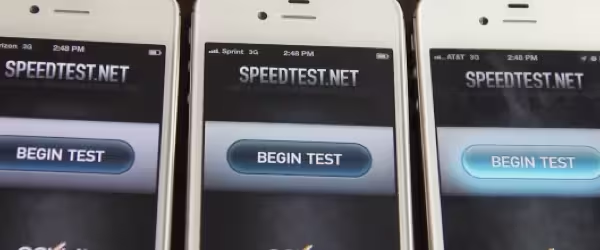
Now that the iPhone is finally available on three major carriers in the US anyone stateside who has not made a purchase yet is likely to be wondering which way to go. There are a lot of factors to consider like cost and plan offerings, but the universal constant is that people like speed.
The iPhone is a great device, but how fast your network delivers information to you is a big limiting factor in how quick the devices will feel. That’s why its important to make an informed decision about which carrier to pick if you want the zippiest iPhone. Thankfully, Jeff Benjamin at iDownloadBlog has gotten his hands on all three versions of the new iPhone 4S available in the US and has done a “head-to-head-to-head” comparison:
The results aren’t all that surprising if you’re familiar with the network technologies involved here. Sprint’s network, although based on CDMA technology like Verizon, is aging and its 3G speeds are normally sub-par even as its reliability is high overall. So it’s not a shock that it runs last in this test. Roughly the order from fastest to slowest is:
- AT&T
- Verizon
- Sprint
However, there is a bit of a catch when it comes to choosing between Verizon and AT&T. Verizon’s CDMA 3G technology is tuned to give great burst rate download speeds, allowing users to quickly snag smaller bites of data. This can make Verizon quicker than AT&T as you saw in the video, but only if you’re snagging smaller chunks of data like websites.
On the tests when larger amounts of data are needed, AT&T’s network pulls ahead in the stretch because it is capable of download speeds up to 14.4Mbps using its HSPA technology (no arguments here about HSPA versus HSPA+ please). The iPhone 4S’s antenna has been optimized to take advantage of this speed and when cruising with a good signal you will download larger files like videos and such much quicker.
This doesn’t answer the question of reliability or overall network coverage, which Verizon and Sprint both have in spades. But if you’re in an area with good and reliable AT&T coverage, you’re going to get the best maximum velocity there.
Let us know what kind of network speeds you’re seeing if you’ve managed to get your iPhone 4S activated.
Get the TNW newsletter
Get the most important tech news in your inbox each week.
Also tagged with


