TL;DR
The White House wants to preempt state AI laws for three years in exchange for passing KOSA, the NO FAKES Act, and age verification. Free speech groups object.
Senator Blackburn's package would block state AI regulation for three years in exchange for the Kids Online Safety Act, the NO FAKES Act, and age verification
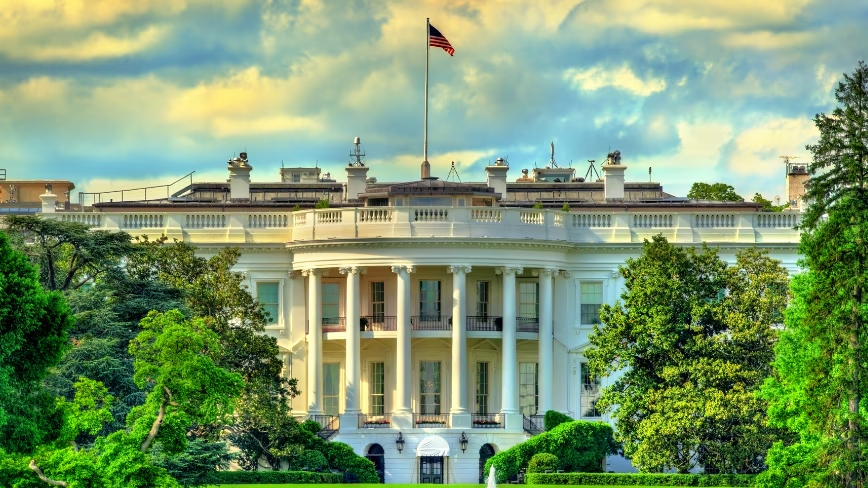
White-House
 Credit: © Leonid Andronov via Canva.com
The White House wants to preempt state AI laws for three years in exchange for passing KOSA, the NO FAKES Act, and age verification. Free speech groups object.
The White House is negotiating with key senators to bundle federal preemption of state AI laws with three online safety bills, Axios reported. Senator Marsha Blackburn is leading the effort to finalise legislative text. The package would block state AI regulation for three years in exchange for passing the Kids Online Safety Act (KOSA), the NO FAKES Act, and a federal age verification mandate.
The deal represents the administration’s latest attempt to strip states of the ability to regulate AI. Congress has already rejected preemption twice. The Senate voted 99-1 to remove an AI preemption provision from the One Big Beautiful Bill Act earlier this year. States have accelerated in the opposite direction, with 1,208 AI bills introduced in 2025 and 145 enacted.
This time, the administration is trying a different route: attaching preemption to legislation that has bipartisan appeal. KOSA would require social media platforms to restrict content deemed harmful to minors, with enforcement powers given to the Federal Trade Commission. The NO FAKES Act would protect individuals from AI-generated deepfakes of their likeness. Age verification would mandate identity checks for online services.
Free speech groups are alarmed. The Foundation for Individual Rights and Expression (FIRE), a Koch-funded conservative organisation, warned that “taken together, these bills would fundamentally change the internet as we know it.” FIRE argues KOSA would give the FTC broad power to hold platforms accountable for lawful speech, and that age verification would effectively end anonymous internet use.
The Intercept has reported that KOSA’s age verification requirements would make it nearly impossible to browse the internet anonymously, a concern that spans the political spectrum. The legislation would give whichever administration controls the FTC significant leverage over how platforms moderate content for roughly 71% of US adults who regularly use Instagram alone.
The AI preemption component would formally establish a Center for AI Standards and Innovation and require certain developers to address risks before releasing models. A Blackburn spokesperson said the package is not “blanket preemption of all laws regulating AI or child safety” but structured as subject-matter preemption affecting specific areas.
The timing coincides with progressive states moving to restrict AI data centre construction and hold tech companies liable for harms their AI systems cause. The administration frames preemption as necessary for national competitiveness, but critics argue it would remove the most active layer of AI oversight at precisely the moment states are filling a federal vacuum.
Whether the deal can pass is uncertain. The administration’s AI agenda has moved cautiously on regulation while pushing hard on adoption. Bundling online safety with preemption is a gambit to get both through Congress in one vote. The question is whether senators will accept a three-year freeze on state AI laws as the price of protecting children online.
Get the most important tech news in your inbox each week.


