 Credit: WhatsApp
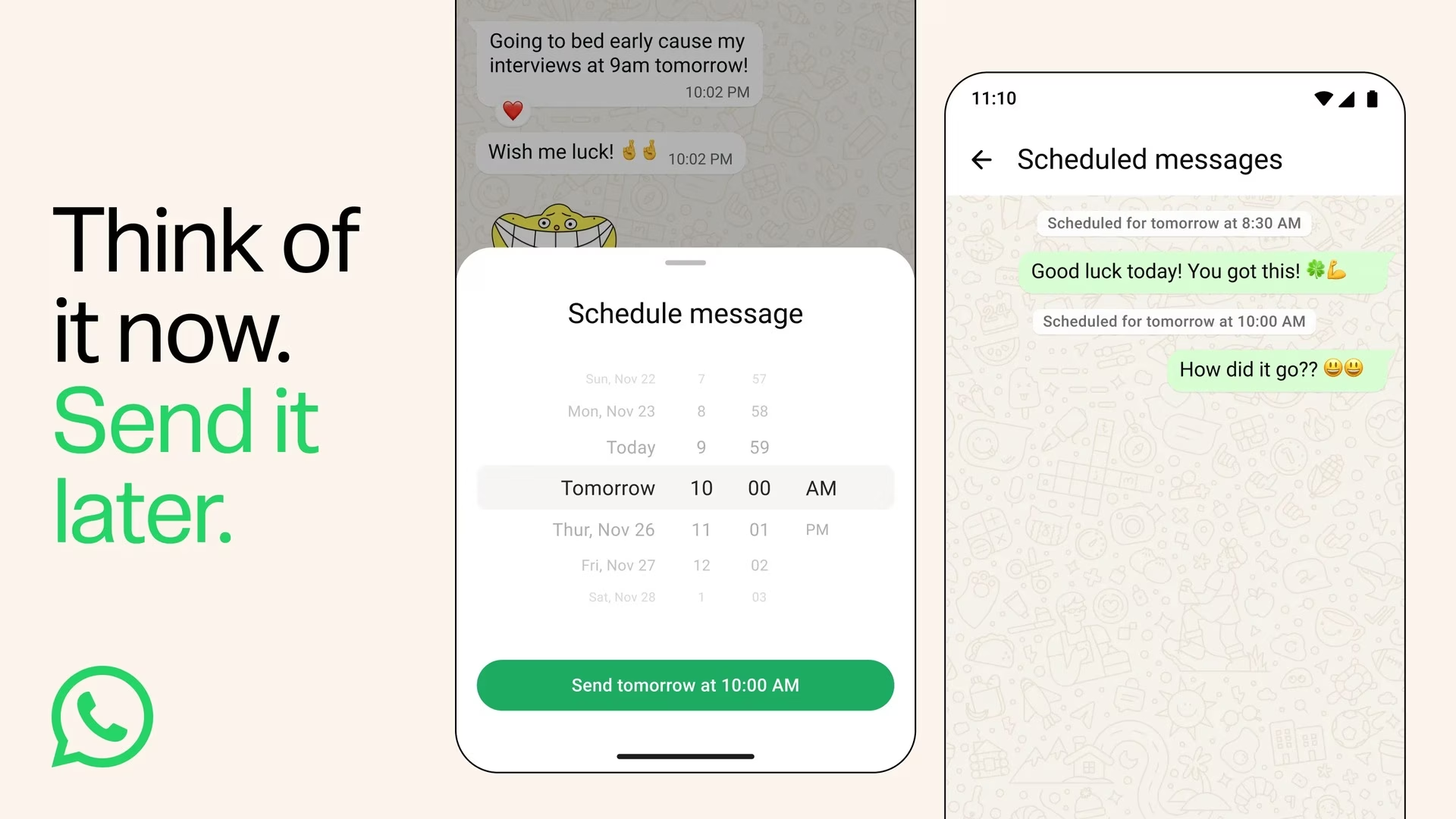
WhatsApp has started rolling out scheduled messages, which let users write a message now and have it sent automatically at a later date and time. The Meta-owned app announced the feature on 25 November and calls it one of its most-requested features.
To schedule a message, users press and hold the send button in a chat and choose a date and time. Messages can be set between 10 minutes and 14 days ahead, and the feature works in both one-to-one and group chats.
Users can schedule text, photos and videos. Pending messages can be viewed and deleted at any point before they go out, and they arrive looking like any other message.
Scheduled messages are still end-to-end encrypted, so WhatsApp cannot read them. They also send at the chosen time even if the sender’s phone is switched off or its battery has run out.
The feature is reaching users globally over the coming weeks. WhatsApp did not say whether it will reach Android, iPhone and the desktop apps at the same time.
The launch follows months of testing. WABetaInfo, which tracks WhatsApp test builds, first spotted the feature in development in February. It reached a small group of Android beta testers in October, before arriving for some iPhone testers.
During testing, scheduled messages were kept in a dedicated section of each chat’s info screen, WABetaInfo reported. Testers could attach only one photo or video per scheduled message, and recipients were not told that a message had been scheduled. Deleting one before it went out did not notify them either.
Rival messaging apps have offered similar tools for some time. Telegram already lets users schedule messages, and Apple has offered a Send Later option in its Messages app since iOS 18. Google Messages also supports scheduled texts.
Until now, WhatsApp users who wanted to send a message later had to rely on reminders or third-party tools. Businesses that use the app to take orders from retailers have also built their own workarounds on top of it.
The app passed three billion monthly users in 2025, according to Meta chief executive Mark Zuckerberg. India and Brazil are its largest markets, by number of users.
Get the TNW newsletter
Get the most important tech news in your inbox each week.


