TL;DR
Waymo will launch its own app in Austin and Atlanta in January 2028, ending its exclusive robotaxi deal with Uber in both cities
The move follows last month's Phoenix split and a string of safety and reliability complaints from Uber, whose stock fell more than four percent on the news
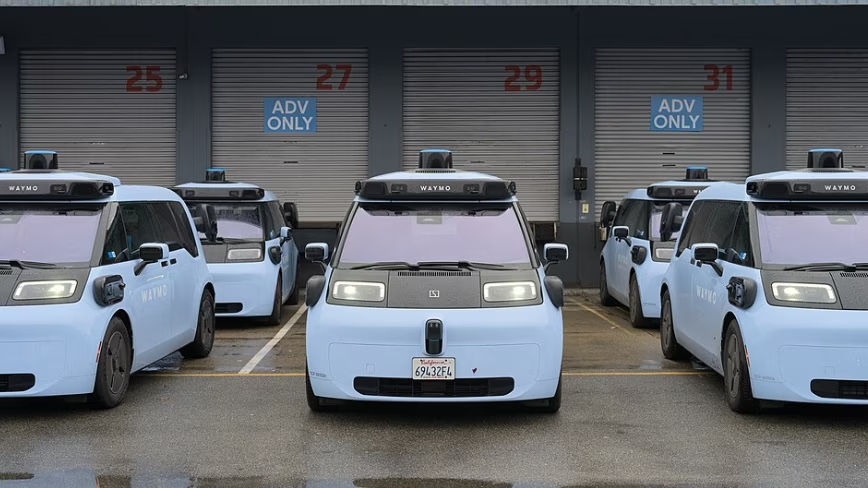
Waymo
 Credit: Dllu
Waymo will launch its own app in Austin and Atlanta in January 2028, ending its exclusive robotaxi deal with Uber in both cities
Waymo has notified Uber that it plans to launch its own app in Austin and Atlanta in January 2028, ending the exclusivity arrangement that has kept its robotaxis available only through Uber in both cities. An Uber spokesperson confirmed the notice to CNBC and Bloomberg on Friday, adding that the change would also free Uber to bring other autonomous vehicle providers onto its platform in those markets. Uber shares fell more than four percent to close below $66, their lowest level in more than a year.
The two companies’ existing contract keeps Waymo’s current fleet on the Uber app through at least May 2028, so riders will not see an immediate change. But the notice formalises a drift that has been visible for months: Waymo has not announced a single new Uber city since launching the Atlanta service last June, choosing instead to expand through its own app into six additional markets. The Financial Times first reported that Waymo was exploring options to exit the partnership entirely.
Behind the public statements, Uber had grown frustrated with Waymo on multiple fronts, citing what it described as unsustainable economics, persistent safety problems, and a failure by Waymo to be forthcoming about incidents, according to Bloomberg. Those include robotaxis driving into flooded roads despite a software recall, illegally passing school buses in Austin, and dozens of empty vehicles circling a cul-de-sac in Atlanta in May, which Waymo blamed on Uber’s routing. Uber said it learned about the school bus incidents through media reports rather than through the companies’ own reporting channels.
The split follows last month’s quiet exit from Phoenix, where the partnership had run for nearly three years. Waymo now operates in 11 US metro areas without Uber and delivers more than 500,000 paid rides per week, a scale that makes a limited arrangement with a ride-hail aggregator harder to justify. Lyft CEO David Risher captured the dynamic last November when he called his own company’s Waymo deal a “situationship,” acknowledging that Waymo holds the leverage in any partnership because it controls the vehicles, the software, and increasingly the rider relationship.
Uber has been building its contingency plan for months, investing in competitors including Avride, Nuro, and a deal worth more than a billion dollars for up to 50,000 Rivian-built robotaxis. But none of those partners operate at anything close to Waymo’s scale, and several will not have vehicles on the road until late this year or later. Uber’s stock has fallen roughly 20 percent this year, according to Bloomberg, driven in large part by investor anxiety that Waymo’s growth will eventually erode the business that only turned its first annual profit in 2023.
Get the most important tech news in your inbox each week.


