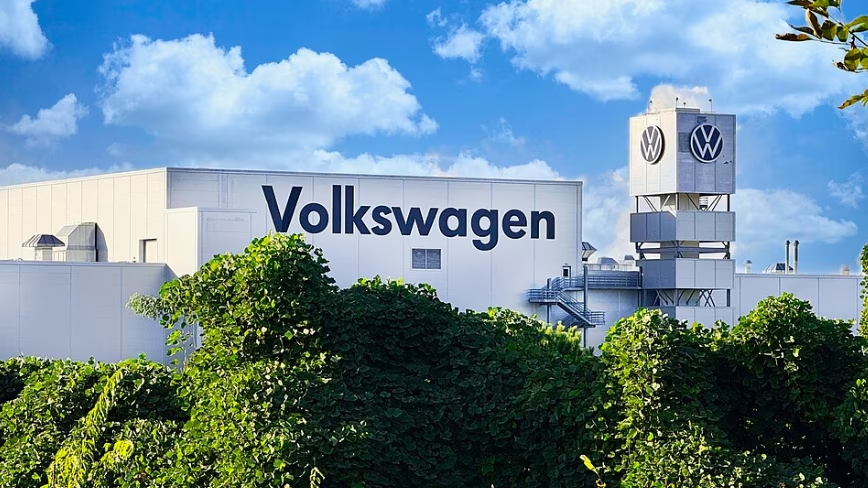
Volkswagen Chattanooga Assembly Plant in Tennessee
 Credit: Harrison Keely
Volkswagen’s supervisory board unanimously approved cutting a further 50,000 jobs, bringing planned reductions to 100,000, and left four German plants without secured production from 2031 to 2034. Half that board represents the workforce and Lower Saxony holds 20% of the voting rights under the 1960 Volkswagen Law.
Volkswagen will cut another 50,000 jobs. Its supervisory board approved the plan unanimously on Thursday and the shares rose 8%, CNBC reported.
That takes the total to 100,000 alongside cuts already approved. The stock topped the Stoxx 600 and is still down 21% this year. Management roles are included.
Future Plan 2030 runs to 12 initiatives, the company said. It calls the programme the most strategically profound transformation in its 89-year history, and will halve the model range by 2035.
Four German plants are named. Emden, Zwickau, Hanover and Neckarsulm have no secured production allocation from 2031 to 2034, and alternative uses are being assessed.
European capacity exceeds demand by more than 500,000 units. Volkswagen will spend €135B on capital projects and research between 2027 and 2031.
The interesting word in all of this is unanimous. It was not a close vote won by management.
Lower Saxony holds 11.8% of the equity and 20% of the votes, and resolutions needing a 75% shareholder majority elsewhere need more than 80% here. Half the 20-seat supervisory board is labour.
So the workforce and a German state approved their own job cuts. IG Metall president Christiane Benner said the executive board now has the foundation to tackle the tasks ahead, while warning that employees should not carry the transformation alone.
That is why analysts called it a breakthrough rather than news. We reported the 100,000 job cuts before the board met, and Deutsche Bank said investors had viewed the company as simply not fixable.
The 1960 law also has a gap worth noting. It requires a two-thirds board majority to build or move a plant and says nothing about closing one.
The pressure itself is priced in euros. Tariffs on European cars went from 2.5% to 15%, the 2025 tariff bill was €2.9B, and Volkswagen can build a cheap electric car just not in Europe.
Kevin Thozet of Carmignac put it plainly. Europe is importing not only Chinese cars but Chinese price deflation, he said, and China has too many cars while Europe has too many factories.
Deutsche Bank expects a halo effect across German carmakers. Porsche has already cut another 5,000 jobs, taking its own total towards 9,400.
Get the TNW newsletter
Get the most important tech news in your inbox each week.


