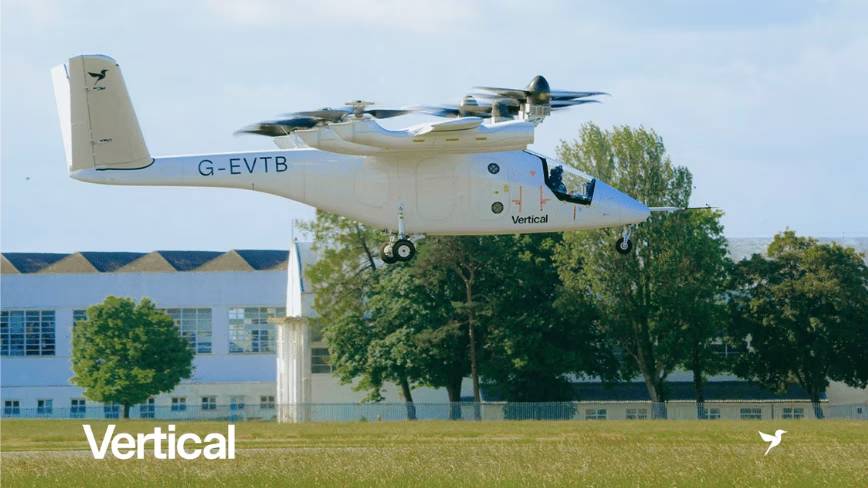
 Credit: Vertical Aerospace
Building an electric air taxi is less about one dramatic first flight than about doing it over and over until regulators are convinced. Vertical Aerospace has just put a second aircraft in the air to help it get there faster.
The Bristol-based company said on Tuesday that its newest full-scale prototype completed its maiden piloted flight at its UK flight test centre, with test pilot Paul Stone at the controls at 8:49 BST on 5 June.
The flight followed a fresh Permit to Fly from the UK Civil Aviation Authority, granted after extensive ground testing, and it roughly doubles Vertical’s flight test capacity while its first prototype carries on with its own campaign.
This is not Vertical’s first time off the ground. The company flew its first untethered test flight back in 2023, made European history with a piloted wingborne flight last year, and completed a full two-way transition between vertical and winged flight in April, joining a tiny group of developers to manage that manoeuvre.
The point of the new jet is volume.
Two aircraft flying in parallel generate more data, more quickly, and this is the last prototype Vertical will add before its Critical Design Review, the milestone that freezes a certifiable design and clears the way to build the first pre-production aircraft.
“Getting our latest prototype into flight testing is an important milestone because it allows us to learn faster in real world conditions and keep building momentum towards certification,” said Stuart Simpson, chief executive of Vertical Aerospace. “Expanding the flight test fleet will help us validate the aircraft more quickly, reduce risk, and move more efficiently towards bringing Valo into service.”
Once the aircraft has worked through every phase of testing in its all-electric form, Vertical plans to retrofit it for hybrid-electric flight. That variant is aimed at the longer range and heavier payloads that defence and logistics customers want, a hedge beyond the four-passenger Valo air taxi the company is certifying first.
Vertical says it holds around 1,500 Valo pre-orders from customers including American Airlines, Japan Airlines, Avolon, Bristow, and Brazil’s GOL, though, as with every order book in this industry, those are conditional commitments rather than cash in hand.
The backdrop is sobering. Vertical is chasing American rivals Joby and Archer, both further along US certification, and the wider field has been brutal: at least six eVTOL makers, among them once-feted names Lilium and Volocopter, have gone insolvent since 2023, undone by the cost and complexity of getting these aircraft certified.
Vertical has had its own turbulence, pushing its CAA certification target to the end of 2026, roughly two years later than first planned, and fielding a patent lawsuit from Archer earlier this year.
What the second prototype buys Vertical is tempo.
More aircraft mean more flight hours, faster validation, and a credible run at the design review that turns a test programme into a certifiable product. The harder questions, the money to reach commercial service and a regulatory finish line that keeps moving, are the ones the whole sector is still trying to answer.
But adding a working aircraft to the fleet, and the public demonstrations that come with it, is the kind of steady progress that keeps an eVTOL company in the race rather than out of it.
Get the TNW newsletter
Get the most important tech news in your inbox each week.


