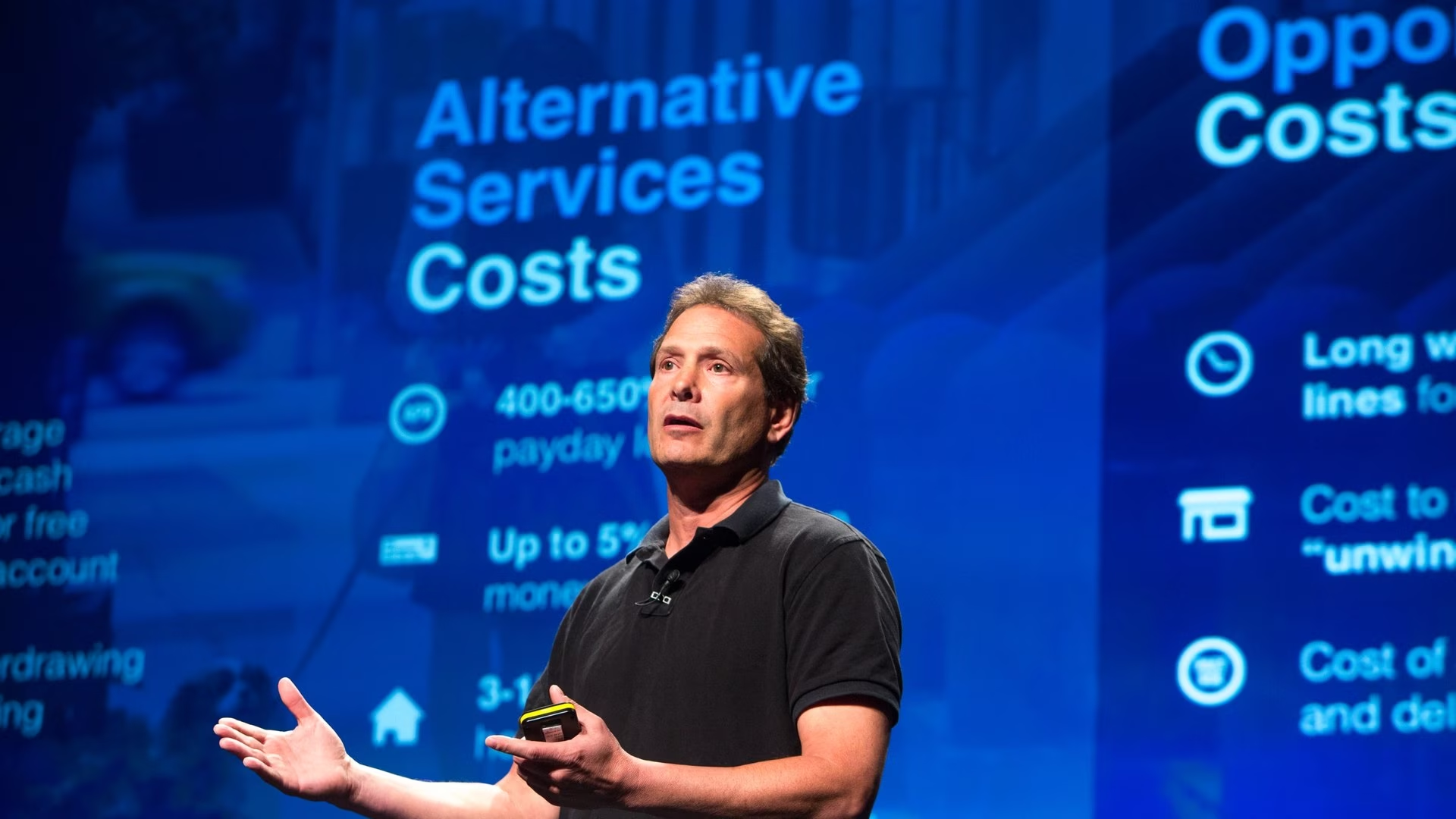
Dan Schulman, now Verizon’s chief executive, speaking at the PopTech conference in October 2013.
 Credit: PopTech / Kris Krüg via Wikimedia Commons, CC BY-SA 2.0 (cropped)
Verizon CEO Dan Schulman said SpaceX would need up to $500B, up to 80,000 cell towers and as many as eight years to build a US mobile network that matches Verizon’s, Business Insider reported. Elon Musk replied on X that it “will take 2 or 3 years“.
SpaceX would need up to $500B and as many as eight years to build a US mobile network that matches Verizon’s, its chief executive Dan Schulman said. He spoke on Verizon’s third-quarter earnings call on Monday, Business Insider reported.
Schulman said a rival network would need up to 80,000 large cell towers, linked by satellites and fiber, and would take at least four to six years to build. SpaceX would then need stores, customer service and back-office systems on top.
“I also operate under the assumption that everything SpaceX says they will do, they will do, and that they will execute flawlessly,” Schulman said.
But he said satellites alone cannot compete in towns and cities, where about 98% of Verizon’s revenue comes from.
“We’re somewhere between 100 to 1000 times more efficient than they are,” he said.
Elon Musk disagreed. “Will take 2 or 3 years,” he wrote on X after the call.
SpaceX told investors in June that it wants to sell phone plans directly to US consumers, and its moves have shaken carriers this month.
Its deal to buy low-band spectrum for about $8B sent Verizon’s shares down 8.8%, their worst day since 2002. Last week, Bloomberg reported that SpaceX wants 80,000 US cell sites for its own network.
Verizon’s own quarter was strong. It added 406,000 postpaid phone customers and raised its targets for the full year.
AT&T chief executive John Stankey also played down the threat last week. “I wouldn’t over-rotate on what I would call one carrier of low band spectrum,” he said.
Get the TNW newsletter
Get the most important tech news in your inbox each week.
Also tagged with


