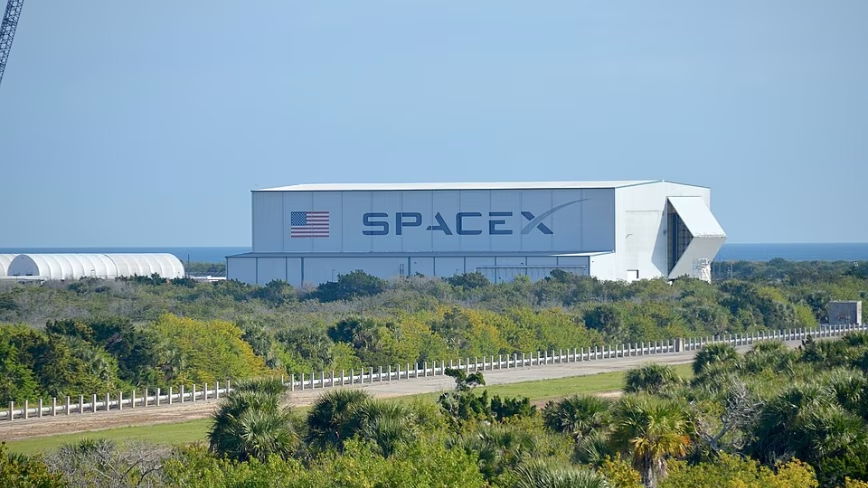
The SpaceX hangar, or Horizontal Integration Facility, at Launch Complex 39A, Kennedy Space Center, Florida, in January 2026
 Credit: Olga Ernst / CC BY-SA 4.0 via Wikimedia Commons
SpaceX agreed to pay about $8B for nationwide low-band US spectrum, and shares in AT&T, Verizon and T-Mobile fell on the news. Europe’s equivalent band comes up for selection in May 2027, with Brussels proposing that two-thirds of it be reserved for European firms and sovereign use.
SpaceX has agreed to pay about $8B for the thing that turns a satellite operator into a phone company. US carrier shares fell hard. The same move is not available in Europe.
Bloomberg reported on Thursday that the sell-off has exposed how little protection telecom stocks offer. Deutsche Telekom is down 8.6% this year, and a gauge of European telecom shares has fallen 18% from a May peak.
SpaceX said on 9 October it would buy nationwide low-band 800 MHz spectrum from investment firm Grain Management. The Wall Street Journal put the price at $8B in cash. The deal needs FCC clearance.
T-Mobile closed down 13.3%, AT&T 9.8% and Verizon 8.8%, according to Axios. It was Verizon’s worst day since 2002.
The band matters because most phones support it and it carries indoors, SpaceX’s remaining technical gap. It had already paid $17B for EchoStar licences, and told IPO investors it was weighing a retail mobile service.
Analysts were calmer than the tape. John Conca of Third Bridge told Bloomberg that SpaceX still needs expensive ground infrastructure in dense markets, and that this is sentiment rather than fundamentals.
Rates did the rest. The 10-year Treasury yield crossed 5% on 15 September, and a dividend stopped being special. T-Mobile was already weak after a 25% slide under Srini Gopalan.
Verizon yields 6.4%, among the ten highest in the S&P 500, against AT&T’s 4.8% and T-Mobile’s 3%. It trades at 8.5 times forward earnings, below its ten-year average.
Europe is the part nobody is pricing. The Commission proposed in May that the bloc’s 2 GHz mobile satellite band be split in three, with two-thirds reserved for a European-controlled operator and for sovereign use.
The current licences, held by Viasat and EchoStar, expire in May 2027. SpaceX and Amazon can bid for the remaining third. Parliament and Council must still approve it.
Deutsche Telekom, Orange, Vodafone and Telefonica are in early talks to bid together. Vodafone would have to restructure its 50/50 venture with AST SpaceMobile, which would not count as European-controlled.
Starlink already reaches European phones, but through operators rather than on its own, Deutsche Telekom among them. Without spectrum it cannot sell to them directly.
The third set aside for governments goes to IRIS2, now in deployment, built for secure government traffic rather than consumer phones, with no service until 2030. Friday showed what the 2027 selection is worth.
Get the TNW newsletter
Get the most important tech news in your inbox each week.
Also tagged with


