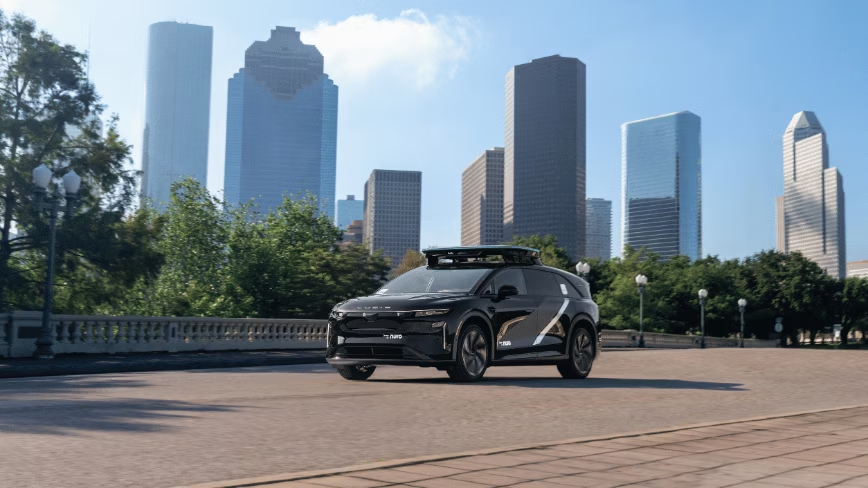
Uber is taking its robotaxi service to Houston.
The company said on 17 June that it will launch a premium driverless service in the city by mid-2027, the second US market for its partnership with EV maker Lucid and self-driving startup Nuro.
It is also the clearest sign yet of how Uber intends to fight Waymo: not by building anything itself, but by assembling the pieces from other companies.
The plan follows a flurry of activity in the San Francisco Bay Area, where the same trio expects to start offering rides later this year. Uber says it will eventually take the programme to “dozens of cities”.
A robotaxi giant that builds no robots
Uber is the odd one out among the big robotaxi names. It sold its in-house self-driving unit to Aurora in 2020 and has since struck more than a dozen deals with autonomous-vehicle developers, betting it can be the platform other people’s robots plug into.
The Houston service is that strategy in miniature. Lucid supplies the car, a version of its Gravity SUV; Nuro supplies the brain, its Level 4 “Nuro Driver” system; and Uber supplies the network, the capital, and the operations.
Uber has put real money behind it, committing to invest about $500m each in Lucid and Nuro, and to buy a minimum of 35,000 robotaxi-ready Lucid vehicles over the coming years.
For Lucid, which has struggled to sell its EVs at scale, and for Nuro, which pivoted in 2024 from delivery robots to licensing its technology, the deal is a lifeline.
Straight onto Waymo’s turf
Houston is not neutral ground. Waymo already runs a commercial, fully driverless service there, as it does in San Francisco, which means Uber has picked its first two markets on its rival’s home patches.
The relationship is tangled. Uber and Waymo are partners in Austin, Atlanta and Phoenix, where Waymo rides are booked through the Uber app, even as the two compete head-to-head in the cities Uber is now entering with Lucid and Nuro.
Waymo’s lead is the backdrop to all of it. It is already running hundreds of thousands of paid rides a week, the dominance that has pushed every other player, including Tesla, to scramble for a foothold.
Still not driverless, and the expensive part is Uber’s
The catch is that the service is not actually autonomous yet. Nuro is testing a combined fleet of nearly 100 vehicles across California and Texas, but they run on public roads with safety operators behind the wheel, around the clock.
Nuro won a California permit last month that would let it remove the safety driver, yet the Bay Area cars are still supervised, and a mid-2027 date for Houston leaves plenty of room to slip.
The other catch is financial. Uber, not its partners, owns and operates the fleet, which means it is taking on the capital-heavy grind of vehicles, depots, charging and maintenance, the part of the business that even Waymo is still working to make pay, hence its push for a cheaper, purpose-built vehicle.
In Houston, that footprint is already going up: a 50,000-square-foot depot with 40 fast chargers and 15 maintenance bays, with construction due to begin in early 2027. It is a long way from the asset-light platform Uber was built on, and a bet that owning the operation, if not the technology, is the way to catch the leader.
Get the TNW newsletter
Get the most important tech news in your inbox each week.
Also tagged with


