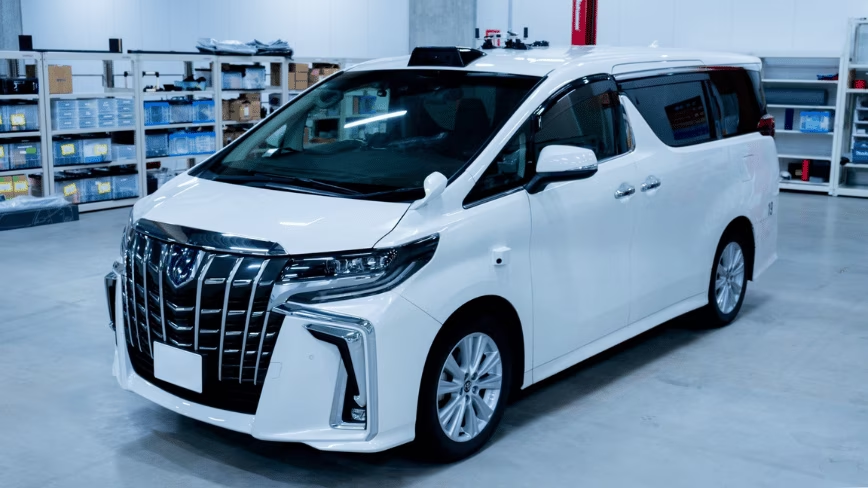
 Credit: Turing Inc.
Nvidia powers almost every self-driving car project going. A small Japanese startup is quietly handing some of that work to AMD instead.
Turing Inc. has added AMD Ventures to its backers and started running its AI on AMD chips, Bloomberg reported. The five-year-old Tokyo firm wants to put self-driving software in consumer cars and robotaxis by 2028. To get there affordably, it is loosening its reliance on Nvidia.
Why AMD, why now
Turing built its systems on Nvidia hardware from the start. That is the default across the industry. Now about 10 per cent of its AI training runs on AMD graphics chips instead. AMD sits just down the road from Nvidia in Santa Clara, and it offered two things Turing wanted: a second supplier, and lower costs. It joins a wider industry hunt for alternatives to Nvidia’s chips.
Cost is the whole point. Self-driving devours capital, and cheaper compute gives a small player one lever it can actually pull. AMD Ventures also joined the cap table, though neither side said how much it invested. AMD is making the same bet elsewhere. It recently backed UK self-driving firm Wayve too.
Late, but cheaper
Turing is not first to market, and it knows it. “We may look like we’re late to the game, but we’ll make it work and we’ll do so more cost-effectively,” said chief financial officer Masato Morishima. He argued the delay matters little, since new car models run on three-to-five-year cycles.
“Technology adoption will likely be extremely gradual,” he added.
The competition is not waiting. A partnership between Nissan, Wayve and Uber plans a pilot robotaxi service in Tokyo by the end of this year. US firm Nuro and others are testing on Japanese streets too. Turing has run its own trials, starting with a 30-minute drive outside Tokyo last year, then repeating it in busier areas.
A national bet
The money is modest by industry standards. Turing raised $79m in an equity and debt extension to the Series A it closed last year, valuing the company at about $600m. That is a fraction of what rivals across Asia have raised, or what Western robotaxi hopefuls command.
For co-founder and CEO Issei Yamamoto, the stakes are bigger than one company. “Autos is a very important industry in Japan. If Japan ends up losing this industry, we won’t have anything to export,” he said. Autonomous driving, he argued, will decide who wins the next era of carmaking.
Cheaper chips are how a Japanese underdog plans to stay in the race. And for AMD, every design win it prises from Nvidia counts as a victory.
Get the TNW newsletter
Get the most important tech news in your inbox each week.


