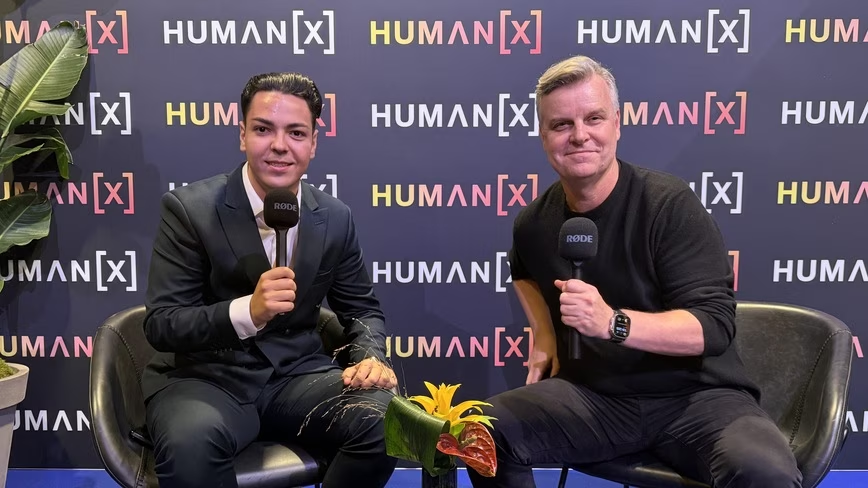
TNW’s Cristian Dina (left) and Zendesk CEO Tom Eggemeier at HumanX in Amsterdam, 23 September 2026
 Credit: TNW
Zendesk will end the year with about $400m of AI revenue, up from about zero two years ago, chief executive Tom Eggemeier told TNW. Most of it comes from AI agents that customers pay for only when they resolve a case.
Eggemeier has run Zendesk since late 2022. Before that, he was a partner at the private equity firm Permira, where he led its Menlo Park office. He spent more than a decade at the contact centre software company Genesys, rising to president. He studied history at the University of Dayton and holds a law degree from the University of Chicago.
He spoke to Cristian Dina at HumanX in Amsterdam on 23 September. It is the third episode of the new TNW Podcast, after Yahoo’s Jim Lanzone and Zoom’s XD Huang. The full conversation is in the video below.
“I saved over the last five days $3,105,” Eggemeier said of Meta’s Muse.
$3,105 with Muse
The day before, Meta had challenged users to save up to $1,000 with Muse. Eggemeier said Muse cut about $2,000 a year from his family’s internet and TV package. It cut about $1,000 a year from its mobile plan. It did about 95% of the work. He made one phone call himself. He is not yet in the early test in which Muse makes calls.
He said Europeans may not save as much, because internet and mobile prices are much higher in the US. He has also been trying Muse and Instinct, another personal assistant, in recent weeks.
He uses ChatGPT for hours a day, for research, customer work and speeches. With help from his team, he wrote code in Claude Code that is now in production at Zendesk. The team checked it three times first. He also built a basketball app with his son.
Paying for outcomes
Zendesk began charging for automated resolutions in August 2024. It has since tested a model with about 100 customers that drops seats. It charges for every resolution, by a human or an AI agent. It will roll that out shortly to customers who want it, he said. He made the case against seats on stage at HumanX the same day.
AI now solves or assists more than 50% of Zendesk tickets, Eggemeier said. That count includes self-service, AI agents and copilots. AI agents alone handle less than that. His best customers reach automation rates of 80% to 90%, with higher satisfaction than with people.
A utility company in Brazil used Zendesk’s collections agent to bring in about $5m of new revenue in a few months, he said. More than 80,000 companies use Zendesk. He estimates that one to two billion people deal with it each year without knowing it.
A human on call
Eggemeier expects personal AI agents talking to company agents to make up more than half of interactions within two years. He called it a little scary, and said people should always be able to reach a human. Zendesk tells customers to offer that option, he said.
Asked about companies replacing staff with AI, he said companies and governments should train people to use it. He called himself an optimist, and pointed to the jobs that changed after the industrial revolution and since the 1980s.
“I can’t see beyond five or 10 years. There’s going to be absolutely a need for humans,” he said.
His advice to young people, including his two children at university, is to build communication, analytical and relationship skills, and to learn AI.
Get the TNW newsletter
Get the most important tech news in your inbox each week.


