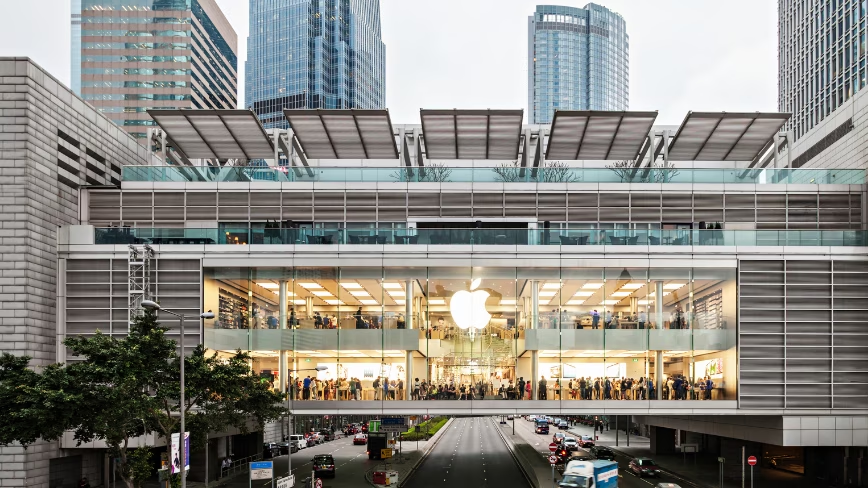
Apple store
 Credit: Canva
Justice Elena Kagan denied Apple’s emergency stay application on Wednesday on behalf of the court, declining to refer the request to the full bench. Apple now returns to Judge Yvonne Gonzalez Rogers in Oakland to argue over what commission, if any, it can lawfully charge on external-link app purchases.
The US Supreme Court on Wednesday declined to pause the lower-court order finding Apple in contempt in the long-running Epic Games App Store dispute. Reuters reported that Justice Elena Kagan, acting on behalf of the court, denied Apple’s emergency stay application without referring it to the full bench, in a procedural signal that the request was not a close call.
Kagan acted less than an hour after Epic’s opposition to Apple’s stay request was distributed, and before Apple had an opportunity to file a reply. The denial leaves the Ninth Circuit’s contempt finding in place while Apple’s underlying petition for certiorari proceeds.
The contempt finding originates with US District Judge Yvonne Gonzalez Rogers, who ruled in April 2025 that Apple had “wilfully” failed to comply with the anti-steering injunctions she issued in the original Epic Games v. Apple judgment. The Ninth Circuit upheld that ruling. The appellate panel rejected Apple’s argument that the contempt order should be paused while the company sought Supreme Court review.
The substantive question is what commission, if any, Apple can charge on payments made through external links inside iOS apps. Before Gonzalez Rogers’s contempt ruling, Apple had been charging 27 per cent on those payments, three percentage points lower than the standard App Store rate. The judge’s contempt order extended the original anti-steering injunction to bar Apple from collecting any fees on third-party storefronts. Apple has not been charging commission on external-link payments for nearly a year as a result.
Apple’s Supreme Court filing argued that the order forces the company to forgo billions of dollars in commission revenue while its appeal is pending. Epic’s chief executive Tim Sweeney, accused Apple of “stall tactics” in seeking a stay so soon after the Circuit Court ruling. Wednesday’s denial means the financial pressure remains in place while the cert petition is considered.
The case now returns to Judge Gonzalez Rogers in Oakland, per US News’ confirmation of the procedural posture. Her court will determine what commission, if any, Apple can lawfully charge developers for purchases made from external-link redirections. The judge has previously referred the matter to the federal attorney’s office for possible criminal contempt proceedings, finding that Apple executives lied under oath about the company’s compliance approach.
The original Epic Games v. Apple ruling dates back to 2021 and was largely a victory for Apple, with the Supreme Court declining to hear cross-appeals in January 2024. The anti-steering provision, which requires Apple to allow developers to link from iOS apps to external payment options, is the only part of the judgment that went against the company. The compliance question around that provision is now in its fourth year of litigation.
Apple’s Supreme Court petition for certiorari, filed in early April, asks the court to consider both the contempt finding itself and the scope of the original injunction. The court has not yet decided whether to take the case. Wednesday’s denial of a stay is a separate procedural matter from the cert question, but it removes Apple’s ability to delay implementation of Judge Gonzalez Rogers’s order while the cert petition is pending.
The next material step is the proceeding in Oakland on the lawful commission rate. There is no fixed timeline for that determination, and any ruling Judge Gonzalez Rogers issues will itself be subject to appeal. The fee dispute that began with Epic’s 2020 lawsuit against Apple is, on Wednesday’s evidence, structurally far from over.
Get the TNW newsletter
Get the most important tech news in your inbox each week.
Also tagged with


