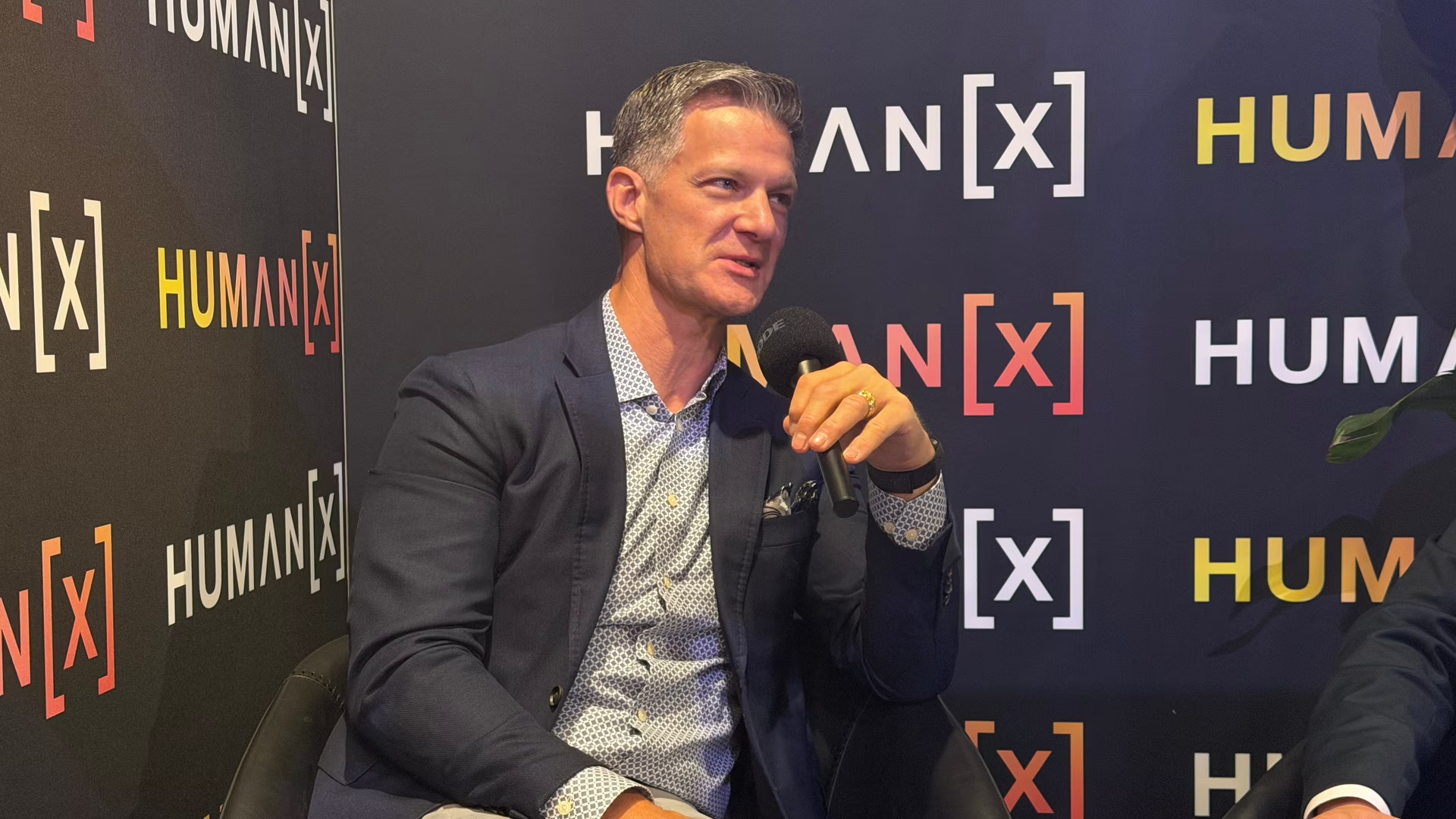
Boomi CEO Steve Lucas at HumanX in Amsterdam, 24 September 2026
 Credit: TNW
Boomi is approaching $1bn in recurring revenue, chairman and chief executive Steve Lucas told TNW. The integration company has tripled its revenue in the four years since he joined in 2022, he said. It helps that Boomi does data, and “AI needs data,” he said. Trillions are spent on AI every year, and Boomi is “certainly a beneficiary.”
Lucas started at Microsoft, demonstrating Windows 3.1 and Office at trade shows while still at university. He spent a decade at Business Objects and SAP, then ran Marketo, which Adobe bought, and the recruitment software company iCIMS. In April 2025 he published Digital Impact, a book about the human side of AI transformation.
He spoke to Cristian Dina at HumanX in Amsterdam on 24 September. It is the latest episode of the TNW Podcast, after Glean’s Arvind Jain, UiPath’s Michael Atalla and Zendesk’s Tom Eggemeier. The full conversation is in the video below.
Half of accounts payable
Boomi calls itself a data activation company. It sells integration, automation and AI tools to more than 30,000 companies. Its most common job is getting a company’s apps, databases and APIs to talk to each other, Lucas said.
Inside Boomi, about half of accounts payable is now reviewed and made by AI, with humans still in the loop, he said. Finance work such as accounts receivable is moving over slowly. Telling staff to use AI does not work on its own, he said. Companies need specific business problems where AI fits, and should build from there.
Ten times more work
Lucas does not expect AI to wipe out work soon. Whenever a transformative technology arrives, from the assembly line to robotics, humans invent new work, he said. He has never felt busier.
“I think there’s going to be 10 times more work before there’s 10 times less work.” Steve Lucas, Boomi chief executive
He called the “SaaS apocalypse” overrated. AI lets anyone create software, so he expects more software in the next five years, not less. That suits Boomi, which integrates it. The average large company already runs more than 350 productivity applications, he said.
“Don’t you find it ironic that productivity software is called productivity software?” Steve Lucas
Data, then agents
Companies get stuck on data, Lucas said. A model is only as good as its inputs, so data has to be accessible, of high quality and secure.
He is wary of big numbers on agents in production. Value comes from agents that drive decisions and return on investment, he said, not agents built “to be buzzword compliant.”
“Anyone can have millions of agents deployed if they do meaningless work.” Steve Lucas
He is not sure what AGI is, and by all measures, he said, the industry has already reached it. Ten years ago, he said, he would have called today’s models from OpenAI or Anthropic AGI. His own test is simpler: he will know when his job starts to get easier.
A life that depends on integration
Lucas has type 1 diabetes. He wears a glucose sensor on his arm and an insulin pump on his back. His life depends on how well they work together, he said. He sees the irony: his life “depends on integration and it’s also what I do for a job.”
The name Boomi comes from the Sanskrit word for earth, he said. The company was founded a little over 20 years ago on the idea that everything is connected.
Saying no
Boomi has about 2,200 to 2,300 employees. Lucas wants to make them 10 times more productive, so the company works like one of 10,000 people. It sells through a direct sales force and more than 800 partners, which bring in 30% to 40% of revenue, he said.
His hardest lesson is saying no. When he joined there were dozens of projects, and he cut about ten of them to stay focused on integration. Next, Boomi is being pulled heavily into AI infrastructure, he said, with governance first. That means watching AI, checking it does what it should, and being able to say yes when a government asks to audit it.
His advice to students is to keep learning to program, because people still need to understand good architecture and what AI is doing.
“Curiosity will be the number one skill set coming out of university.” Steve Lucas
Get the TNW newsletter
Get the most important tech news in your inbox each week.


