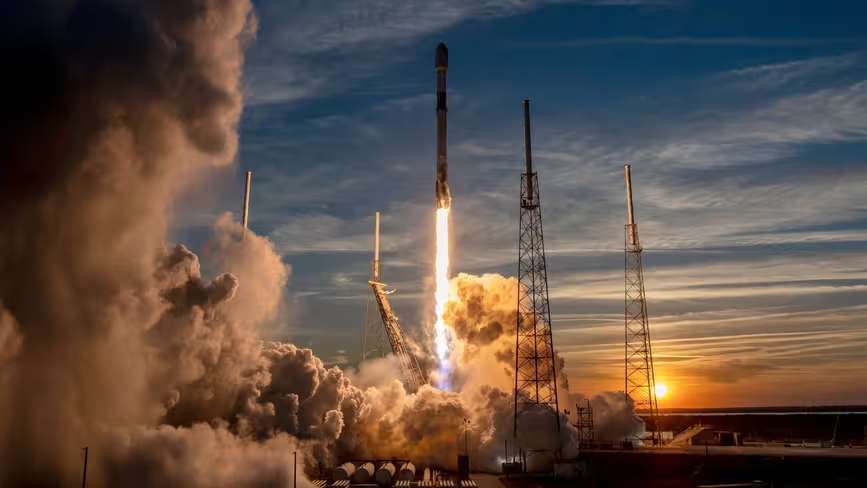
 Credit: SpaceX
A SpaceX-Tesla merger has moved from rumour toward roadmap. On the day SpaceX began trading, the people around Elon Musk stopped waving the idea away.
SpaceX President Gwynne Shotwell did the floating. Asked about merger chatter by CNBC, she said a tie-up “might make Elon’s life a little easier.” She added that “there are synergies between Tesla and SpaceX in our futures.”
She hedged, too. “Right now I’m focused on keeping the lights on here,” Shotwell said, pointing to rockets, the space station, and broadband. The message was not now, but not never.
Why the SpaceX-Tesla merger talk turned serious
Two things changed this week. First, SpaceX went public at a $1.77tn valuation, making Musk the first trillionaire. Second, its filing said it may issue “significant equity” to fund deals.
Public stock is merger currency. SpaceX can now pay for acquisitions with shares the market prices daily. Shotwell said as much: “M&A is in the future, especially when you look at the AI world.”
The empire is already consolidating. SpaceX absorbed xAI in February at a $250bn valuation. Tesla is the biggest piece still outside the tent. Musk now runs two public companies at once.
The ties are already deep
Tesla and SpaceX are not strangers. Tesla holds a stake in SpaceX. Starlink hardware sits inside Tesla’s coming Cybercab. The two are jointly building Terafab, a chip megaproject, with Intel as a supplier.
Tesla also shares manufacturing tricks with SpaceX, and SpaceX spent $131m on Cybertrucks last year. The supply chains already overlap.
A former Tesla director put it bluntly. Steve Westly told CNBC that folding Tesla into SpaceX is “absolutely likely.” He flagged “a lot of governance issues,” then predicted it would happen anyway. CNBC reported in May that Musk has discussed exactly that with colleagues.
The catch: control and a stretched price
Governance is the hard part. Musk already holds more than 80 per cent of SpaceX’s voting power, with final say even over his own removal. A merger would hand him that grip on a second trillion-dollar company.
The valuation is the other catch. SpaceX lost nearly $5bn last year. A Danish pension fund blacklisted the IPO as overvalued, and Morningstar puts fair value near $780bn, under half the listing price.
Westly framed the real test. SpaceX must hit at least two of its three “moonshots”, rockets, Starlink, and AI, to hold its valuation. A Tesla merger would add two more bets, self-driving cars and humanoid robots, neither of which makes much money yet.
For now, Shotwell is keeping the rockets flying. She did not rule the merger out. On a day built for grand ambition, that was the point.
Get the TNW newsletter
Get the most important tech news in your inbox each week.
Also tagged with


