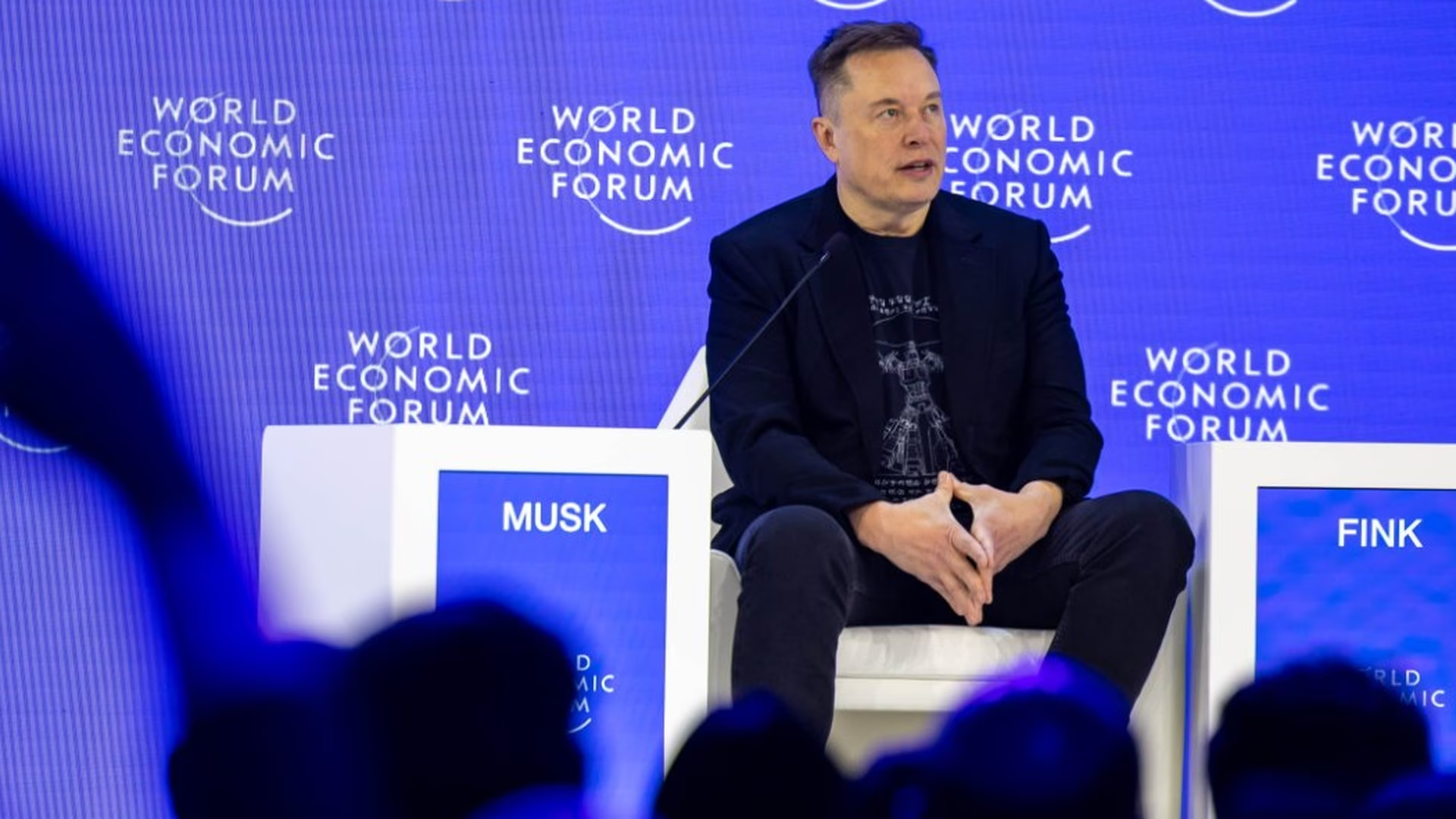
Elon Musk at the World Economic Forum Annual Meeting in Davos, January 2026.

SpaceX and Tesla have picked five directors to negotiate a possible $3.5tn merger, the largest ever. They are racing to finish it before the end of the year, the Financial Times reported. Stephen Morris and Oliver Barnes cited people close to the process.
The five lead two special committees, one at each company, that will handle the talks. Their job is to agree the terms of an all-stock deal and win over shareholders. They must also guard against the investor lawsuits that followed earlier Musk deals.
“They can’t afford to let Elon bulldoze them. They need to do this by the book,” one of the people told the FT.
Who is at the table
For SpaceX, the negotiators are Roelof Botha and Randy Glein. Botha, a former Sequoia managing partner, joined its board in June. Glein co-founded DFJ Growth and has been a SpaceX board observer since 2009. For Tesla, they are its chair, Robyn Denholm, and directors Kathleen Wilson-Thompson and Jack Hartung, a former Chipotle CFO.
All five are deemed financially “disinterested”, but all have longstanding ties to Musk, according to the FT. Botha got his first US job from Musk at PayPal in 2000. Hartung’s son-in-law is a programme manager at Tesla. Denholm and Wilson-Thompson steered Musk’s $1tn pay package. The rest of Tesla’s board had to step aside for being too close to its chief executive, the FT reported.
Morgan Stanley and Goldman Sachs are advising SpaceX’s committee, and Evercore is advising Tesla’s. The banks are mapping where the businesses overlap, in AI models, chip design and data centres. They are also looking for areas that fit together, such as rockets, robotics and solar panels.
What still has to be settled
The committees must agree an exchange ratio for SpaceX and Tesla shares. Retail investors hold an estimated 20% of Tesla. One person told the FT the committees were not close yet. Governance, and who takes the top jobs in the merged group, would come next.
Under Texas rules, where both companies are incorporated, Musk cannot formally take part in the negotiations. He has called them an “odd kabuki dance”, according to the FT. On SpaceX’s third-quarter earnings call, he said a combination would be “a good idea”. His backing had already rattled some insiders, Reuters reported in October.
Tesla shareholders would most likely vote at a separate extraordinary meeting, not at the annual meeting on 3 December. Musk needs more than 50% of all possible votes, so abstentions count as a no. He controls about 84% of the votes at SpaceX through super-voting shares, but only a fifth at Tesla. A merger could give him majority control of the combined group.
Tesla’s Chinese operations are another obstacle, the FT reported. Beijing could object, and Washington could object too, given SpaceX’s rockets and Starlink. Tesla is most likely to ringfence the Chinese business rather than sell it. The deal would also face antitrust reviews in the US, China, Europe and the UK.
SpaceX shares fell 1.3% to $131.60 in premarket trading on Tuesday, below their $135 IPO price. Tesla was flat, CoinDesk reported.
Pricier debt
SpaceX is also paying more to borrow. Last week, Saturn Funding Trust, an Apollo-managed vehicle that buys Nvidia Vera Rubin systems and leases them to SpaceX, sold debt that includes a $25.2bn tranche due in 2032. It carries a coupon of 8.259%, or 345 basis points over US Treasuries, Toby Nangle wrote for FT Alphaville.
That is more than the average BB-rated junk bond issuer pays, according to Alphaville. SpaceX’s own 2031 bonds were first sold at 110 basis points over Treasuries and are now offered at more than double that spread. Musk said in October that SpaceX had raised $40bn in debt to buy AI chips.
‘Sell compute because we can’t compete’
The talks come as SpaceX’s own AI work struggles to keep up. Musk has told employees that SpaceX is falling behind in AI, Grace Kay and Ryan Mac reported for The New York Times, citing three people. That makes renting out its computing power more lucrative than using it, he told them.
Anthropic pays about $3.1bn a month to rent SpaceX’s computing power, and Google about $800m, according to the Times. Anthropic is now the AI unit’s largest customer, and the unit brings in more than half of SpaceX’s revenue.
In August, Musk renamed a group chat of hundreds of engineers “Sell compute because we can’t compete,” according to messages viewed by the Times. He warned staff about wasting graphics chips.
“Anyone wasting GPUs on bullshit while we are failing to compete will be asked to leave immediately, as this constitutes a betrayal of your team,” Musk wrote.
SpaceX has also cut back. It shut down its AI companions in September and disbanded the 60-person Grok Imagine team this month, the Times reported. Tesla also pulled its engineers off Digital Optimus, a joint project to teach Grok to work as an AI office worker. On Tuesday, Musk responded to the report on X.
@WR4NYGov NYT is posting the obvious as “news” 🙄
— Elon Musk (@elonmusk) November 24, 2026
Get the TNW newsletter
Get the most important tech news in your inbox each week.


