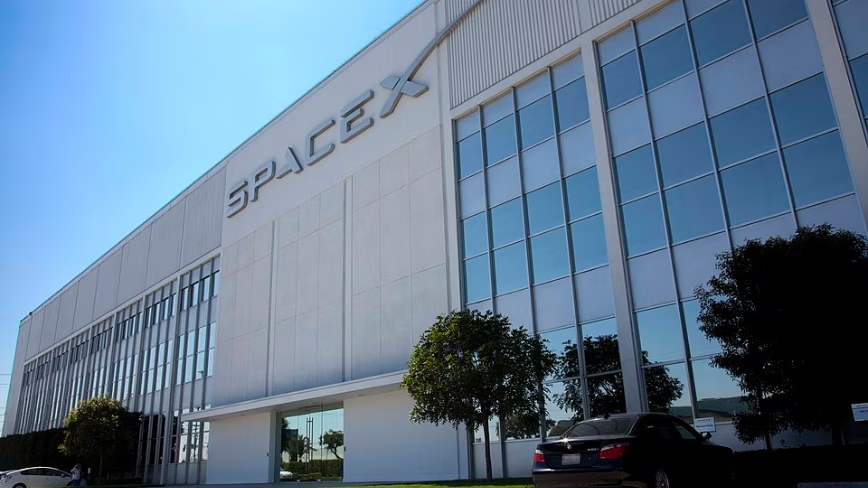
SpaceX
 Credit: SpaceX
Most rocket companies buy their fuel. SpaceX wants to pipe it in. Filings in Texas show the company plans to build its own natural gas pipeline, an unusual move for a space firm, and a telling one.
SpaceX calls the line Starpipe. It would run eight miles, about 13km, to Starbase, SpaceX’s company town on the Texas coast, and feed the next-generation Starship rocket. Reuters reported the plan, citing county filings, and said construction could begin next month.
An affiliate, Lone Star Mineral Development, filed the project last month with the Texas Railroad Commission, according to documents Reuters reviewed. Starpipe should enter service by 26 January. The Rio Grande Valley Business Journal first reported the pipeline.
The reason is logistics. Starship burns about 630,000 gallons, some 2.4 million litres, of liquid methane per launch. Today that arrives by the truckload, hundreds of tankers in an hours-long crawl. That pace cannot support what Musk wants next.
SpaceX has flown 12 Starship tests since 2023. Musk talks of dozens of launches a year, then hundreds, then thousands. A pipeline replaces the convoy. Picture the gap between filling a car at a pump and ferrying the petrol in by bucket.
Vertical integration, all the way down
The pipeline is the visible part of a bigger plan. SpaceX has spent years exploring its own gas drilling near Starbase and across Texas, Reuters found in land records. Since 2023, it has signed more than 100 paid-up oil and gas leases with Texas landowners.
On the day SpaceX went public, president Gwynne Shotwell laid out the plan on CNBC. The company would build pipelines, process its own propellant, and look into drilling its own gas. For a rocket maker, that is a remarkable stretch of ambition, from gas deep underground to methane in a launch tank.
Drilling would be a leap. “I’m not saying it’s beyond the realm of possibility,” said Stan Lindsey, a Texas oil and gas consultant. He noted that SpaceX has no experience in the field. If the drilling does not pan out, he added, Starpipe is the “fallback position.”
The map of Starpipe
The geography is taking shape. Starpipe would start on an 83-acre site at the Port of Brownsville. SpaceX is negotiating to lease that land for 50 years, a port official told Reuters. At Starbase, plans filed with the US Army Corps of Engineers show SpaceX wants a liquefaction plant to turn the piped gas into liquid methane on site.
The company may not even need to drill to fill the line. SpaceX could tap Enbridge’s nearby Valley Crossing pipeline expansion, Lindsey said. Enbridge did not respond. Either way, SpaceX would own the stretch from supply to launchpad, the same hunger for natural gas now pulling tech giants into their own energy deals.
A pipe sized for more than today
One number hints at the scale of the plan. Starpipe’s 16-inch diameter implies fuel demand well beyond 25 launches a year, the cadence the Federal Aviation Administration currently allows. The pipe targets a future SpaceX cannot yet legally fly.
That future is vast. Starship anchors Starlink, the planned AI data-centre satellites, and Musk’s ambitions for the moon and Mars. SpaceX’s prospectus imagines thousands of solar-powered AI satellites drawing power approaching a fifth of the US grid.
Starpipe is a small, strange first step toward all of it: a space company learning to think like an oil and gas firm. Whether regulators, and physics, let it scale that far remains the open question buried in an eight-mile pipe.
Get the TNW newsletter
Get the most important tech news in your inbox each week.
Also tagged with


