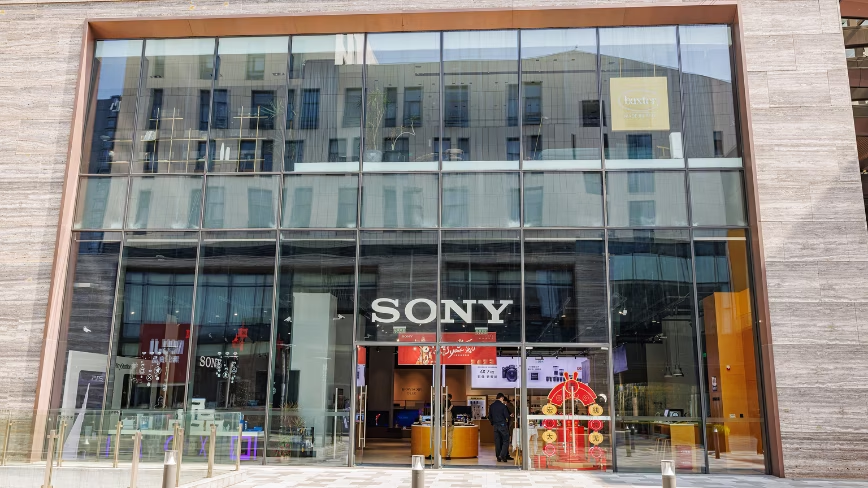
 Credit: Sony
Two of the biggest names in chips are joining forces on the humble camera sensor. Sony and TSMC plan to spend around ¥1 trillion, roughly $6.4bn, on a joint plant in Japan to make the next generation of image sensors.
The logic of the pairing is easy to see once you know what each brings. Sony is the world’s leading designer of image sensors, the chips that turn light into the photos your phone takes, while TSMC is the world’s largest contract chipmaker, so the deal marries unrivalled design with unrivalled manufacturing.
The factory will rise in Kumamoto, in southern Japan, which is no accident. TSMC already runs advanced operations in the prefecture, so building there lets the partners tap an existing cluster of skilled workers, suppliers and infrastructure rather than starting from scratch.
Ownership tilts toward Sony, as you might expect given whose product this ultimately is. Sony will hold roughly 60% of the venture and TSMC about 40%, with commercial production targeted to begin as early as 2029, a timeline that reflects just how long leading-edge fabs take to build and qualify.
The reason to invest now is that image sensors are quietly becoming more valuable, not less. They already sit in every smartphone, but demand is spreading fast into cars, where sensors feed driver-assistance and autonomous systems, and into the broader world of physical AI.
That last market is the one to watch. As robots and autonomous machines move from demos into factories and streets, they need to see the world reliably, and high-quality image sensors are the eyes that make that possible, which turns a mature component into a growth business again.
The robotics wave is arriving faster than many expected, too. Analysts have sharply raised their forecasts, with Morgan Stanley doubling its China humanoid shipment target, and every one of those machines is a potential customer for advanced sensors.
For TSMC, the deal is also another step in a global building spree. The chipmaker has been planting fabs far beyond Taiwan, from its first European factory in Germany to expanded operations in Japan, spreading both its capacity and its geopolitical risk.
It is hardly alone in the rush. Rivals are pouring money into new plants across the map, whether that is Intel committing billions in Ireland or newcomers building giant fabs elsewhere, as the whole industry races to add capacity for an AI-hungry world.
Even Elon Musk has joined the fray, with a $16.8bn Terafab rising in Texas, a sign of how central owning silicon has become to almost every technology ambition, from cars to AI to space.
The structure of the deal is telling in its own right, because it plays to each partner’s strengths rather than forcing either to stretch.
Sony keeps control of the design and the customer relationships it has spent decades building, while TSMC supplies the manufacturing muscle and process expertise that turn a clever sensor into one that can be produced at scale and at a competitive cost.
It also deepens a relationship that already runs through Kumamoto. TSMC’s existing presence there grew out of an earlier push, backed heavily by the Japanese government, to bring advanced chipmaking back onshore, and layering an image-sensor venture on top makes that cluster stickier and harder for rivals to replicate.
For Japan, the project is a welcome vote of confidence. The country has been trying to rebuild its standing in advanced chipmaking, and a marquee Sony-TSMC venture strengthens a domestic supply chain that both Tokyo and its allies want to see grow, especially as governments everywhere treat semiconductors as strategic rather than merely commercial.
There is caution baked into the timeline, mind you. Production is years away, demand forecasts can soften, and image sensors are a competitive field, so the payoff depends on the camera-and-robot boom the partners are counting on actually materialising.
Still, the signal is clear enough. When the best sensor designer and the best chip manufacturer put billions behind the same bet, they are wagering that the world will keep wanting machines that can see, and see ever more sharply.
Get the TNW newsletter
Get the most important tech news in your inbox each week.
Also tagged with


