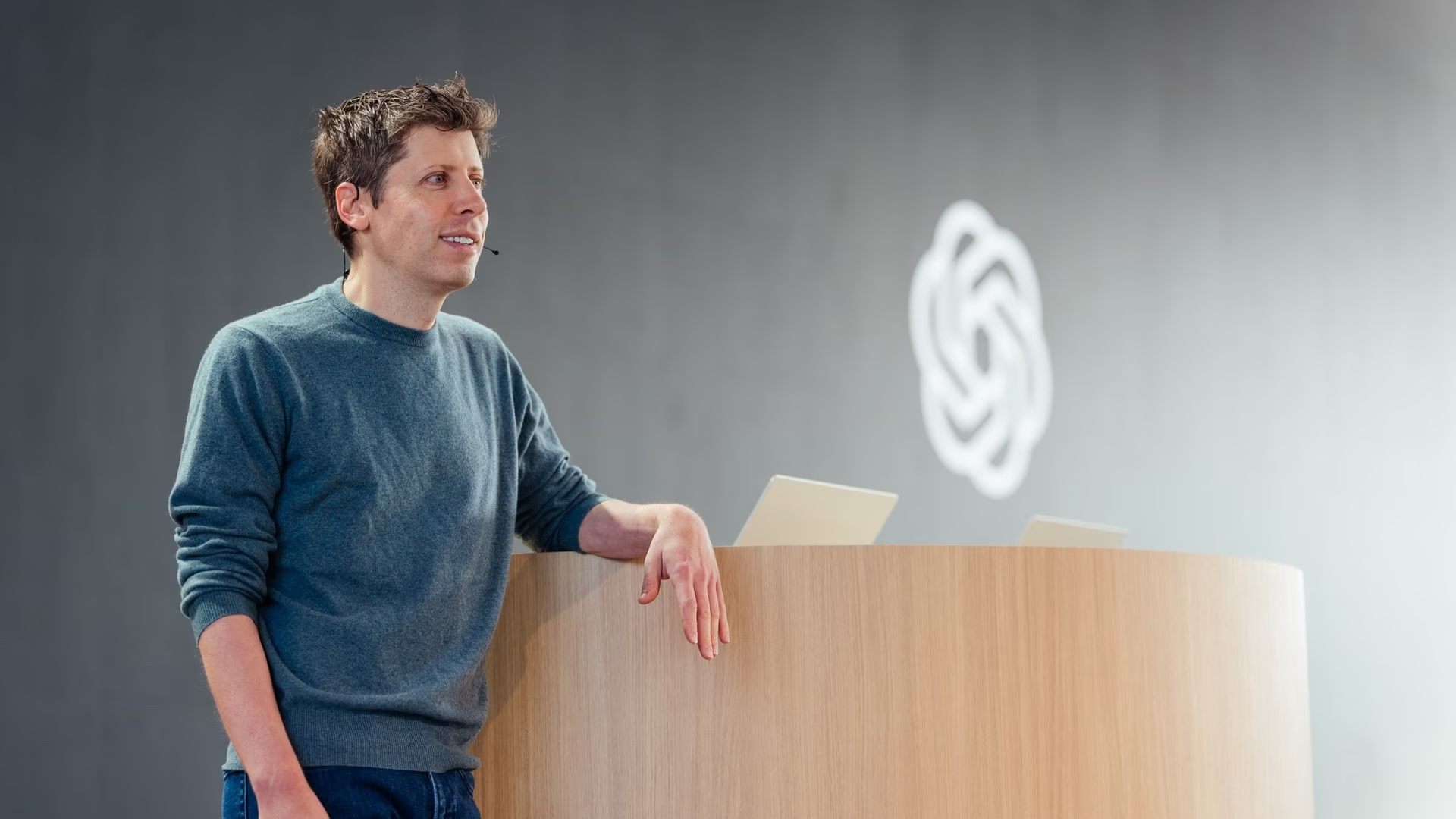
Sam Altman at OpenAI DevDay in San Francisco, 29 September 2026.
 Credit: OpenAI
Sam Altman said on Monday he does not know enough to say whether Jensen Huang should return to Nvidia, in an interview with Reed Albergotti at Semafor’s Silicon Valley & The World event.
Albergotti pointed out that Altman had been ousted by his own board about three years ago. He added that a letter backing Huang looked copied from the one Altman’s supporters drafted at the time.
“I don’t think I know enough to answer that question. Jensen has long been a hero of mine. Heroes have flaws. I am grateful for the company he’s built,” Altman said.
He said he felt strong personal empathy for Huang and still remembered what his own ouster was like. Nvidia took an early bet on OpenAI, and OpenAI took one on Huang, Altman added.
“It’s hard to imagine the AI revolution without Jensen,” he said.
CNBC has reported that Nvidia’s board is not considering Huang’s return.
Nvidia’s guarantees
Albergotti asked whether Nvidia’s guarantees still carried the same weight. He cited the roughly $105bn he said the chipmaker had guaranteed for OpenAI’s data centre in Ohio. TNW has reported on what that guarantee covers.
“Nvidia is like a behemoth of a company. I think people still trust their guarantees very much,” Altman said.
He said Huang and Nvidia are clearly very closely linked. But revenues and demand for AI are growing so strongly that, in his view, the industry will be fine.
IPOs and double counting
Altman said OpenAI will go public at some point, though being public has real downsides at a volatile time for the industry. Albergotti asked if Anthropic’s listing this week would leave too little investor money for OpenAI.
“That is not a worry,” Altman said. “One way you could look at the last year is there’s been way too much investor demand and not enough supply.”
He also explained reported remarks to Samsung executives about double counting. Many companies now make AI chips, he said, and many of them expect to sell most of their volume to OpenAI, Anthropic and a few others. Those buyers will not need all the supply from every vendor, but the data centre buildout itself is solid.
Data centres will still get built, Altman said, but engagement with local communities is not working for people. Developers could build further away from where people live.
RAM, spies and self-improving AI
Altman returned to his remark on RAM in home computers, which he said was misinterpreted. He said DRAM prices have risen perhaps five to seven times.
“I want people to have a lot of RAM. I think everybody should buy a lot of RAM, be able to buy a lot of RAM for their own computer,” he said. “I think the home tinkering is great.”
Asked about espionage, Altman said people seeking an edge had tried things like putting a camera in an OpenAI conference room or taking engineers out for drinks to learn pre-training secrets. OpenAI’s security has not been perfect, he said.
On recursive self-improvement, Altman said OpenAI develops new models faster with its own technology. It does not let a model design its successor with no human oversight.
“We could be pushing more towards the RSI spectrum than we are, but I don’t think we could safely do that right now,” he said.
OpenAI now works with embedded evaluators, including METR, Altman said. Outside opinions on safety work will become increasingly important and valuable, he added.
Get the TNW newsletter
Get the most important tech news in your inbox each week.


