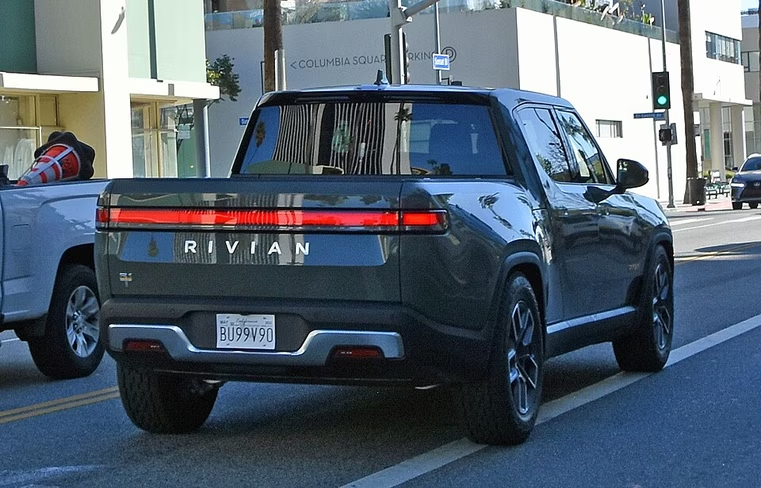
Rivian R1T on Sunset Blvd, rear view
 Credit: Chris Yarzab
Rivian is bringing Rivian OS 2.0 and Waze real-time alerts to all R1 and R2 models, still without Apple CarPlay or Android Auto, on its way to a single core operating system. That architecture reaches Europe from 2027 through the Volkswagen joint venture.
Rivian is rebuilding the screen in every car it sells. Software version 2026.31 brings Rivian OS 2.0 and Waze real-time alerts to the R1S, R1T and R2, including first-generation R1 models running older hardware.
One thing has not changed. There is still no Apple CarPlay and no Android Auto, and the company’s position is that owners will stop needing them.
Chief software officer Wassym Bensaid has named the destination. The R1 software was rebuilt from the ground up to match the R2, with the goal of a single core operating system across the lineup.
Two details are missing. Rivian has given no rollout schedule, and has not said whether drivers can file their own Waze reports or only read other people’s.
What makes an American infotainment decision a European story is ownership. Volkswagen is now Rivian’s largest shareholder at 15.9%, after a $1bn payment triggered by a software milestone.
The joint venture the two run together is building a shared vehicle architecture. It reaches European roads in the ID. EVERY1, an entry-level electric car due in 2027, on a platform the group wants to scale toward 30 million vehicles.
Europe has spent years arguing about precisely this layer. The question of who controls what appears on a car’s main screen has been a competition matter, not a design one.
In April last year Germany’s Bundeskartellamt closed its case against Google Automotive Services with binding commitments. Google must license Maps, Play and Assistant as standalone products, drop contractual incentives around default settings and advertising revenue, and allow interoperability with rival services.
Italy had already reached for a fine, hitting Google with $123mn over Android Auto for blocking a third-party app from working with the system.
The German commitments reach across the EU. European carmakers are now formally free to mix and match in-car software components instead of taking one company’s bundle.
Rivian’s answer to that freedom is to take none of them. Volkswagen has paid $1bn toward finding out whether a car company can write its own operating system and make drivers stop asking for the phone.
Get the TNW newsletter
Get the most important tech news in your inbox each week.


