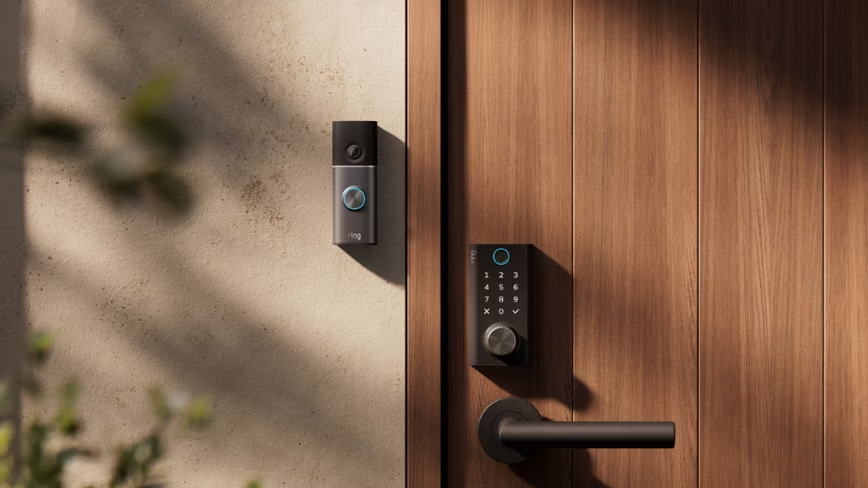
The Ring Smart Lock, with the power dial below the keypad, shown beside a Ring video doorbell.

Ring has announced a $249 smart lock with a dial that recharges a dead battery by hand, due in the United States early in 2027. Amazon’s own disclosure says the lock has not been authorised by the Federal Communications Commission and may not be sold until it is, and its remote features run over Amazon Sidewalk, a network Amazon has said is available only in the United States.
Ring has announced a smart lock with a dial you turn by hand to recharge a dead battery. It costs $249 and reaches American shops early next year. Amazon says it is not yet allowed to sell it, and its remote features depend on a network that does not exist in Europe.
Turning the dial below the keypad puts back enough charge to restore the fingerprint reader and the backlit keypad, Ring said, as Bloomberg reported. Jamie Siminoff, who founded Ring, said the company waited until it had solved what he calls smart lock anxiety. It fits a standard single-cylinder deadbolt and needs no extra wiring.
There are four ways in: a fingerprint, the keypad, the Ring app and Alexa. Ring also announced five cameras, four of them 4K, priced from $70 to $220.
The small print is more interesting than the dial.
Amazon’s own announcement says the lock “has not been authorized as required by the rules of the Federal Communications Commission” and may not be offered for sale or lease until it is. The line sits at the foot of the page under a heading marked Disclosures.
It was announced anyway.
The second disclosure is the one that matters here. Remote locking, status updates and PIN syncing all run over Amazon Sidewalk, a shared network powered by nearby Amazon devices rather than the owner’s wifi. Amazon has said Sidewalk is available only in the United States.
Nothing has been said about a European version of the lock.
This is becoming a pattern. Google opened its smart home platform to Claude and other agents last month in the United States only, on a $20 subscription, and barred those agents from unlocking doors.
Ring already has a problem of its own with recognition.
Familiar Faces, which identifies people a camera has seen before, is the subject of a proposed class action in Seattle, and Amazon has switched it off in Illinois and Texas, the two states with the strictest biometric laws.
Europe’s rules on biometric data are stricter than either.
What a European buyer can actually get today is the open alternative, where IKEA’s Matter sensors talk to Samsung hubs without anybody’s proprietary mesh, from $5.99 a bulb.
Get the TNW newsletter
Get the most important tech news in your inbox each week.


