 Credit: TNW
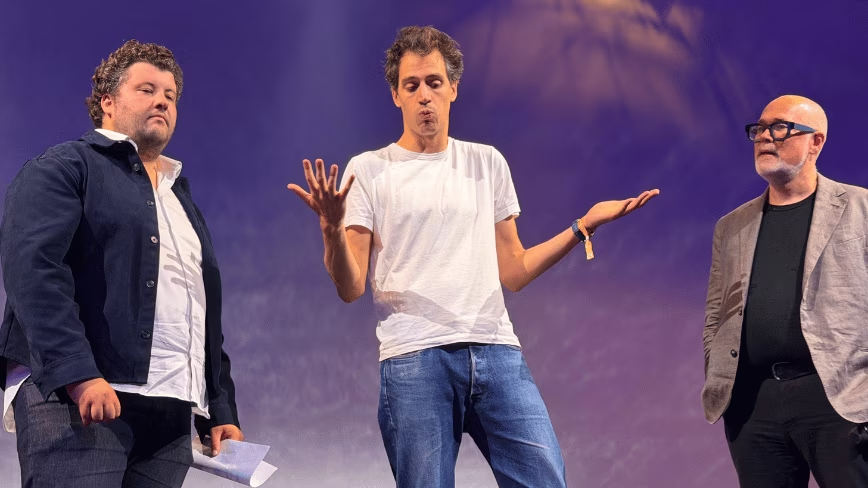
Mistral CEO Arthur Mensch and Mozilla president Mark Surman were making the case for open-source AI’s reliability at RAISE Summit. Then the venue lost power, and their fireside chat finished almost in the dark.
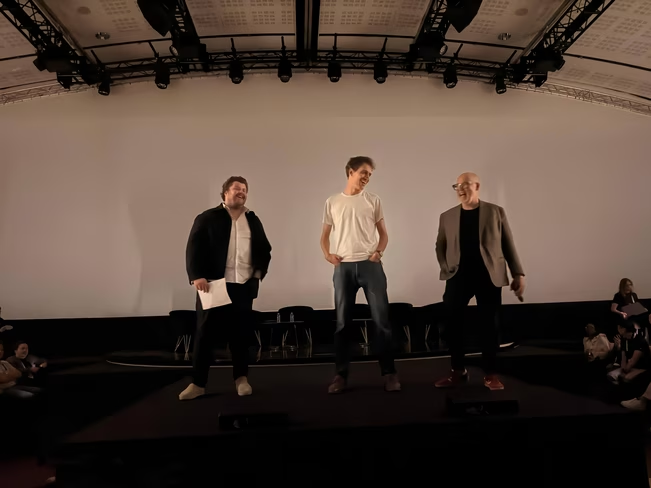
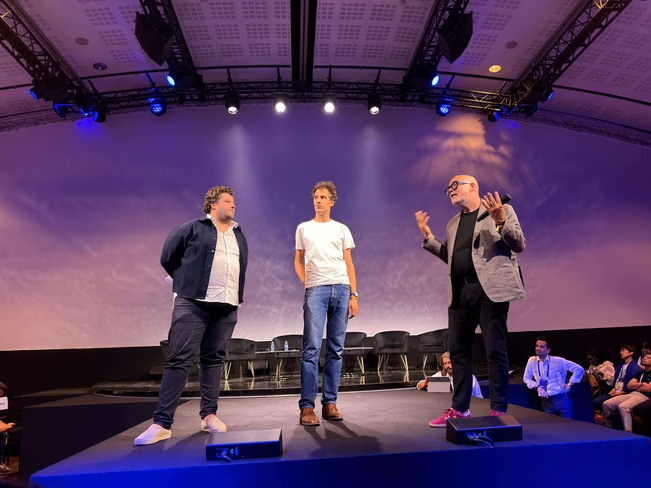
It was, in fairness, the perfect cue. Midway through a RAISE Summit fireside chat on open-source AI, the Master Stage lost power. The microphones died. Arthur Mensch and Mark Surman carried on, almost in the dark.
The topic, of all things, was reliability. Mensch, the Mistral chief, was arguing that open models let you own your AI, fork it, and never sit at a vendor’s mercy. Surman, Mozilla’s president, had just said open source is something “they can’t shut the lights off” on. Then the lights went off.
The pitch that made itself
Strip the comedy and the chat had a serious case. Open-source models are becoming the default building blocks of AI, the pair argued, the way Linux and the web became defaults before them. Mensch’s line is blunt: closed models hand a few providers immense leverage over everyone who builds on them.
The bigger worry was concentration. Surman cast a world where a handful of US labs own the whole stack as an “empire,” with open source as the rebel alliance. Better, they argued, for Europe, Canada and others to share an open platform each can adapt and control.
Mensch framed AI like energy: a matter of security you cannot afford to import wholesale. Surman tied it to trade dependence, and to Europe’s fear of leaning on American AI. Both pointed to recent European and Canadian strategies that name open source as a lever.
Why it matters
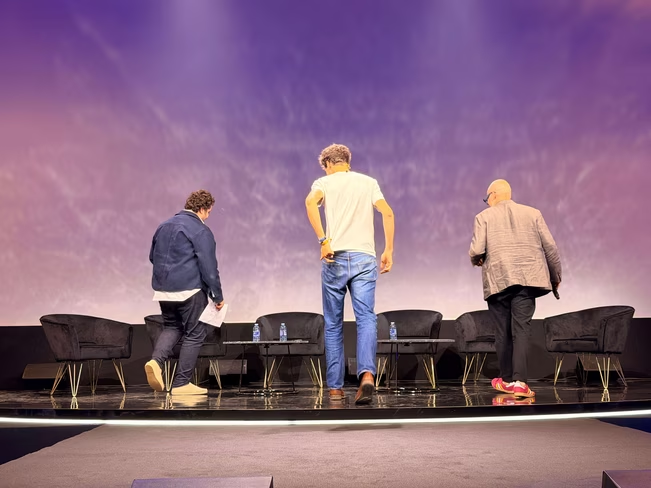
The outage did the chat a favour. Resilience is easy to slogan and hard to prove. For a few minutes, two of open source’s loudest voices had to keep going without the grid, the mics or the slides. The medium, briefly, was the message. The power came back. The point stayed made.
Get the TNW newsletter
Get the most important tech news in your inbox each week.
Also tagged with


