TL;DR
The Pentagon designated Alibaba, Baidu, BYD, and others as Chinese military companies under Section 1260H. The designation carries no immediate sanctions but lawyers warn it could become the foundation for investment restrictions cutting these firms off from Western capital.
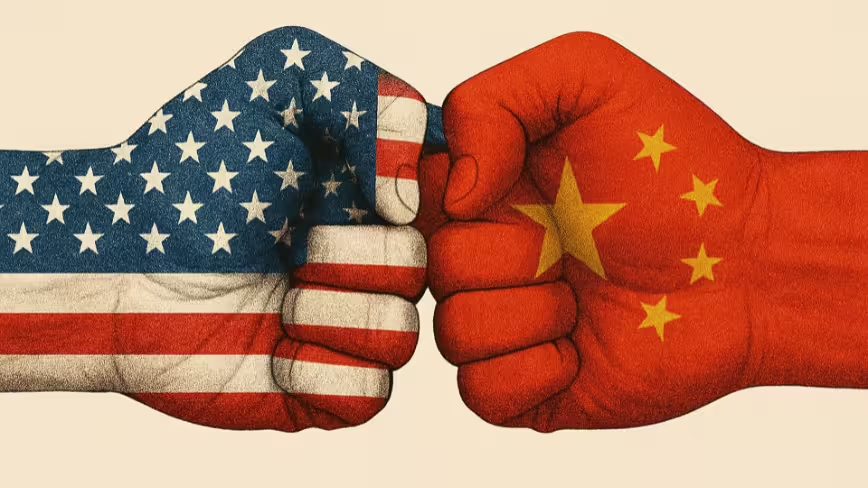
The US Department of Defence has added Alibaba, Baidu, BYD, WuXi AppTec, RoboSense, Unitree Robotics, and Chinese memory chipmakers CXMT and YMTC to its list of “Chinese military companies” under Section 1260H of the National Defence Authorisation Act. The updated roster, scheduled for publication in the Federal Register on Wednesday, expands the Pentagon’s blacklist to 188 entities, up from 134 in the previous revision.
All three tech giants rejected the designation. Alibaba said there was “no basis” for its inclusion. Baidu called it “entirely baseless.” WuXi AppTec said it had been “incorrectly included.”
What the designation does and does not do
Unlike the Commerce Department’s Entity List, a Section 1260H designation does not impose export controls or prohibit companies from doing business with US customers. From 30 June, the Pentagon will be barred from directly procuring products or services from designated firms, with third-party procurement restrictions following in June 2027.
Since most of the affected companies do not sell directly to the US military, the immediate operational impact is limited. “The list itself is not as powerful as many people imagine,” said Dai Menghao, an export-control lawyer at King & Wood. “Objectively speaking, it is more like a reputational list.”
Why it matters anyway
The greater risk is that the designation becomes the foundation for tougher measures. Proposals already circulating in Washington would automatically align the Pentagon blacklist with the Treasury Department’s Non-SDN Chinese Military-Industrial Complex Companies List.
If adopted, that alignment would prohibit Americans from investing in the publicly traded securities of designated firms. For companies like Alibaba and Baidu, which are listed on US exchanges, the consequence would be forced divestment by American investors.
The pattern
Tencent and battery giant CATL were added to the list in January 2025. CXMT and YMTC were briefly removed in February before being re-added in this round, a reversal that drew criticism from China hawks in Washington.
The additions span AI, electric vehicles, robotics, biotechnology, and semiconductors, covering virtually every sector where China competes with the US at the technology frontier. The White House accused Chinese entities of “industrial-scale” distillation attacks on American AI models in April. The Pentagon blacklist extends the pressure from model access to capital access.
Market reaction
Hong Kong-listed shares of the newly designated companies fell on Tuesday. WuXi AppTec dropped 3.7%. Alibaba fell 1.4%. RoboSense lost 0.8%.
The moves were modest, consistent with the view that the immediate impact is reputational rather than operational. But Shi Shenchang, a lawyer at Shanghai-based Co-Effort Law Firm, said the main risk is that US lawmakers increasingly use the 1260H list as a foundation for additional restrictions. The list’s power is not in what it does today. It is in what it makes possible tomorrow.
The companies’ options
Alibaba and Baidu have both said they will pursue legal action to be removed. Previous challenges by Chinese companies, including Xiaomi’s successful 2021 lawsuit, show the designation is not permanent.
But the legal process is slow, and the political environment has hardened since 2021. China’s Foreign Ministry accused the US of “weaponising national security” and said it would take “all necessary measures” to protect Chinese firms. Whether those measures include retaliatory restrictions on US companies operating in China is the escalation risk the market has not yet priced in.


 Credit: DailyNewsBay via Shutterstock.com