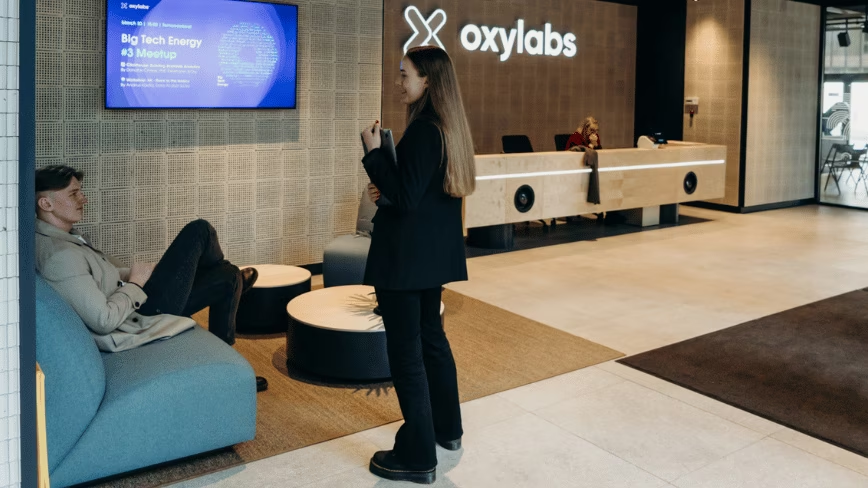
 Credit: Oxylabs
Oxylabs has raised $130M from private equity firm Warburg Pincus. It is the company’s first outside investment since it launched in 2015. The deal values the Vilnius-based data infrastructure firm at around $3.6bn. Oxylabs announced the raise on Thursday.
The figure is striking for a firm that bootstrapped its way to the top. Oxylabs says it now runs at $350m in annual recurring revenue. It counts more than 350,000 customers. That makes it the second unicorn to spin out of the Tesonet accelerator, after NordVPN maker Nord Security. It is also one of the most valuable companies in Lithuania’s history.
Selling shovels for the agentic web
Oxylabs sells the plumbing for gathering public web data at scale. It began as a premium proxy service. That kind of tool routes a company’s requests through many addresses, so it can collect prices, listings, or threat data without getting blocked. Today it pitches itself as a full web-data platform. It holds more than 160 patents and handles billions of requests a day.
The timing is the pitch. AI agents are starting to browse the web far more than humans do. They need a live feed of what is out there, not a stale index. “The next generation of AI won’t be powered by static indexes,” said chief executive Vytautas Savickas. That, he argues, is the market Oxylabs has spent a decade building for.
Warburg’s second Lithuanian bet
The cheque comes from the Warburg Pincus Capital Solutions Founders Fund. That fund closed in 2024 with more than $4bn. It is not the firm’s first move in Vilnius. Warburg Pincus also backs Nord Security, the other Tesonet unicorn. That gives it two stakes in Lithuania’s small but potent cluster of data firms.
“Oxylabs has established itself as a leader in web intelligence,” said Allison Ross, a principal at Warburg Pincus. For Oxylabs, the deal is also a flag for European tech. Savickas framed it as proof that Europe can build sovereign, world-class technology that AI developers depend on.
An industry with a reputation to manage
The web-data business carries baggage. Large-scale scraping sits in a legal grey zone. The residential proxy networks behind it draw scrutiny too, over how they source the home connections they route through. Oxylabs leans hard on compliance to stand apart. It co-founded an ethical web-data initiative and points to audits at its trust centre. It also separates itself from what it calls “providers with low or collapsing reputations”.
The money will fund more of the same, plus deals. Oxylabs bought Webshare in 2022 and ScrapingBee in 2025. It says the investment expands its capacity for acquisitions and partnerships. Goldman Sachs advised on the raise.
Why it matters
The raise shows where investors think AI value is pooling. It is not only in the models, but in the pipes that feed them. If agents shop, book, and research for us, someone must supply the real-time web underneath. Oxylabs is betting the boring layer is the durable one.
Get the TNW newsletter
Get the most important tech news in your inbox each week.


