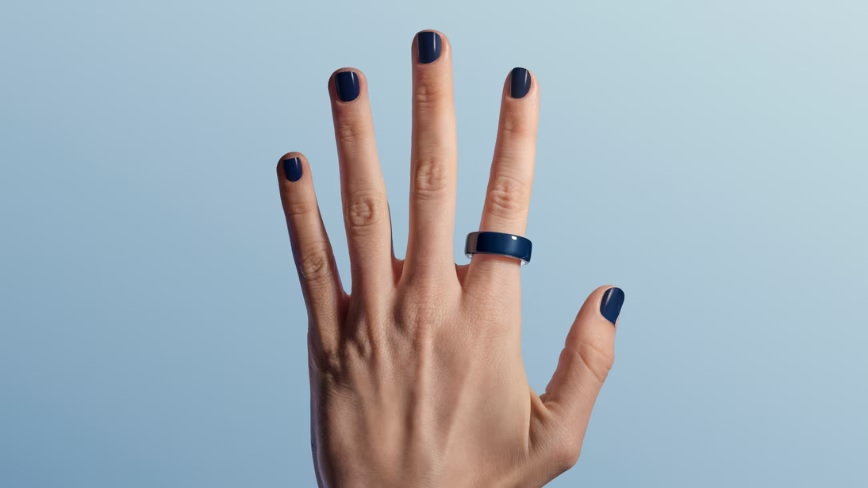
Oura ring
 Credit: Oura
Oura is targeting a September listing that would raise up to $3bn and value the smart ring maker at more than $16bn, according to Bloomberg, several months after the Finnish company filed confidentially for a US IPO.
The mark would be a sharp step up from the $10.9bn valuation it carried last September, in a category that has been taking ground from the Apple Watch for two years.
A significant portion of the offering is expected to come from existing shareholders selling rather than from new capital. That detail matters for how the listing should be read, since a large secondary component makes an IPO partly a liquidity event for early backers rather than purely a fundraising.
Those backers have been well served. Oura closed an $875mn Series E last September with Fidelity, ICONIQ, Whale Rock, and Atreides participating, alongside earlier investors including Dexcom and Coatue.
The company now employs more than 900 people across offices in San Francisco and Finland, having grown out of a narrow original audience. Its earliest customers were quantified-self enthusiasts and biohacking executives, and its current pitch is sleep and recovery tracking for people who simply want to know why they feel tired.
The category has benefited from a shift in what people want measured. Sleep, recovery, and readiness are metrics that suit passive continuous tracking, and they are harder to collect from a device the wearer takes off at night to charge.
The product argument is that a ring is the wearable people actually keep wearing. There is no screen to check, no notification to dismiss, and a battery measured in days rather than hours, which is the whole reason the form factor has taken share from wrist devices.
Oura’s latest hardware pushed that further, with the Ring 5 launching at $399 as the smallest smart ring on the market. Pricing at that level, plus a subscription for the analysis, is the model the whole valuation rests on.
Subscription revenue is what separates a $16bn valuation from a hardware multiple, since recurring income from software is priced very differently to one-off sales of a titanium ring. How much of Oura’s revenue is recurring is therefore the number that matters most.
Competition has arrived from both directions. Samsung’s Galaxy Ring brought a platform owner into the category, while Whoop, which sells a screenless band on a subscription, reached a $10.1bn valuation and has signalled its own IPO ambitions.
Oura has been defending its position in court as well as in the market, having sued the rival ring maker Ultrahuman. Patent litigation is a reasonable proxy for how commoditised a hardware category is becoming, and rings are getting easier to build.
Regulatory positioning is the other thing to watch in the filing. Oura has been careful to sell wellness insight rather than medical diagnosis, and how far it can move towards clinical claims without triggering device regulation is a material question for a company priced at this multiple.
Neither Oura’s revenue nor its membership numbers have been disclosed publicly, which is the largest gap in any assessment of a $16bn price. That information will arrive when the S-1 is made public, and it is the document worth waiting for.
Manufacturing at ring scale is its own constraint, since the devices are made in a range of sizes and cannot be adjusted after purchase, which turns sizing kits and returns into a real cost line rather than a footnote. Investors will want to see how that behaves as volumes grow.
A European hardware company listing in the United States at this scale is also its own small commentary. Oura is Finnish, its manufacturing and research remain there, and the capital markets it is going to are not.
The listing has not been confirmed by the company, and Bloomberg’s reporting describes a plan rather than a filing with terms attached. September is close enough that the public prospectus should settle most of the open questions shortly.
Get the TNW newsletter
Get the most important tech news in your inbox each week.


