 Credit: OpenAI
OpenAI wants you to talk to ChatGPT, not type at it. On 8 July it launched GPT-Live, a new generation of voice models. The company says they make talking to AI feel much closer to a real conversation. Two versions, GPT-Live-1 and a smaller GPT-Live-1 mini, reach ChatGPT users worldwide from today.
The headline change sits in the architecture. GPT-Live runs “full-duplex,” so it can listen and speak at once. It can drop in an “mhmm” or a “got it,” trade quick back-and-forth, or wait while you think. Older voice modes had to wait for you to stop talking first. That often left them cutting in at the wrong moment.
Think in the background, keep talking
The second shift is delegation. When a question needs a web search or harder reasoning, GPT-Live hands it to a stronger model in the background. That model is GPT-5.5 at launch. GPT-Live keeps chatting while it waits, then folds the answer back in.
“This is exactly how humans interact with each other,” ChatGPT voice product lead Atty Eleti told reporters, according to CNET. “We keep the conversation going while we think in the background.”
One demo drew attention. In press briefings, the model handled real-time, simultaneous translation, speaking a running translation as the presenter talked. TechRadar, shown the feature, called it genuinely useful. The model also answers to a wake word, with OpenAI staff using “Hey Chat” in the demo.
Smarter, and free for everyone
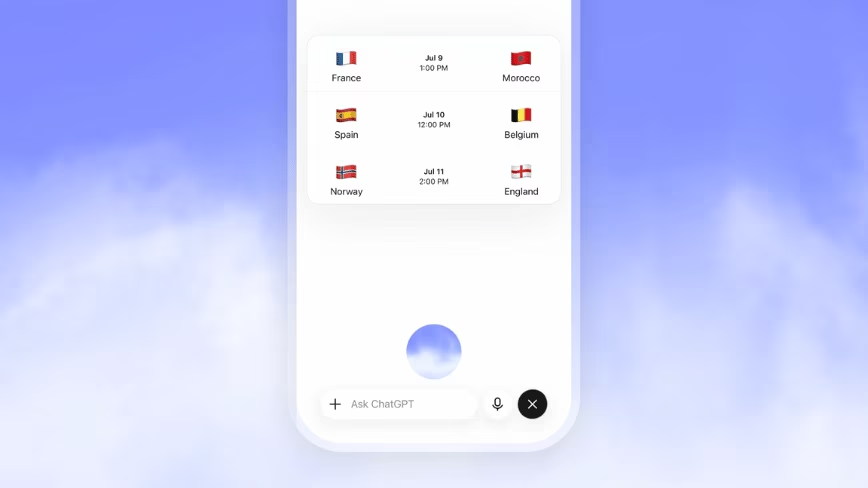
OpenAI calls GPT-Live its smartest voice model yet. Users can pick a reasoning level: Instant, Medium or High. Voice can now surface visual cards for things like weather, stocks and sports. The company claims GPT-Live-1 and the mini beat the old Advanced Voice Mode in five to 10-minute test conversations. It also reports big gains on benchmarks for scientific reasoning and agentic web search.
More than 150 million people already use ChatGPT’s Voice and Dictation each week, OpenAI says. GPT-Live-1 becomes the default for Go, Plus and Pro subscribers, while free users get the mini. It reaches iOS, Android and the web, though the rollout may take a few days.
The human-sounding problem
Sounding human cuts both ways. OpenAI says it added voice-specific safety training and real-time safeguards. Those can steer a reply, surface crisis resources, or end a conversation in higher-risk cases, with extra protections for teens. It also stresses that GPT-Live uses preset voices and will not imitate a real person.
That caution matters. A model that sounds like a friend earns trust more easily, and misleads more easily too. Critics such as Signal’s Meredith Whittaker have warned that chatbots “are not your friends.” The field stays crowded as well. Rivals like ElevenLabs and a wave of voice-agent startups chase the same prize. The broader assistant race pushed Amazon to rebuild Alexa.
Why it matters
This lands the same day OpenAI pressed ahead with a broad GPT-5.6 rollout, part of a fast release cadence. For years, voice served as a convenient extra, not the main way people use ChatGPT. With GPT-Live, OpenAI is betting that talking, not typing, becomes the default. Whether people want an AI that never quite stops listening is the open question.
Get the TNW newsletter
Get the most important tech news in your inbox each week.


