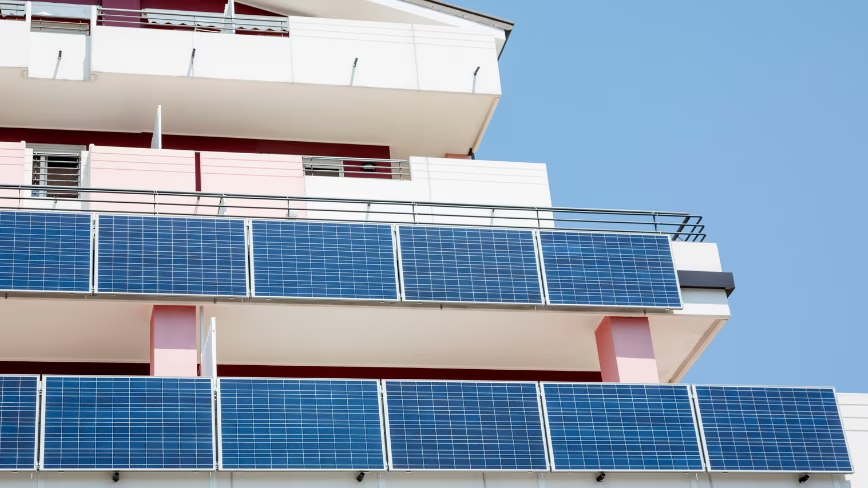
Solar panels
 Credit: Canva
New Jersey has legalised plug-in balcony solar up to 1,200W, barring local governments from requiring approvals and stopping landlords from blocking installation. Germany wrote the same right into its civil code in October 2024 and now has 1.31 million registered systems at 1.34GW.
New Jersey has legalised plug-in balcony solar. A new law bars municipalities and landlords from blocking portable panels that plug into a household socket, InsideEVs reported.
Governor Mikie Sherrill signed it this week. It takes effect in six months and caps systems at 1,200W. The panels run through an inverter that stops feeding the grid during an outage, which keeps line workers safe.
Local governments can no longer require licensing or approvals, the governor’s office said. Landlords must be notified 14 days ahead and may still restrict placement and size.
The pitch is bills. Sherrill said the units cost a fraction of rooftop solar and can shave up to $50 off a typical monthly bill. Electricity prices have been climbing across the state.
It passed unanimously in both chambers in June. Around 40% of New Jerseyans rent or live in apartments, a group that has never had a way to lower its own power bill, according to advocacy group Permit Power.
Germany settled this two years ago, after its market had already started without one.
Tenants and condominium owners have had a legal right to install since October 2024, written into the civil code and the condominium act. A landlord must give documented reasons to refuse.
German landlords also cannot demand professional installation. New Jersey’s keep control of placement and size, and both regimes require written notice.
The scale is the difference. Germany had 1.31 million systems registered in April at 1.34GW, and the register is thought to capture a minority of what is actually installed.
The power limits differ too. Germany caps inverter output at 800W against 2,000W of modules, and between 85% and 89% of new systems run at the 800W ceiling. The module allowance is more than twice the feed-in cap.
New Jersey’s 1,200W limit is half as much again. Berlin companies have been building solar for renters on the tighter number for years.
The German market being copied is already cooling. Installations fell 14% year on year in the first quarter, to 64,633 from 88,948.
Britain got there a week earlier anyway. Plug-in kits became legal on 27 August, at around £400 for £70 to £110 of annual saving.
Get the TNW newsletter
Get the most important tech news in your inbox each week.


